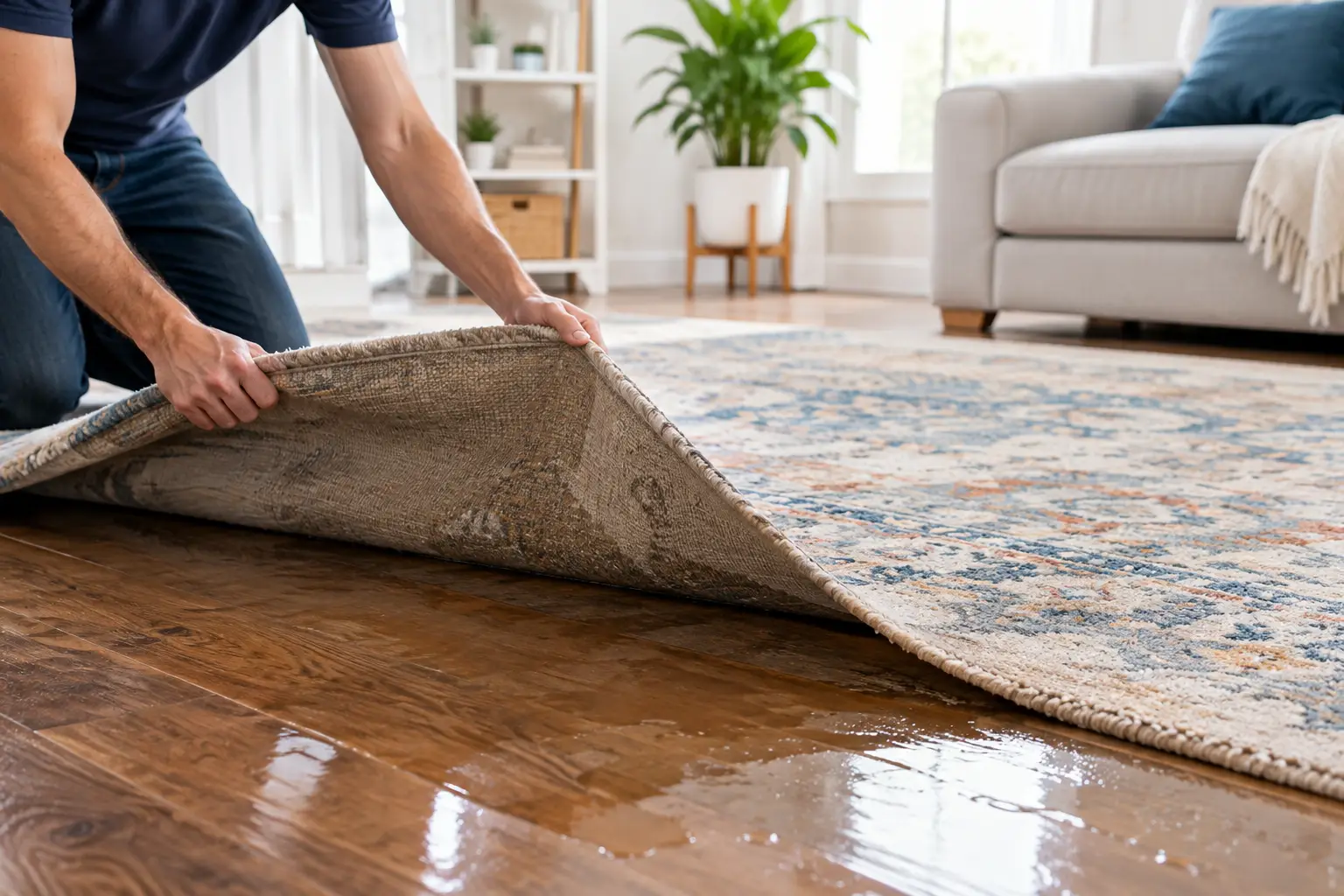
A rug can look only damp on the surface while its foundation, fringe, and floor beneath are holding far more water than expected. Flooded rug recovery is a time-sensitive process, especially in Central Florida, where heat and humidity can accelerate odor, dye movement, mold growth, and fiber damage. The right first steps can make a meaningful difference in whether a favorite area rug can be restored.
For Oriental rugs, wool rugs, designer rugs, and pieces with sentimental or financial value, the goal is not simply to make the rug feel dry. It is to remove contaminated water, soil, and residues before they settle into the fibers, then dry the rug correctly so its colors, structure, and backing remain as stable as possible.
Start Flooded Rug Recovery Right Away
First, stop the source of water if it is safe to do so. A leaking appliance, overflowing sink, burst supply line, or rain intrusion should be addressed before cleanup begins. If water is near electrical outlets, appliances, or exposed wiring, keep clear and contact the appropriate emergency professional.
Next, consider the type of water involved. Clean water from a supply line is different from water that has traveled through a dishwasher, washing machine drain, toilet overflow, outdoor flooding, or sewage backup. Water that may contain contaminants requires a more cautious approach. A rug exposed to sewage or floodwater should not be brought through the home, shaken out, or handled without proper protective measures.
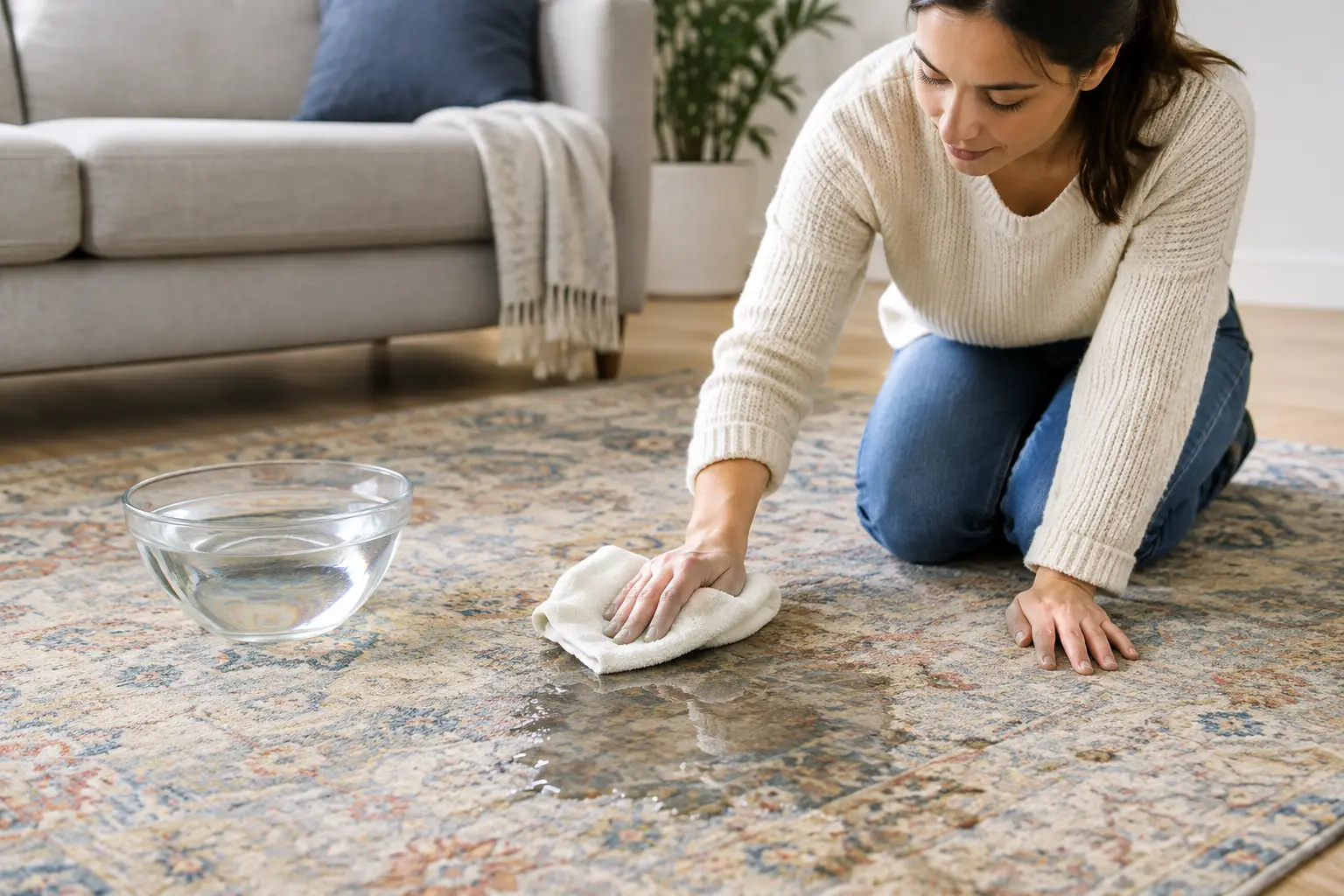
If the rug is movable and the water is clean, remove it from the wet floor as soon as possible. A soaked rug is much heavier than it appears, and pulling it by the fringe or a corner can cause tears, distorted edges, or damage to the foundation. Roll it loosely from one end with help, supporting the weight underneath. Do not fold a wet rug.
For homeowners handling an early-stage water event, these steps are generally the safest:
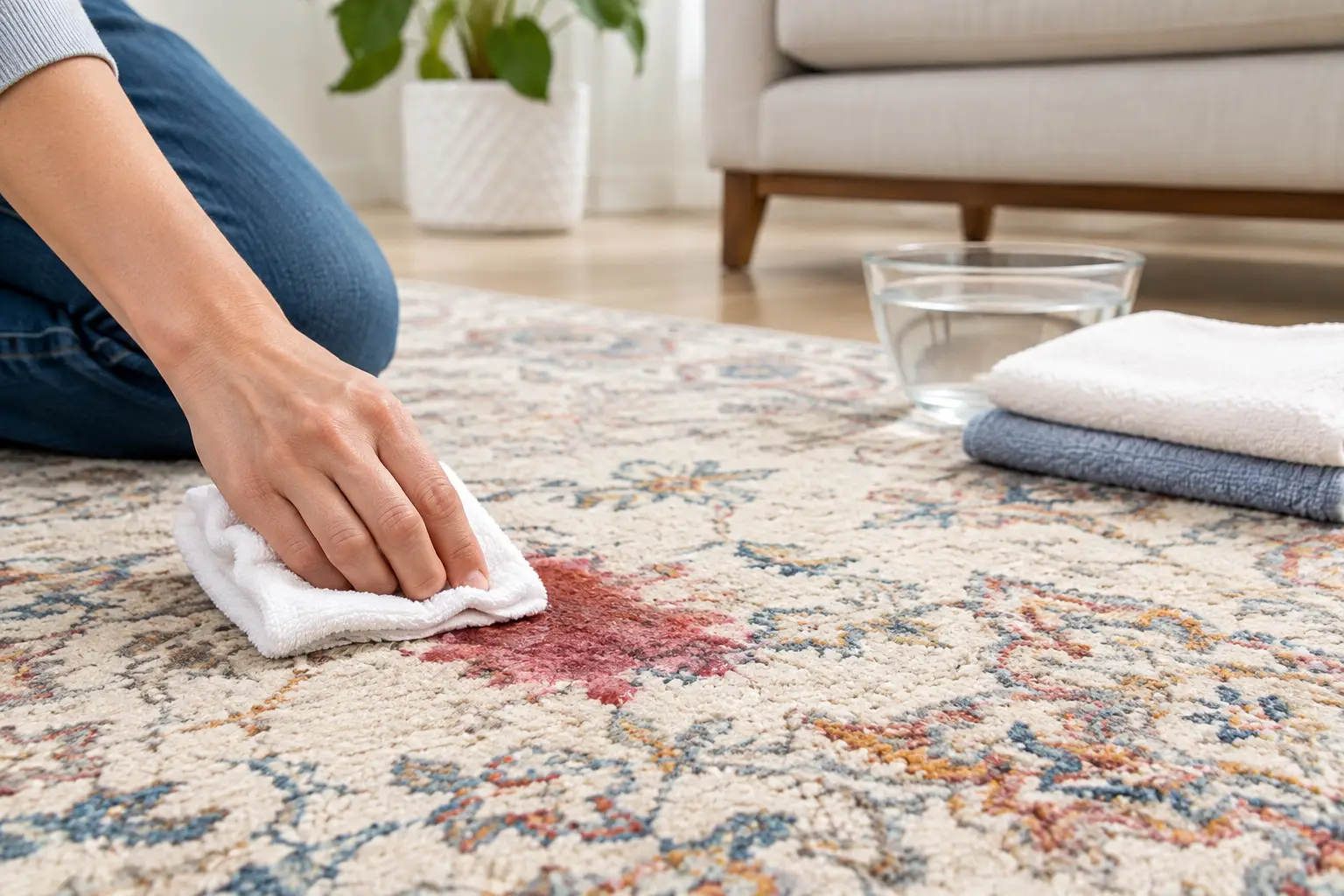
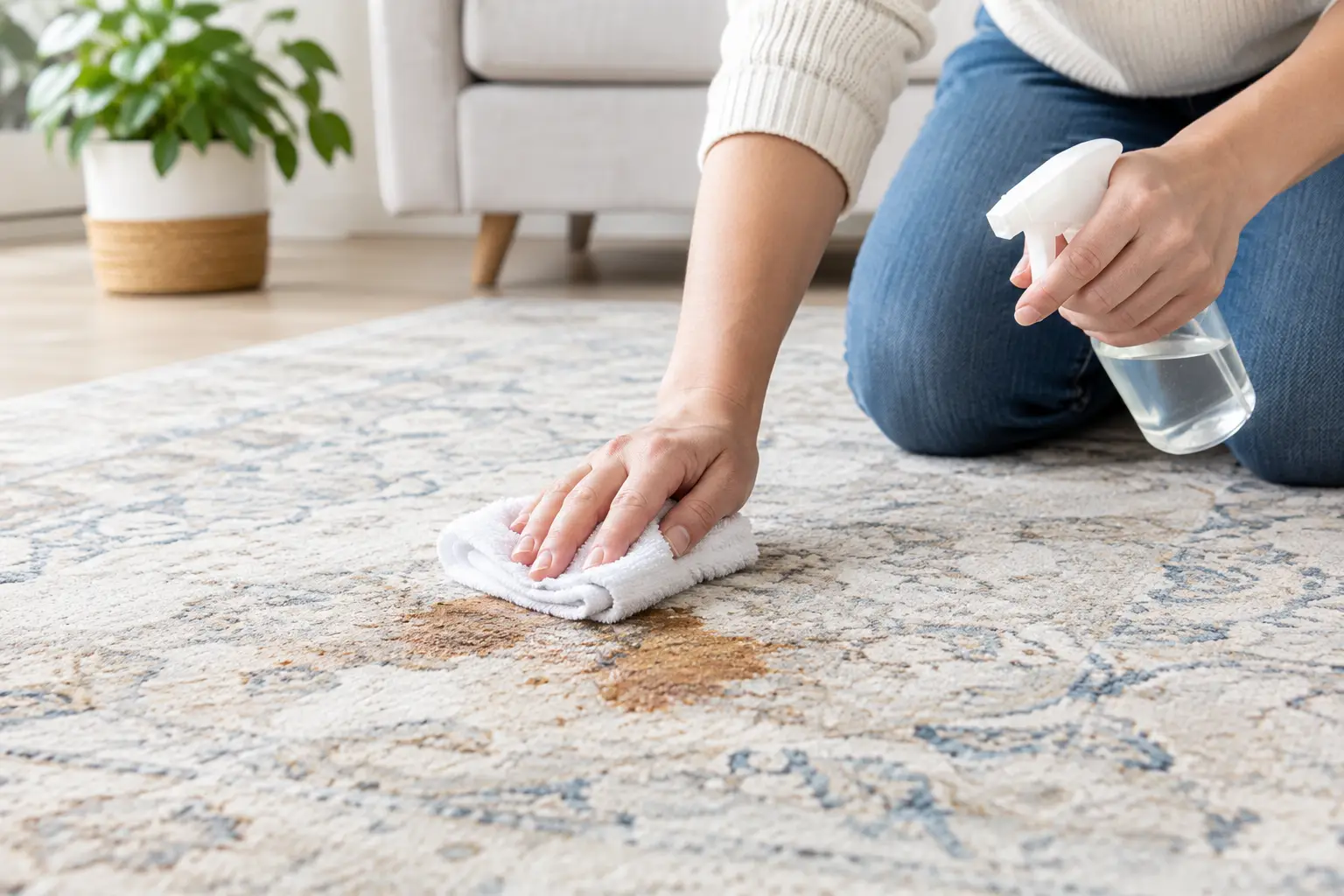
- Blot standing water from the surface with clean white towels.
- Lift the rug off wet flooring if it can be done without dragging or straining it.
- Place fans in the room to improve air circulation around the floor and rug.
- Remove furniture from the rug, or place protective blocks under furniture legs.
- Take clear photos of the rug, the affected room, and the water source for insurance documentation.
Avoid using household heat tools, such as a hair dryer, portable heater, or direct high heat. These can dry one area too quickly while moisture remains trapped elsewhere. Uneven drying can contribute to buckling, shrinkage, hardened fibers, and dye migration.
Why a Wet Rug Needs More Than Surface Drying
Many area rugs have several layers that hold moisture. Even a flatwoven rug can retain water within its fibers and along its edges. Hand-knotted Oriental rugs may have wool pile, cotton foundations, colored dyes, fringe, and dense construction that all react differently when saturated. Rugs with glued backings, latex, jute, or synthetic components can be particularly vulnerable to delamination, odor, and permanent texture changes.
A rug that feels dry on top may still be wet below. That hidden moisture can affect hardwood, laminate, and subflooring while creating the conditions for mildew. The longer a wet rug remains in place, the more likely it is that odors will become difficult to remove.
Flooded rugs also carry more than water. They may contain soil from the floor, residues from cleaning products, pet contamination, bacteria, or minerals from the water itself. Simply running a wet vacuum over the surface may remove some moisture, but it does not provide the controlled flushing and drying needed for many valuable rugs.
What Not to Do With a Flooded Rug
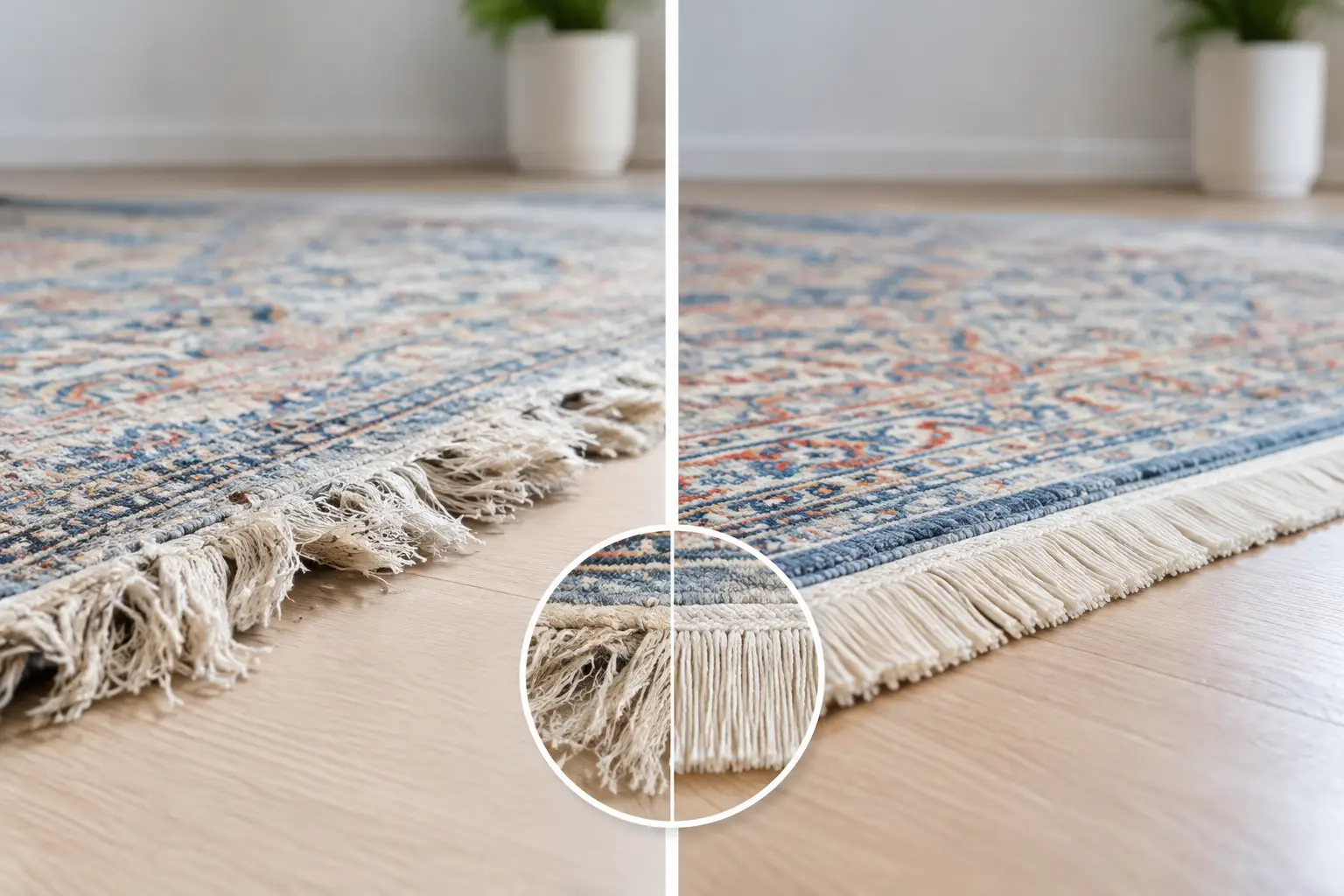
Good intentions can create expensive problems. Do not hang a saturated rug over a fence, railing, or clothesline. The concentrated weight may stretch the rug, break fibers, or pull its shape out of square. Likewise, do not leave it rolled up while waiting to decide what to do. A wet rolled rug holds moisture tightly and can develop a strong odor quickly.
Home steam cleaning is another risk after a water event. Adding more water without fully removing the existing moisture can push contamination deeper into the rug. Strong spot removers, bleach, and harsh disinfectants can also damage natural fibers and alter color, particularly on wool and silk rugs.
It is also wise not to assume every rug should receive the same treatment. A machine-made polypropylene rug may tolerate a different approach than an antique hand-knotted rug or a designer piece with a delicate backing. The fiber type, construction, age, color stability, and source of water all matter.
When Professional Rug Washing Is the Better Choice
Professional attention is strongly recommended when a rug was fully saturated, exposed to contaminated water, has an odor, shows bleeding colors, or is made of wool, silk, cotton, or other natural fibers. It is also the right choice when the rug is antique, hand-knotted, valuable, or simply too heavy to move safely.
A proper in-studio process begins with an evaluation of the rug’s materials, construction, dyes, and condition. The rug can then be dusted, washed using an appropriate water-based bathing process, rinsed to remove soils and residues, and dried under controlled conditions. This is very different from a quick surface extraction performed in the room.
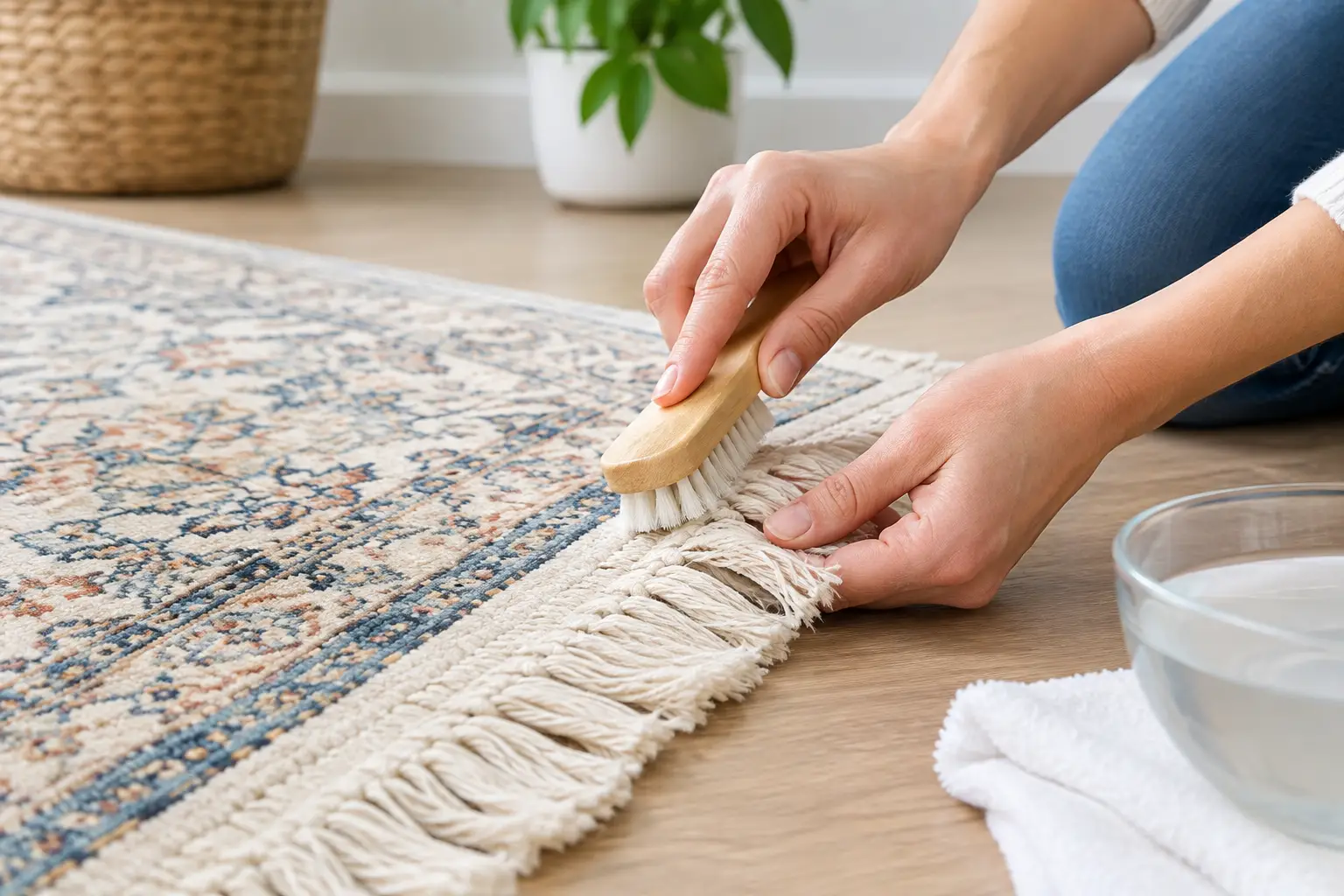
At 1st Impressions Oriental and Area Rug Cleaning, each rug is handled according to its individual needs, with care for fine fibers, fringe, colors, and structural details. Professional washing can also reveal concerns that are easy to miss at home, such as weakened edges, moth activity, backing failure, or color loss that may benefit from repair or correction.
Protect the Floor Beneath the Rug
Flooded rug recovery should include the floor, not just the textile. Once the rug is removed, dry the underlying surface promptly. Wood floors can cup or discolor, and moisture may remain under rug pads or along baseboards. If the rug was on a pad, inspect it carefully. A saturated pad can hold odor and moisture against the floor long after the rug itself has been moved.
In some cases, a pad can be cleaned and dried. In others, replacement is the more dependable choice, particularly if it has absorbed contaminated water or developed an odor. A quality custom-fit rug pad can help protect hard surfaces and prevent slipping once the room is fully dry and the rug is ready to return.
If water has affected a large area of flooring, traveled into walls, or remained in the home for more than a short period, a water mitigation specialist may be needed alongside rug care. Restoring the rug without addressing moisture in the room can lead to recurring problems.
How Long Do You Have to Save a Wet Rug?
The first 24 to 48 hours are especially important. That does not mean a rug is automatically beyond saving after two days, but delays increase the likelihood of odor, color bleeding, mold, and fiber deterioration. Fast action gives a professional cleaner more options and usually leads to a better outcome.
Some damage may not be fully reversible. A rug that has sat in contaminated water, suffered extensive dye migration, or developed mold within its foundation may need more intensive restoration, and there are situations where replacement is the safest recommendation. Honest evaluation matters because preserving a rug should never come at the expense of indoor health or the condition of the home.
If your rug has been affected by a leak, overflow, or storm-related water, take photos, keep it unrolled, and arrange an assessment as soon as possible. Careful handling in the first hours can protect the rug you chose for your home and the floors it was meant to enhance.