A wet rug can change from a small household inconvenience to a costly restoration issue faster than many homeowners expect. In Central Florida, humidity slows evaporation, and drying wet rugs the wrong way can trap moisture in the foundation, encourage odor, cause dyes to migrate, or leave natural fibers stiff and misshapen. The right response depends on how wet the rug is, what it is made of, and whether contaminated water, pet urine, or flooding is involved.
First, Determine What Made the Rug Wet
A clean-water spill from a tipped glass or an overflowing sink requires a different response than a rug exposed to a toilet backup, stormwater, or pet urine. The source of the water matters as much as the amount.
For a small clean-water spill, prompt blotting and controlled airflow may be enough. If the rug is saturated, however, moisture has likely reached the backing and floor beneath it. A rug can feel dry on the surface while its foundation remains wet, particularly when it is thick, wool, hand-knotted, or placed over a rug pad.
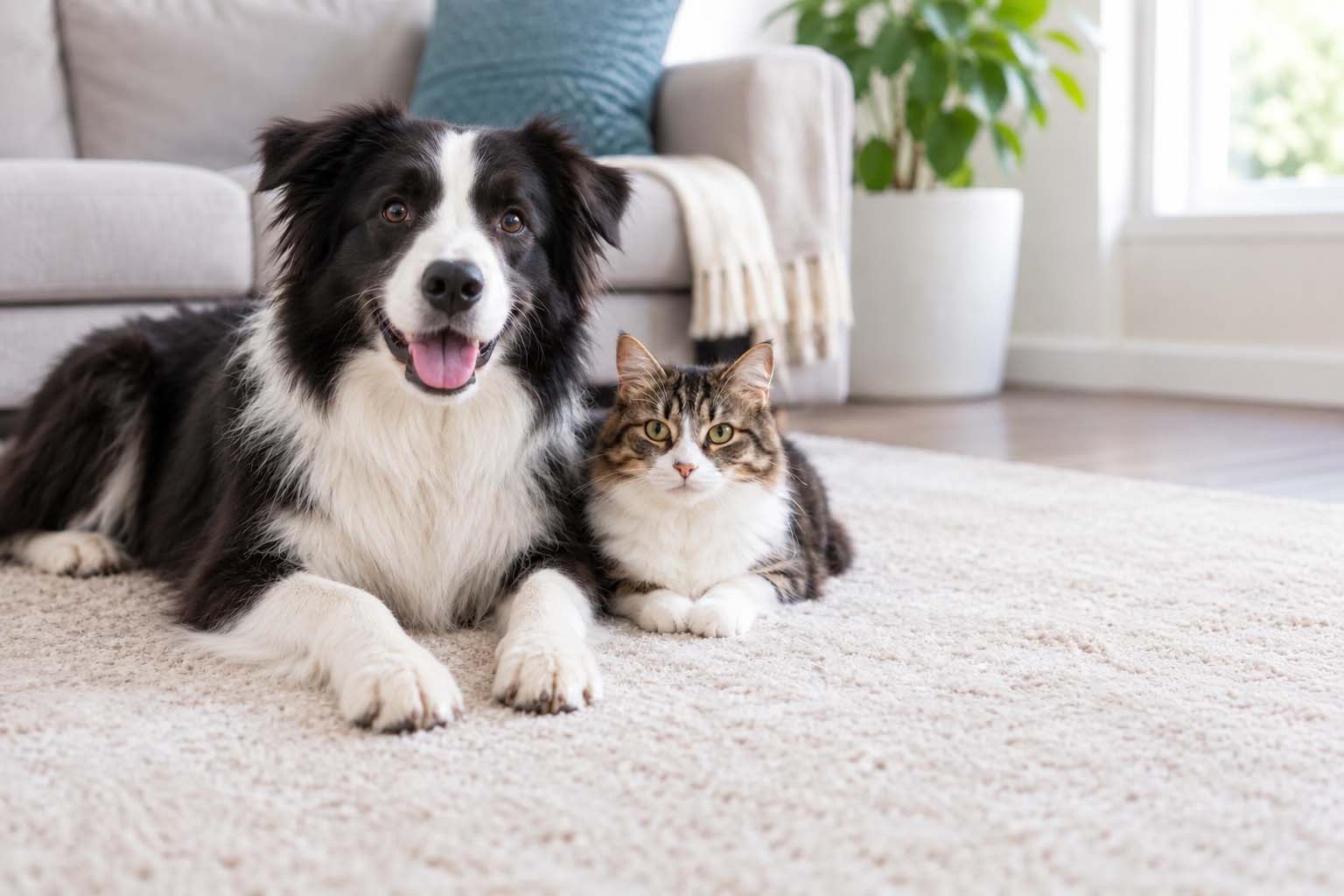
Water from a plumbing backup, outdoor flooding, or another potentially unsanitary source should be treated with more caution. Do not assume that drying alone makes the rug safe. Contaminants can remain in the fibers and foundation, and improper home treatment may set odors or create a health concern. Pet urine presents its own challenge because odor-causing residue can remain even after the visible moisture disappears.
Immediate Steps for Drying Wet Rugs
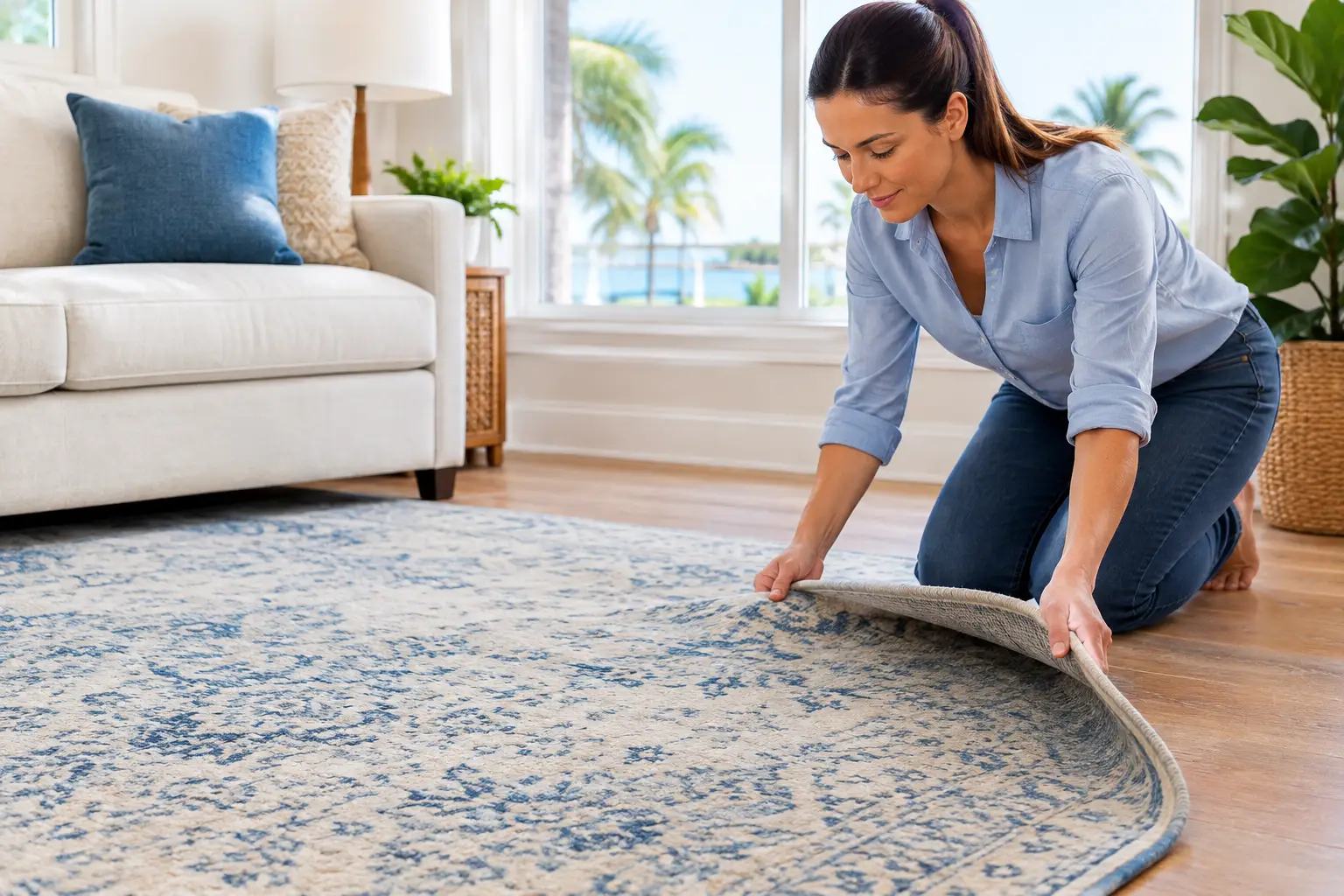
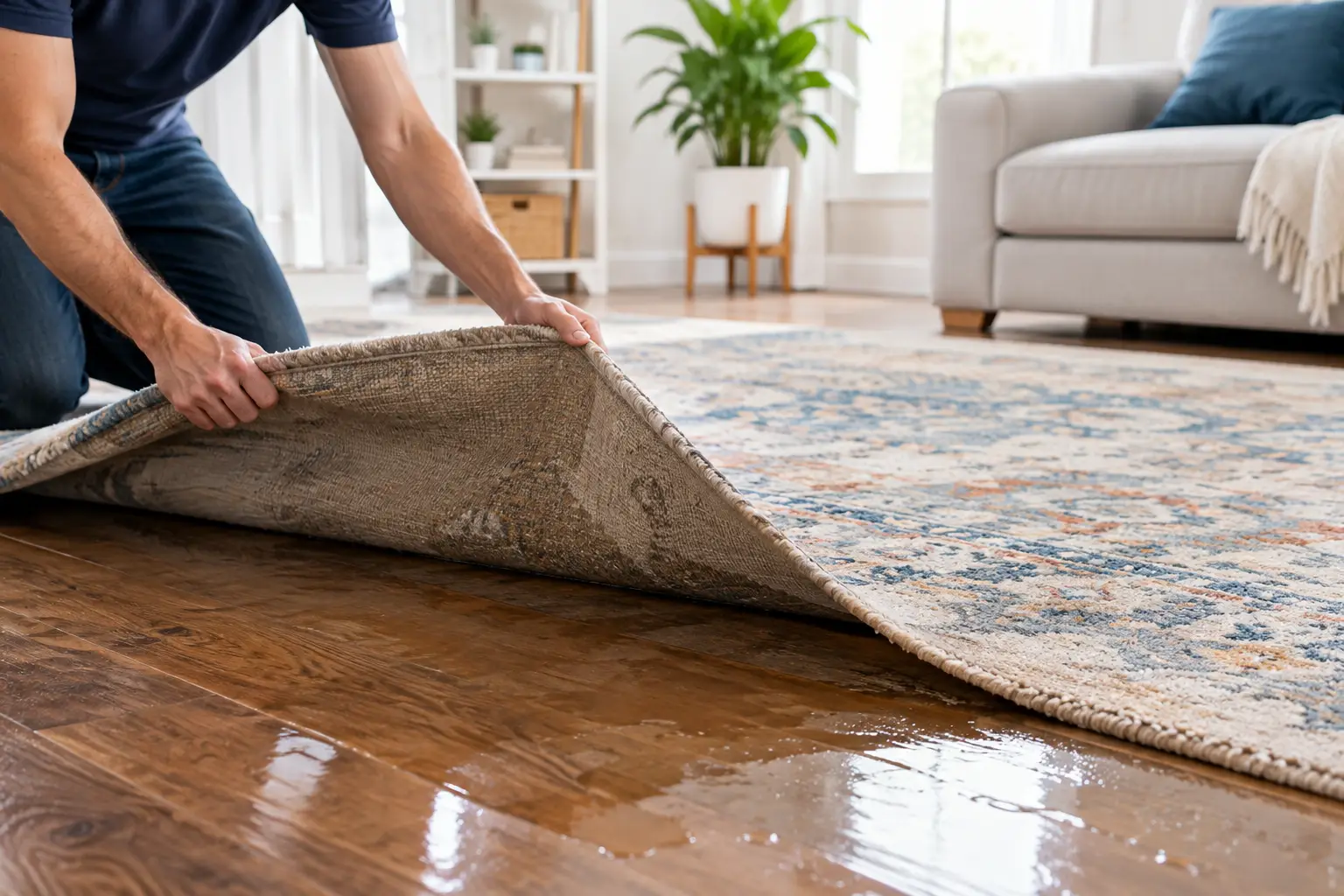
Begin by protecting the floor underneath the rug. If possible, move furniture off the affected area and carefully lift an edge of the rug. Check the floor, the underside of the rug, and the rug pad. Moisture against hardwood, laminate, or engineered flooring can lead to staining, warping, or finish damage.
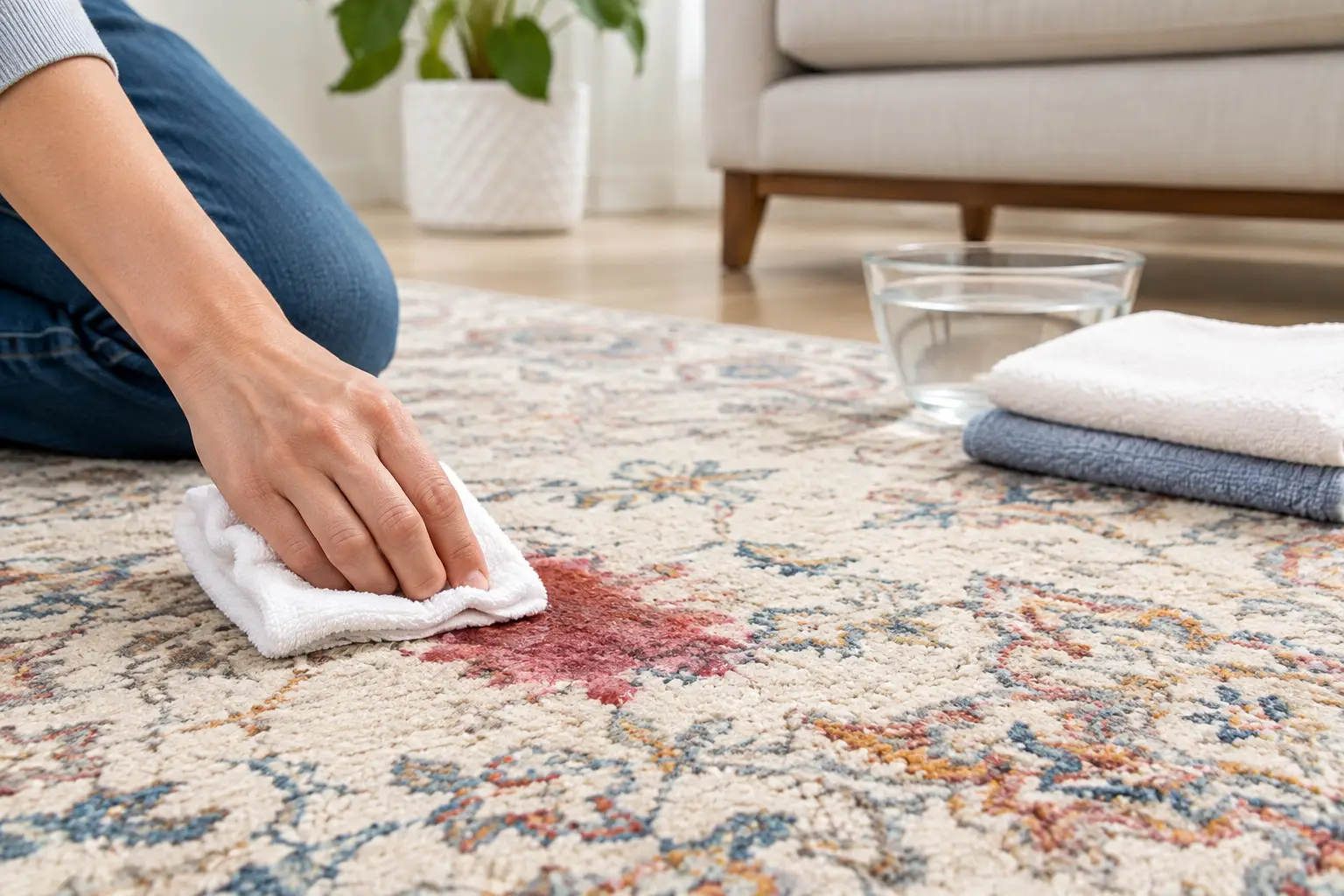
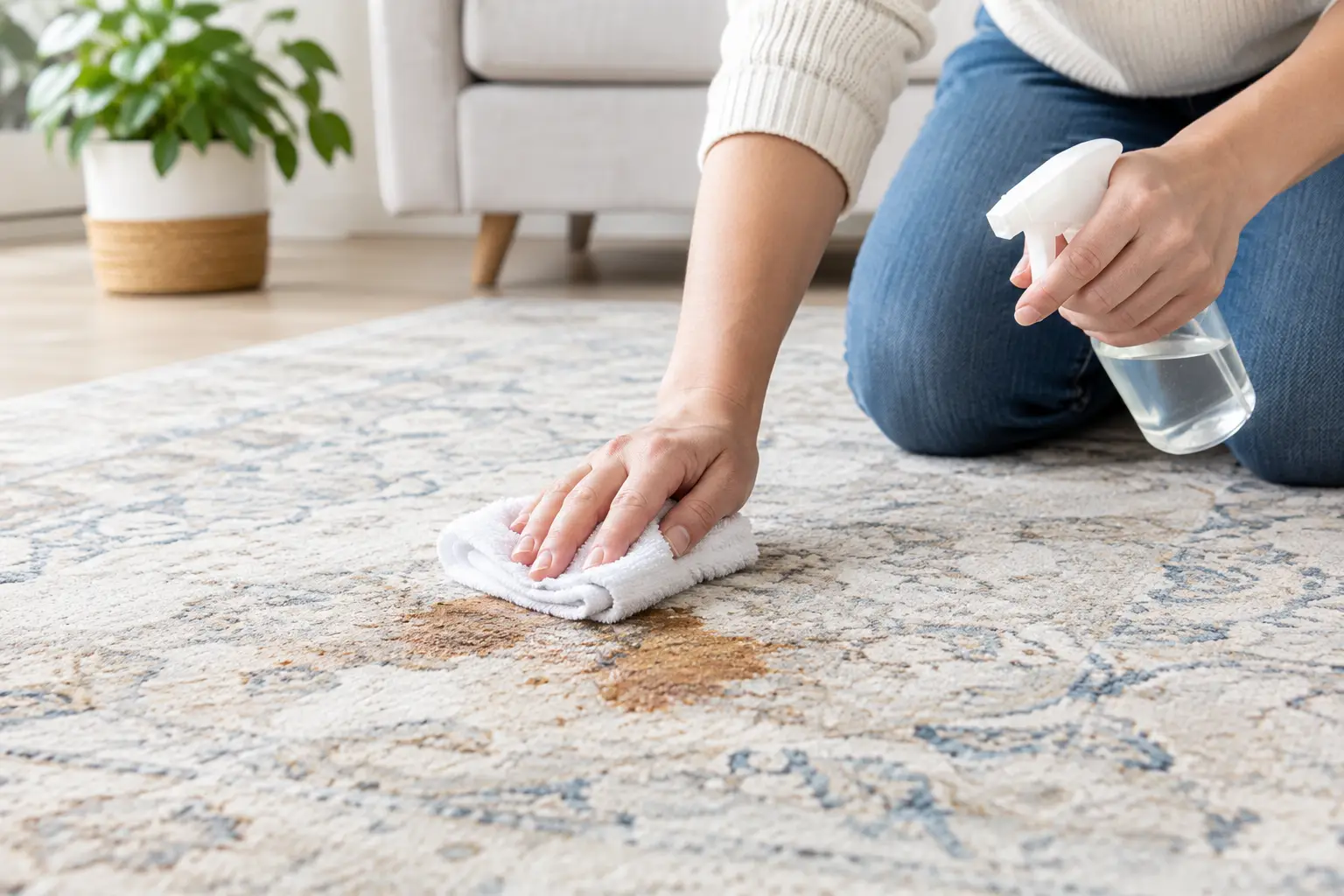
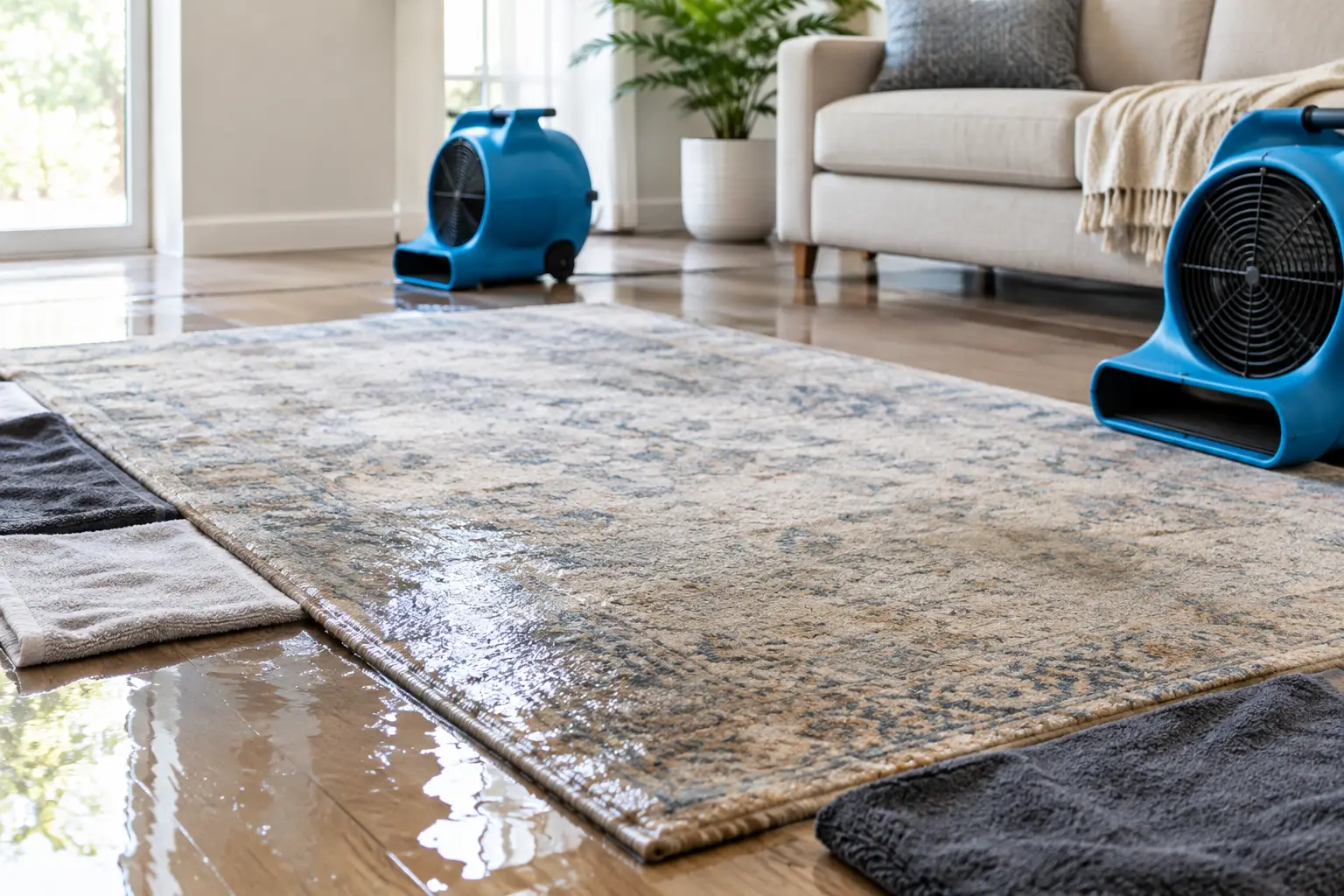
For a manageable clean-water spill, blot the rug with clean white towels. Press firmly rather than rubbing. Rubbing can push moisture deeper into the pile, distort delicate fibers, and spread color. Replace towels as they become saturated.
Use a wet-dry vacuum only if you know it is appropriate for the rug and the water is clean. Extraction is often more effective than towels for a large spill, but aggressive vacuuming can pull yarns or damage fringe on some handmade rugs. Never run a standard household vacuum over a wet rug.
Once excess moisture has been removed, increase air circulation. Set up fans so air moves across the rug rather than directly blasting one small area. Run air conditioning or a dehumidifier when possible. In Orlando-area homes, dehumidification is often just as important as airflow because outdoor air can carry substantial humidity.
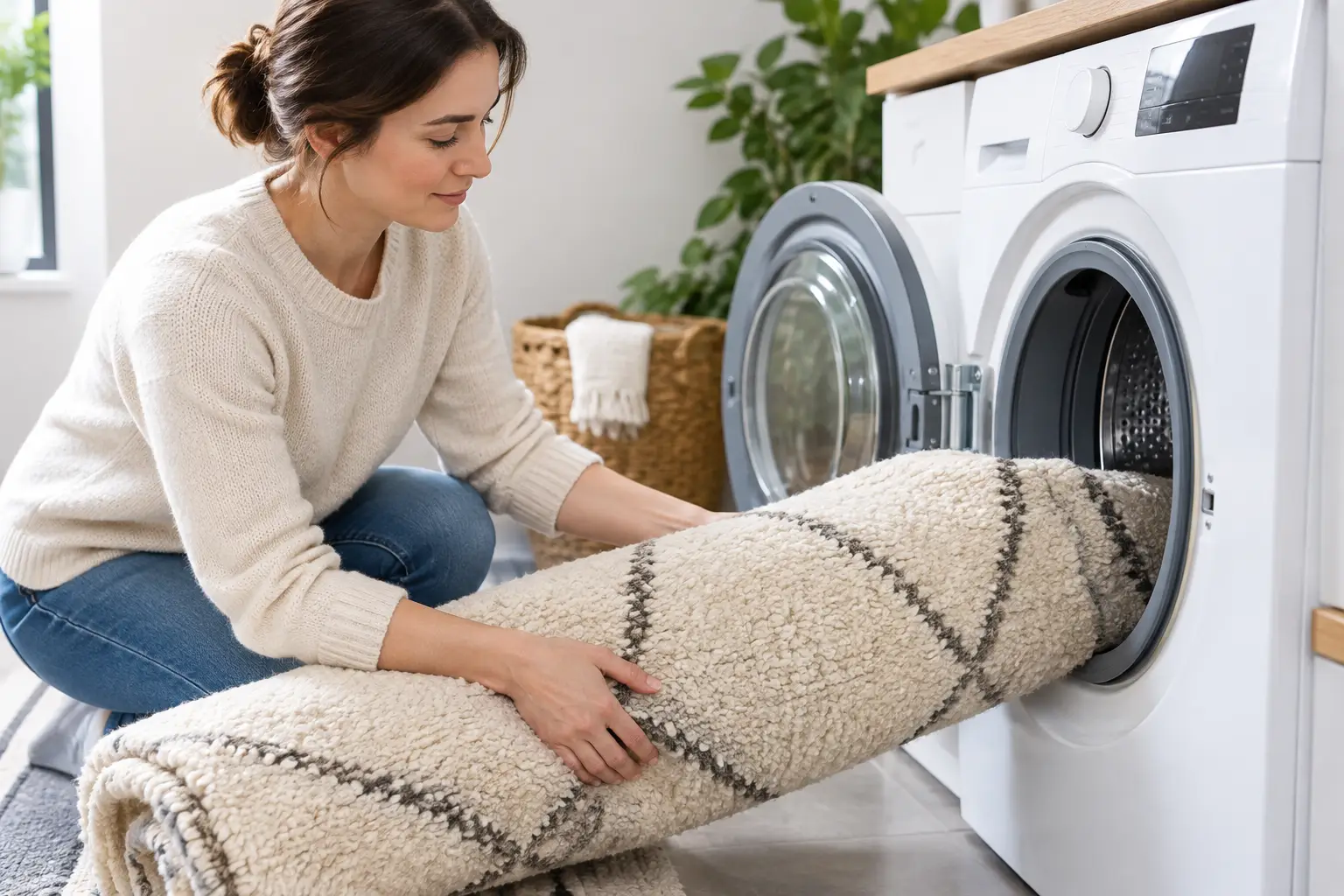
If the rug can be moved safely, hang it over a sturdy rail or place it in a clean, dry area with air circulating on both sides. Avoid folding or rolling a wet rug. Creases can hold moisture and may cause dye transfer, mildew growth, or permanent distortion.
Why Sun, Heat, and DIY Cleaning Can Backfire
It is understandable to want a wet rug dry as quickly as possible. Still, fast does not always mean safe. Direct sun and high heat are common shortcuts that can create more damage than they solve.
Sunlight can fade dyes, especially on Oriental rugs, antique textiles, silk, viscose, and richly colored designer rugs. Intense heat from a hair dryer, space heater, or heat gun can shrink wool, harden natural fibers, loosen adhesives, and warp synthetic backings. Heat may also cause some dyes to bleed, leaving color transfer that cannot be corrected with simple cleaning.
Avoid applying household stain removers, bleach, disinfectants, or heavily fragranced products to a saturated rug. These products may react with the fibers or dyes, leave a residue that attracts soil, and complicate later professional cleaning. A rug that looks brighter immediately after a chemical treatment may later show fading, yellowing, or weakened fibers.
The same caution applies to steam cleaners. Steam adds heat and moisture at the moment you need controlled extraction and drying. It can be particularly risky on wool, silk, viscose, jute, cotton foundations, and rugs with unstable dyes.
Be Especially Careful With Handmade and Natural-Fiber Rugs
Hand-knotted Oriental rugs, wool rugs, silk rugs, viscose rugs, and rugs with cotton or jute foundations need thoughtful handling after water exposure. Their fibers and construction do not behave like wall-to-wall synthetic carpet.
Wool can hold a surprising amount of water without feeling completely soaked. Cotton foundations may shrink as they dry. Jute can weaken, stain, or develop a musty odor. Silk and viscose are vulnerable to texture changes, color loss, and watermarking. Even a well-made rug may need a controlled wash and drying process if it has been thoroughly saturated.
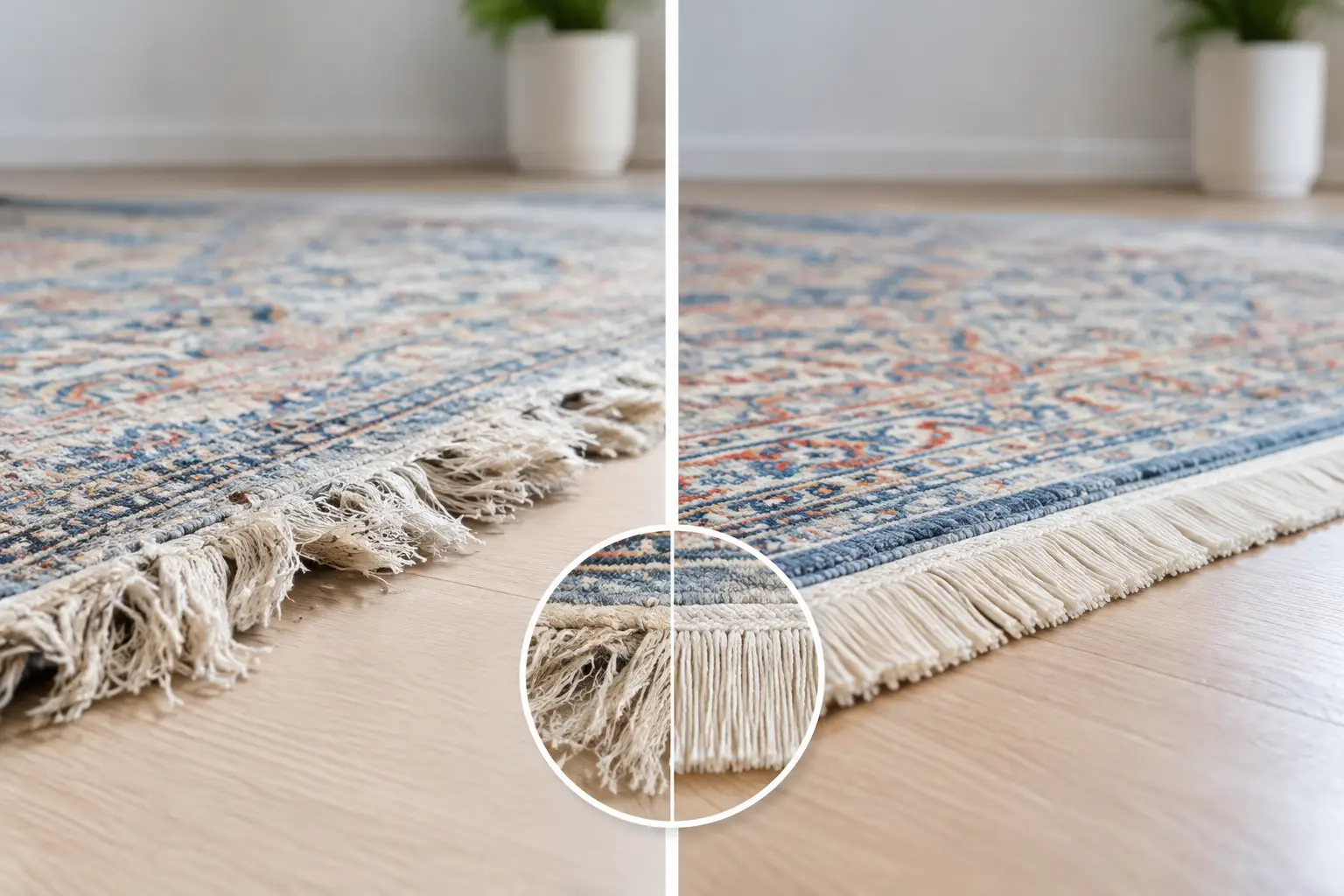
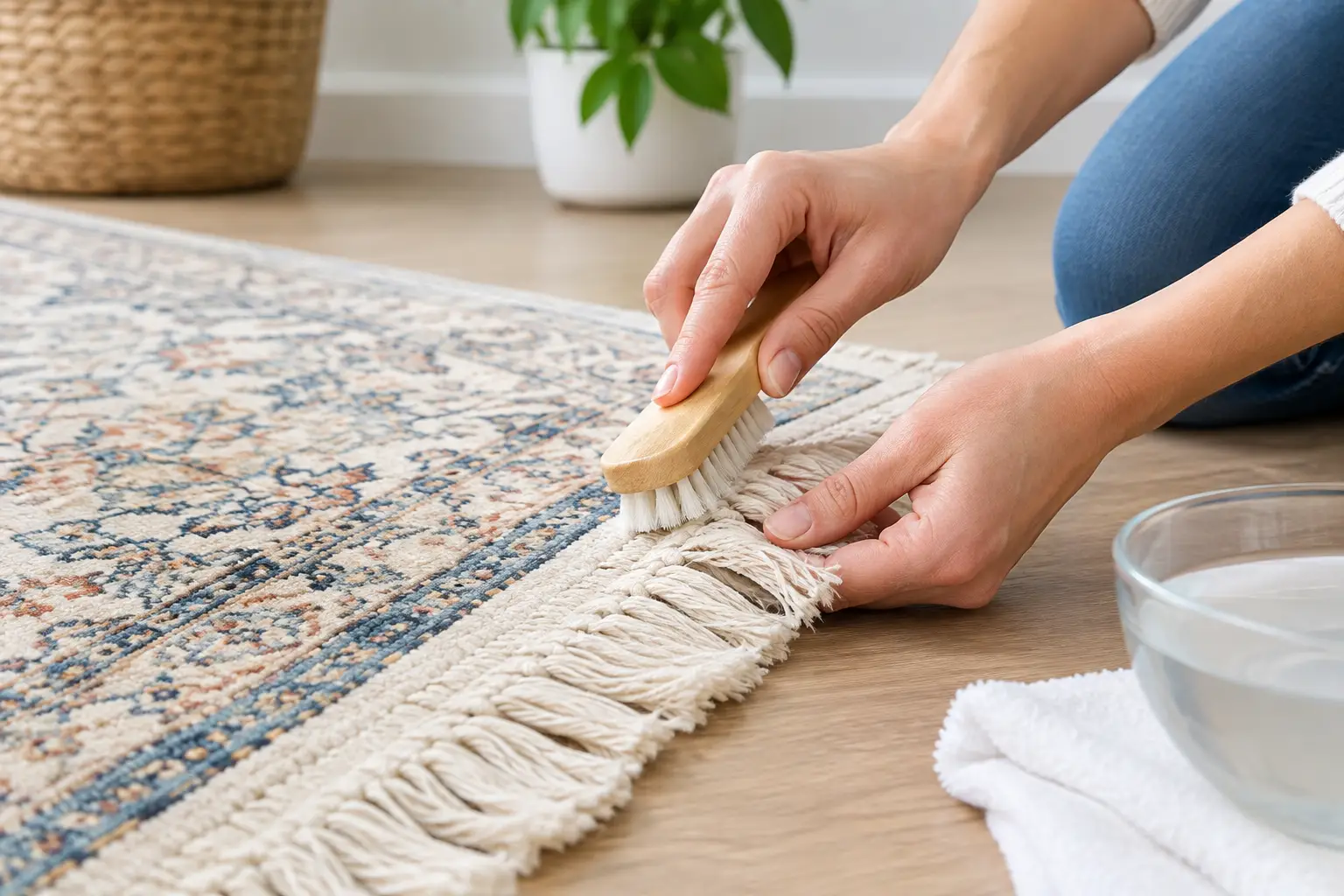
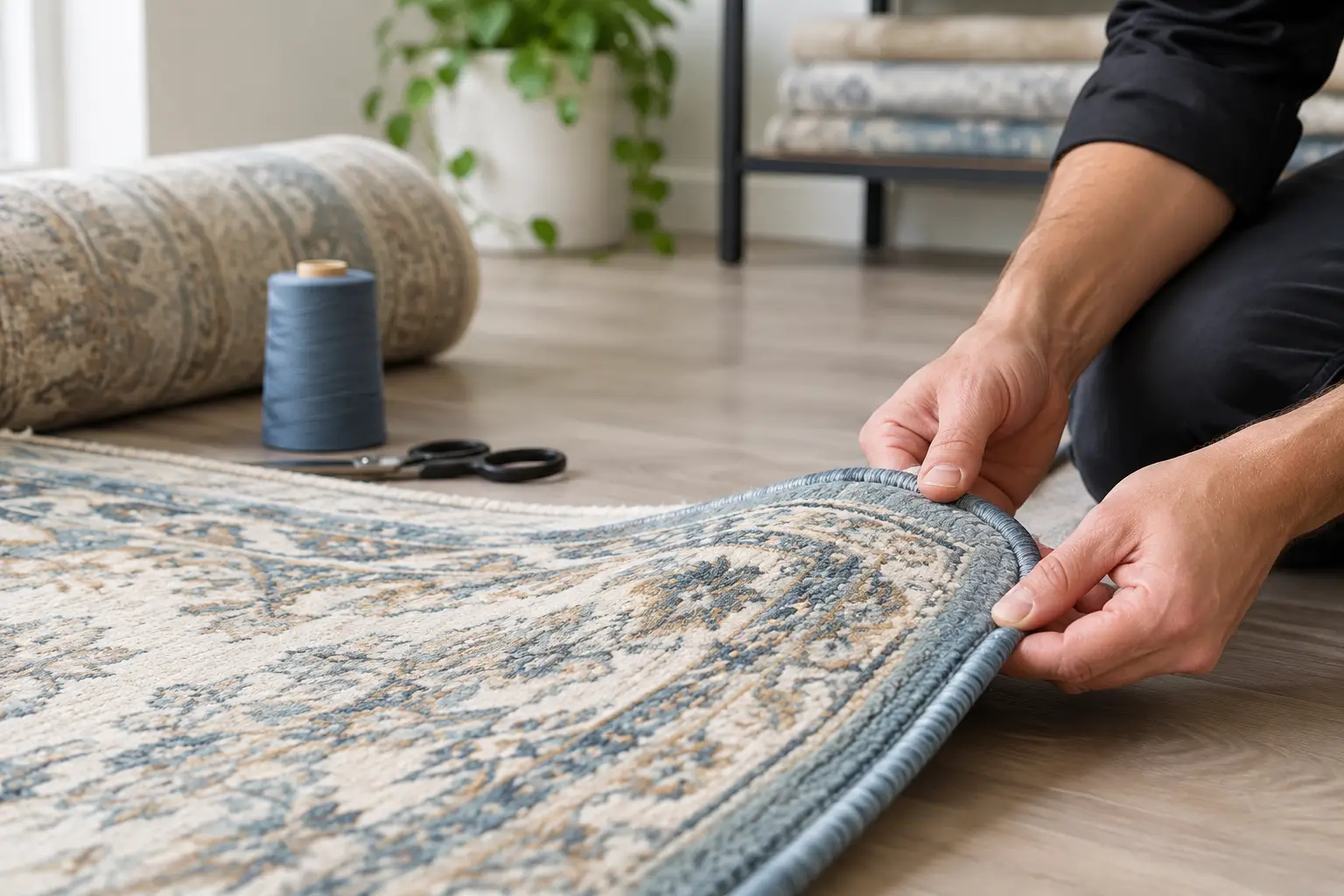
Fringe deserves attention as well. Fringe is often part of the rug’s structural foundation, not a decorative trim that can simply be replaced. Pulling, brushing, or forcefully extracting wet fringe can cause unraveling or breakage.
Do Not Forget the Rug Pad and Floor
A wet rug pad is often the hidden reason a rug continues to smell damp after it appears dry. Pads absorb water and hold it against the underside of the rug and the flooring. Depending on the pad material and amount of saturation, replacement may be the safer choice.
Remove the pad from the area so both sides can be inspected. If it has an odor, discoloration, crumbling material, or signs of mold, do not place it back under the rug. A quality custom-fit pad can help support a rug and protect the floor, but it also needs to be dry and clean before reuse.
Check hard floors carefully. Dry the surface and the seams between boards or tiles. If moisture has traveled beneath flooring, or if wood begins to cup or discolor, a flooring professional may be needed. Addressing the floor promptly protects the rug and prevents a much larger repair later.
Signs the Rug Needs Professional Attention
A professional rug care center is a wise next step when the rug is fully soaked, valuable, sentimental, handmade, or exposed to contaminated water. It is also the right choice when there is pet urine, a persistent odor, dye bleed, browning, mildew, or a color change after drying.
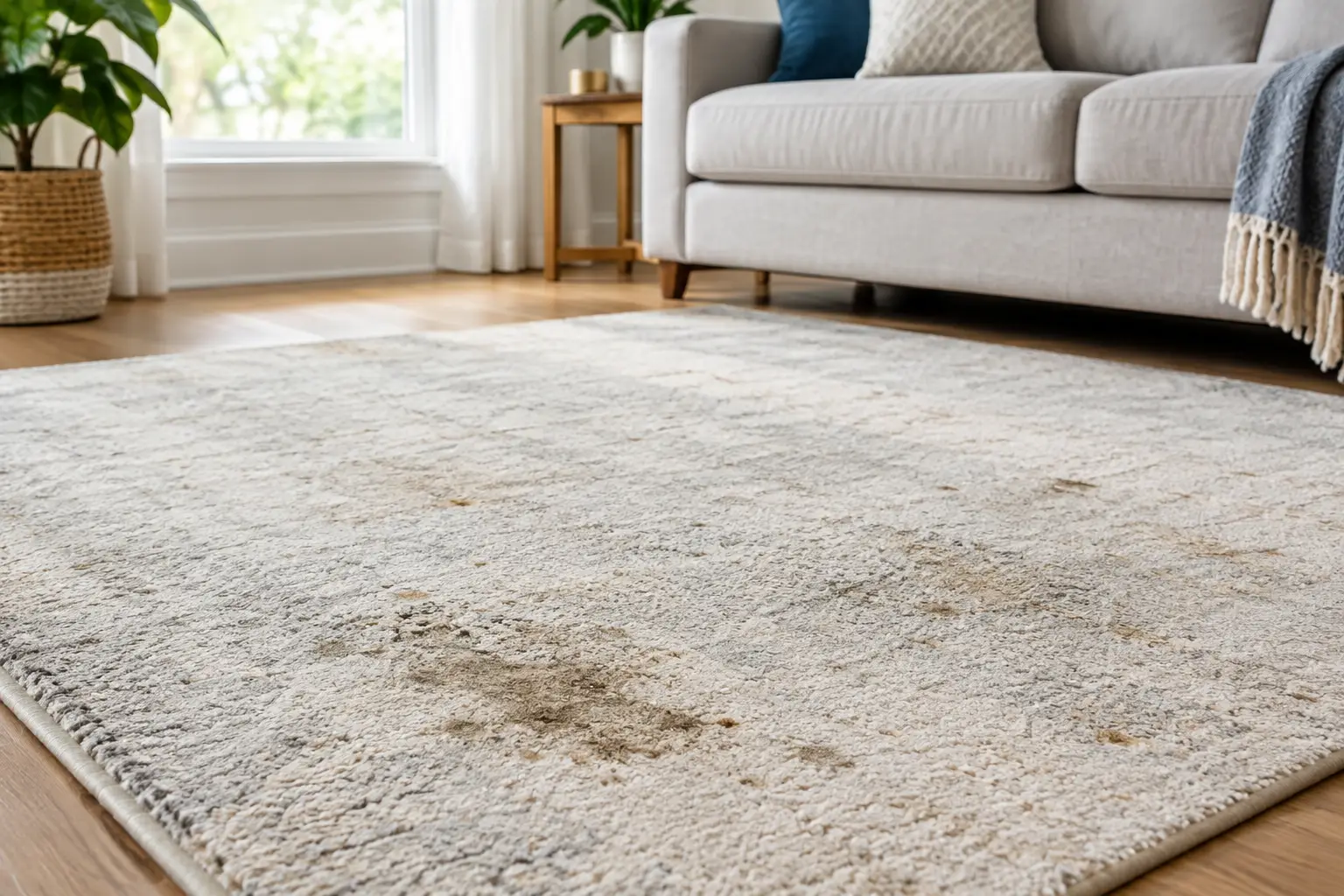
Watch for these warning signs: a sour or musty smell, colors transferring onto towels, rippling or curling edges, stiff fibers, dark spots on the back of the rug, or an area that remains cool and damp after a day of airflow. These conditions suggest moisture or residue is still present below the surface.
Professional treatment is not simply a matter of making the rug look clean again. Proper care may include controlled dust removal, water-based washing suited to the fiber type, urine decontamination when needed, careful rinsing, color-stabilizing measures, and thorough drying in a controlled environment. This approach is especially valuable for rugs that cannot safely be treated with harsh chemicals or bleach.
At 1st Impressions Oriental and Area Rug Cleaning, rugs are evaluated by their fiber, construction, condition, and water exposure before a care plan is recommended. For homeowners in Orlando, Winter Park, Winter Garden, and surrounding communities, pickup and delivery can also prevent the additional risk of trying to transport a heavy, saturated rug yourself.
Prevent the Next Water Emergency
Some water accidents cannot be avoided, but a few habits can reduce the damage. Use rug pads that help prevent slipping and create a protective layer between rug and floor. Keep pet accident areas monitored, address plumbing leaks promptly, and avoid placing valuable rugs where repeated splashing is likely. During heavy storms, move fine rugs away from vulnerable doors, windows, and low areas if water intrusion is a concern.
Most of all, trust what you see and smell. If a rug remains damp, smells off, or shows any change in color or shape, it needs more than another round of fans. Acting early gives a fine rug its best chance to dry cleanly, retain its character, and remain part of your home for years to come.