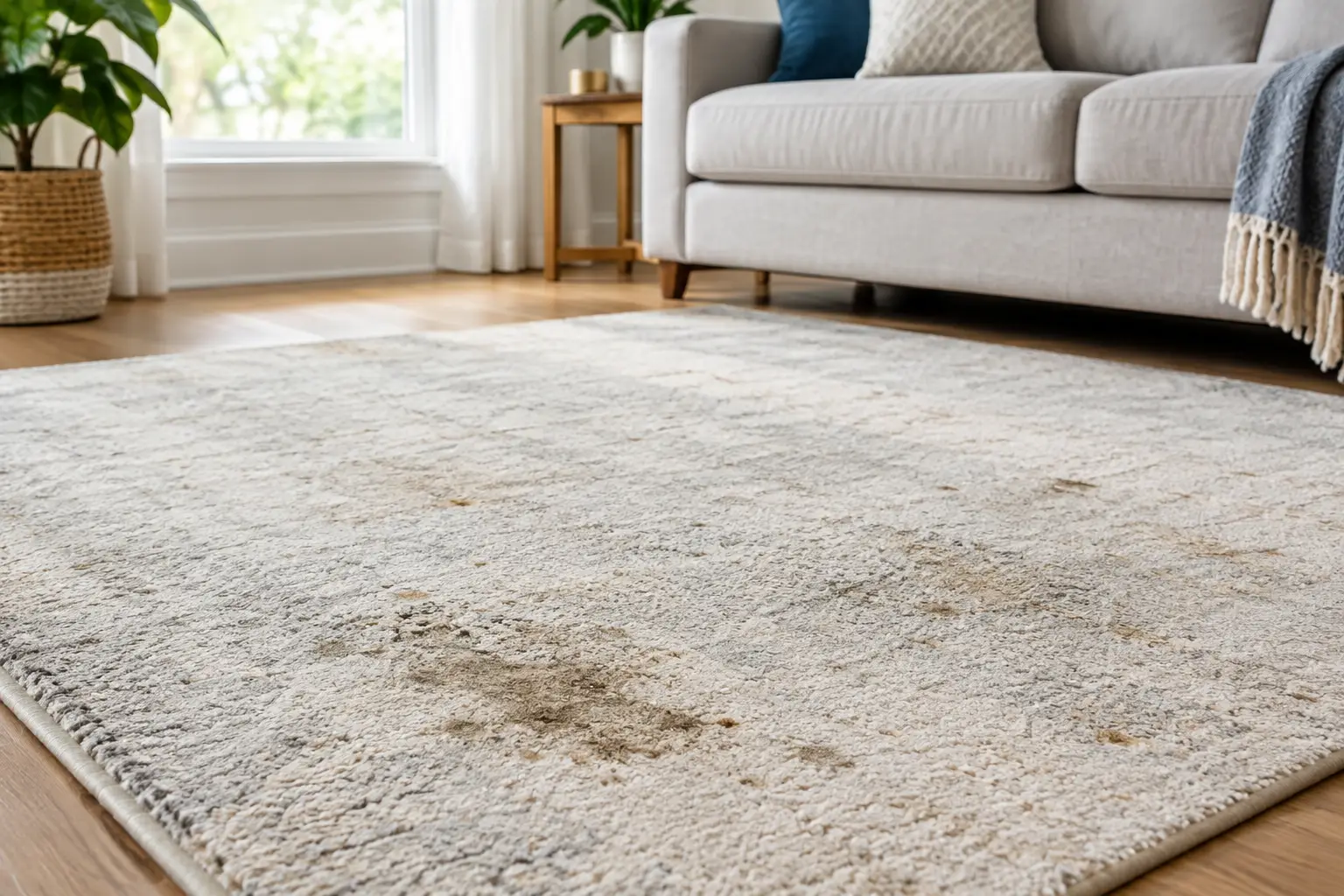
A spill on an area rug creates a quick decision: act fast, but do not panic-clean. The wrong product, too much water, or hard scrubbing can spread a stain, distort the pile, or cause dye colors to run. Knowing how to remove rug stains starts with treating the rug as a textile, not just another household surface.
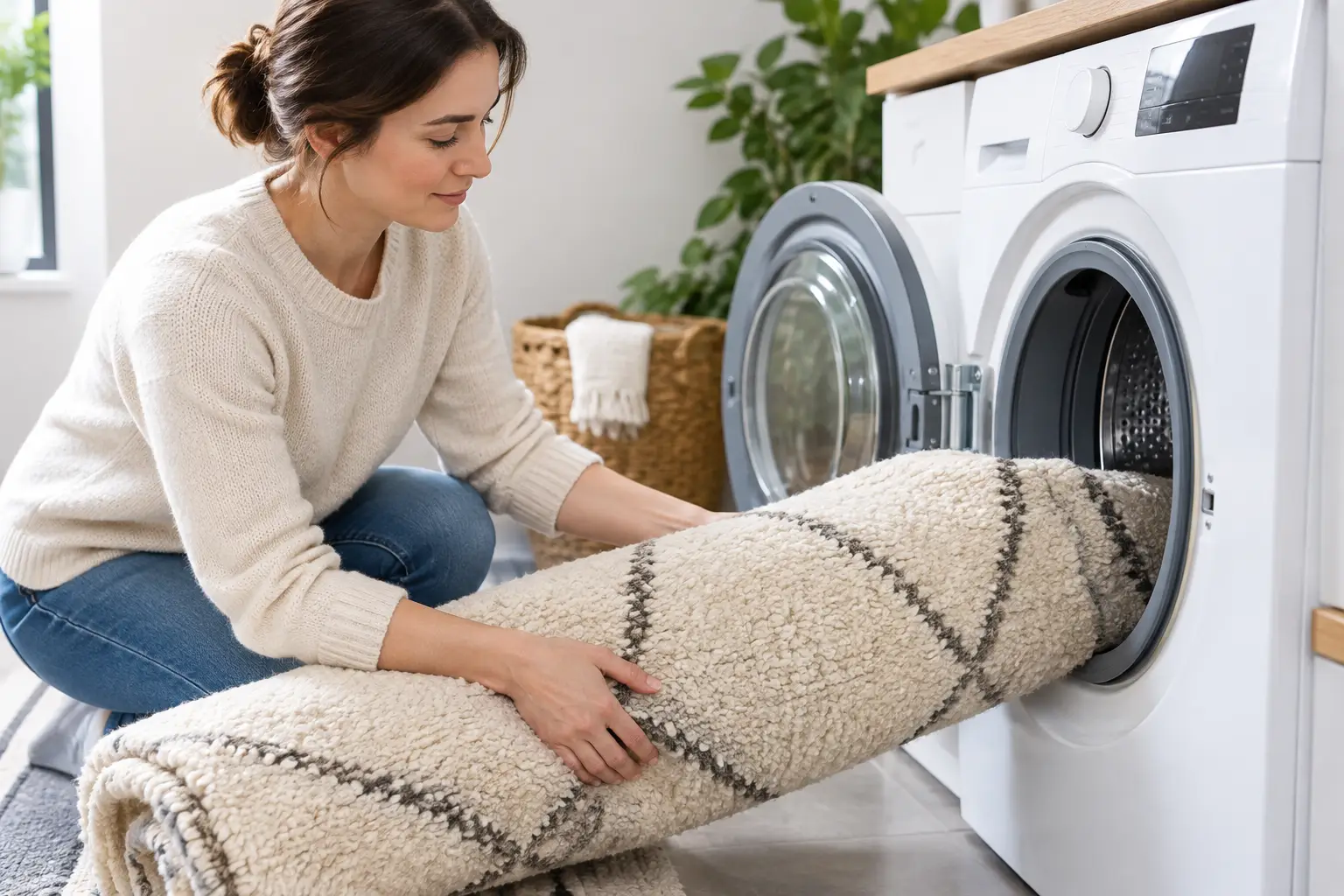
For a washable synthetic rug, a careful spot treatment may be enough. For an Oriental rug, hand-knotted wool rug, silk rug, or a piece with sentimental or financial value, restraint is often the safer choice. A visible spot may be only part of the problem, especially when liquid has reached the rug backing, fringe, or pad beneath it.
How to Remove Rug Stains in the First Few Minutes
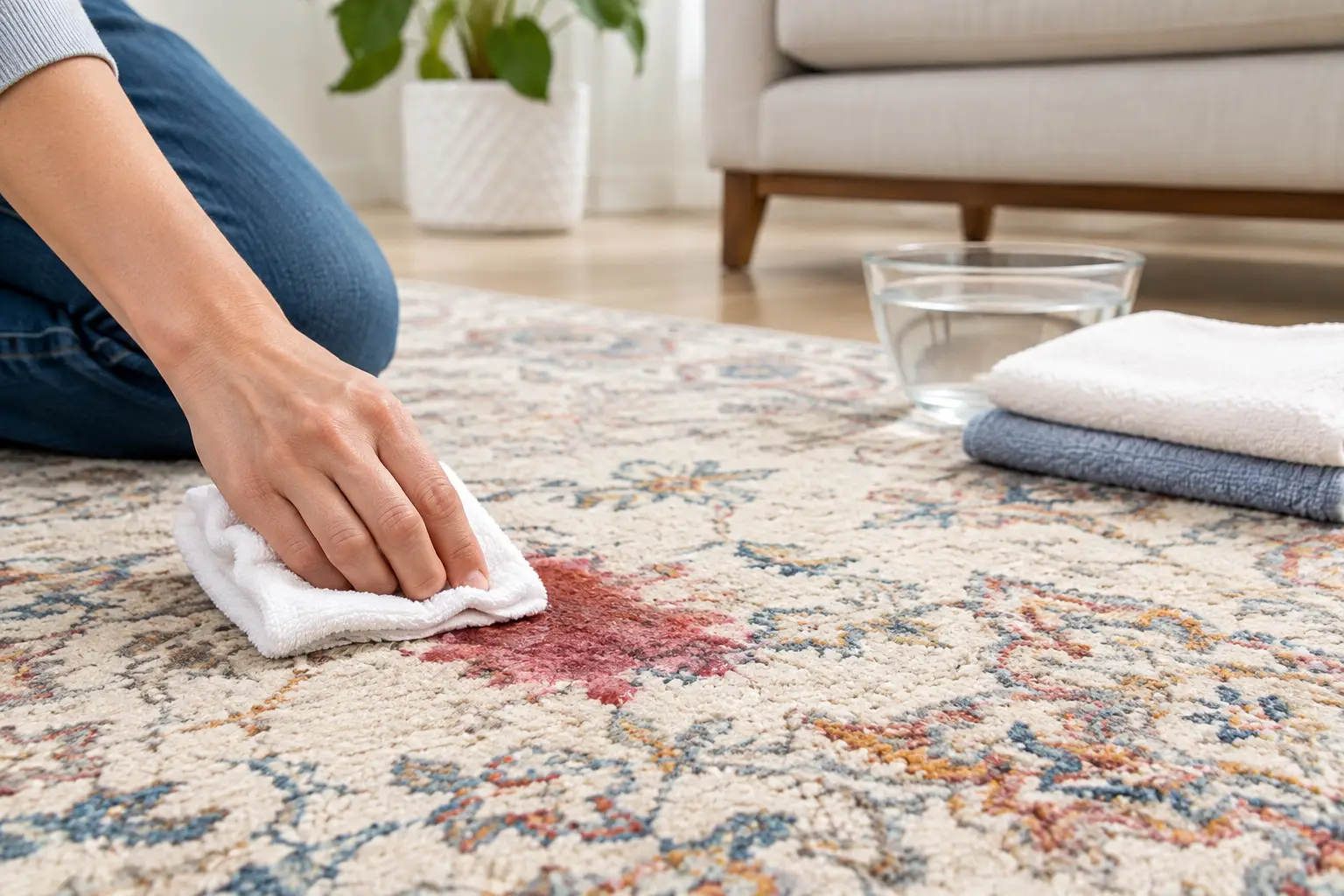
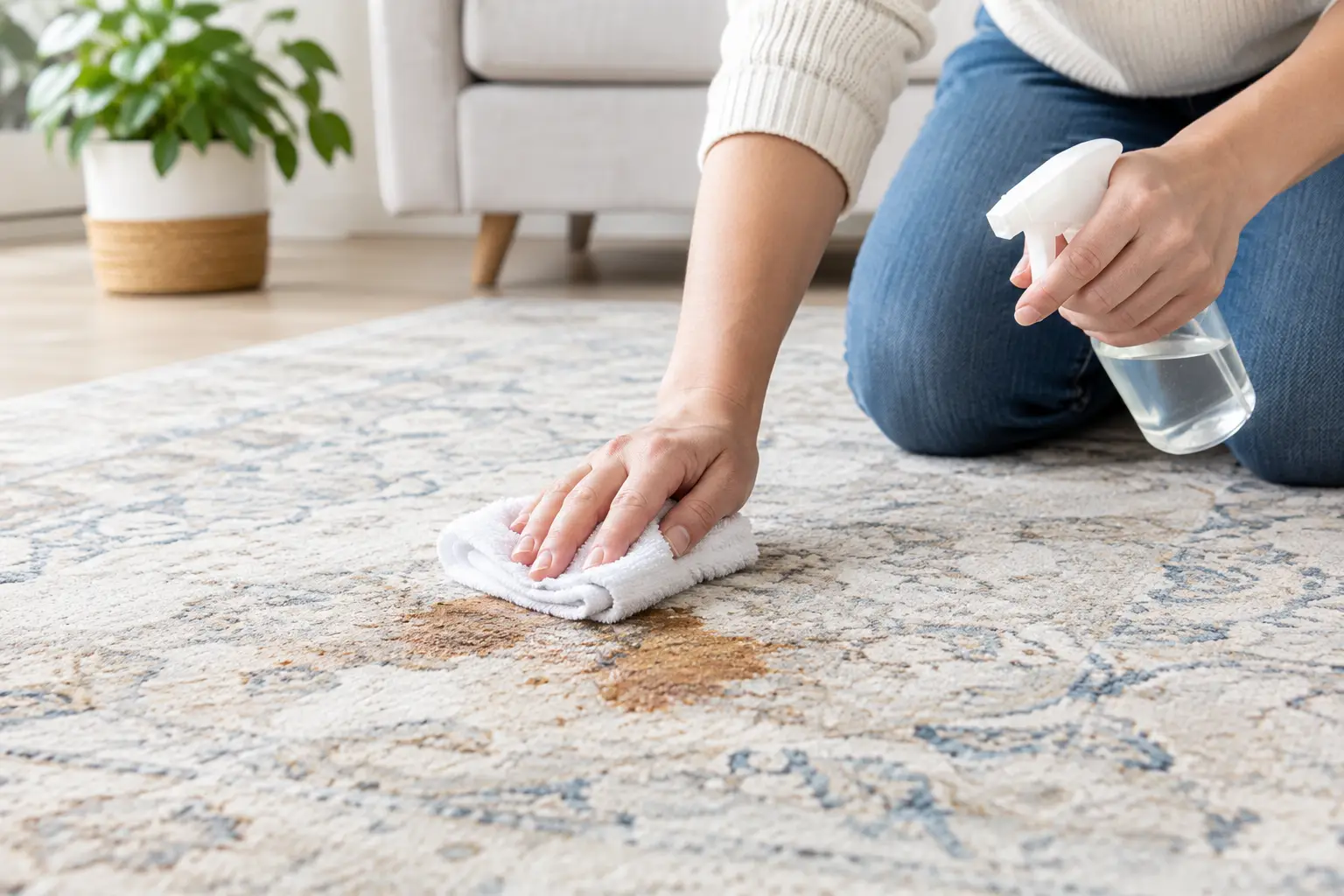
Begin by removing solids without pushing them deeper into the fibers. Use the edge of a spoon or a dull knife to lift food, mud, or other debris. Then blot the affected area with a clean, white absorbent towel. Press down firmly, lift, and move to a dry section of the towel as it picks up moisture.
Do not rub. Rubbing frays fibers, spreads pigment across a larger area, and can work the stain deeper into the foundation of the rug. Avoid colored towels as well, since their dye can transfer when wet.
If the spill is fresh and the rug’s fibers are known to be colorfast, lightly dampen a white cloth with cool water and continue blotting from the outer edge toward the center. This approach helps prevent a ring from forming around the stain. Keep the moisture controlled. Soaking a rug in place can leave dampness trapped in the backing or pad, creating odor and increasing the risk of color migration.
After blotting, place a dry white towel over the area and apply light weight for several minutes. Allow the rug to dry fully with good air circulation before walking on it or placing furniture back over it.
Identify the Rug Before Choosing a Cleaner
The same stain can require very different care depending on the rug. Wool is naturally resilient, but it can react poorly to high-alkaline products and aggressive brushing. Silk fibers are more delicate and can lose luster or develop water marks. Viscose, bamboo silk, and some rayon blends are especially vulnerable to browning, pile distortion, and permanent texture changes when treated incorrectly.
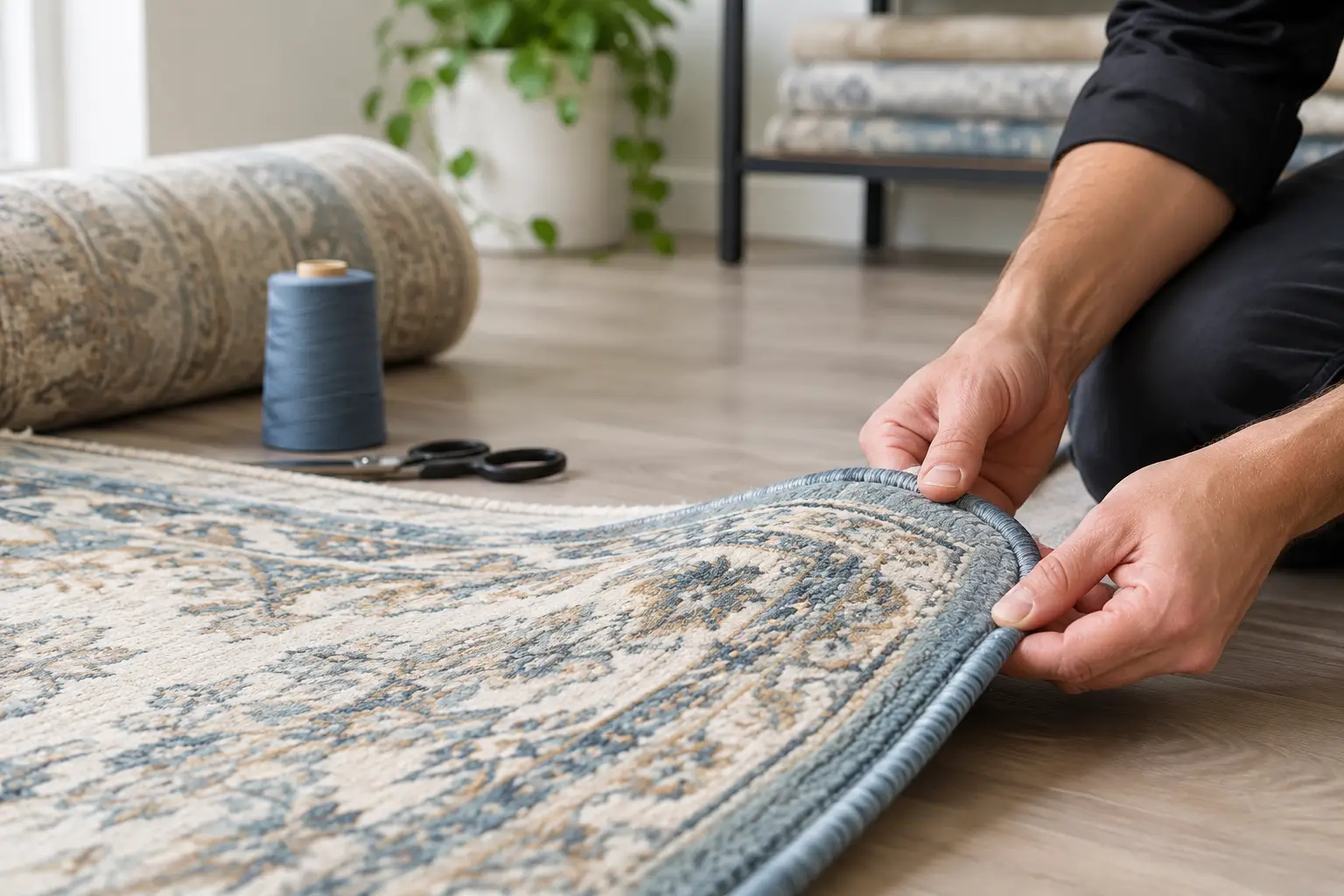
Construction matters, too. A hand-knotted Oriental rug has a fiber pile attached to a foundation that may hold moisture and contaminants long after the surface looks dry. Tufted rugs often use adhesive in their backing, which can weaken if excessively wet. Machine-made rugs may tolerate a different cleaning process, but their dyes can still bleed.
Before using any cleaning solution, check the manufacturer’s care tag if one is available. Test a small, hidden area with a barely damp white cloth. If color transfers to the cloth, stop. Home spot cleaning is not worth risking a larger color problem.
Match the Response to the Type of Stain
Food, Coffee, Wine, and Juice
For most fresh food and beverage spills, prompt blotting with cool water is the first and safest response. Avoid heat. Hot water can set protein-based stains and may affect dyes. If a stain remains after controlled blotting, resist the temptation to layer several household cleaners on top of one another. Mixed products can leave residue that attracts soil or create a reaction that is harder to correct later.
Red wine, dark coffee, tea, and brightly colored drinks can leave dye stains even when the spill is handled quickly. The right treatment depends on the rug’s fiber and dye stability. Bleach and harsh stain removers can lighten the surrounding fibers, leaving a pale spot that is often more noticeable than the original stain.
Mud and Dirt
Let mud dry completely before attempting removal. Once dry, gently vacuum the area without using an aggressive beater bar on delicate rugs. Dry soil is easier to lift than wet mud, which can smear into the pile. If discoloration remains, it may be embedded soil rather than a simple surface mark and may need a full wash.
Grease, Makeup, and Oil-Based Spills
Oil-based stains are difficult because water alone does not dissolve them. Blot excess oil first, and avoid pouring solvent or degreaser directly onto the rug. These products can damage fibers, dissolve backing materials, or affect dye color. Makeup, cooking oil, lotion, and wax frequently require controlled specialty treatment followed by thorough rinsing, not a quick surface spray.
Pet Urine and Odor
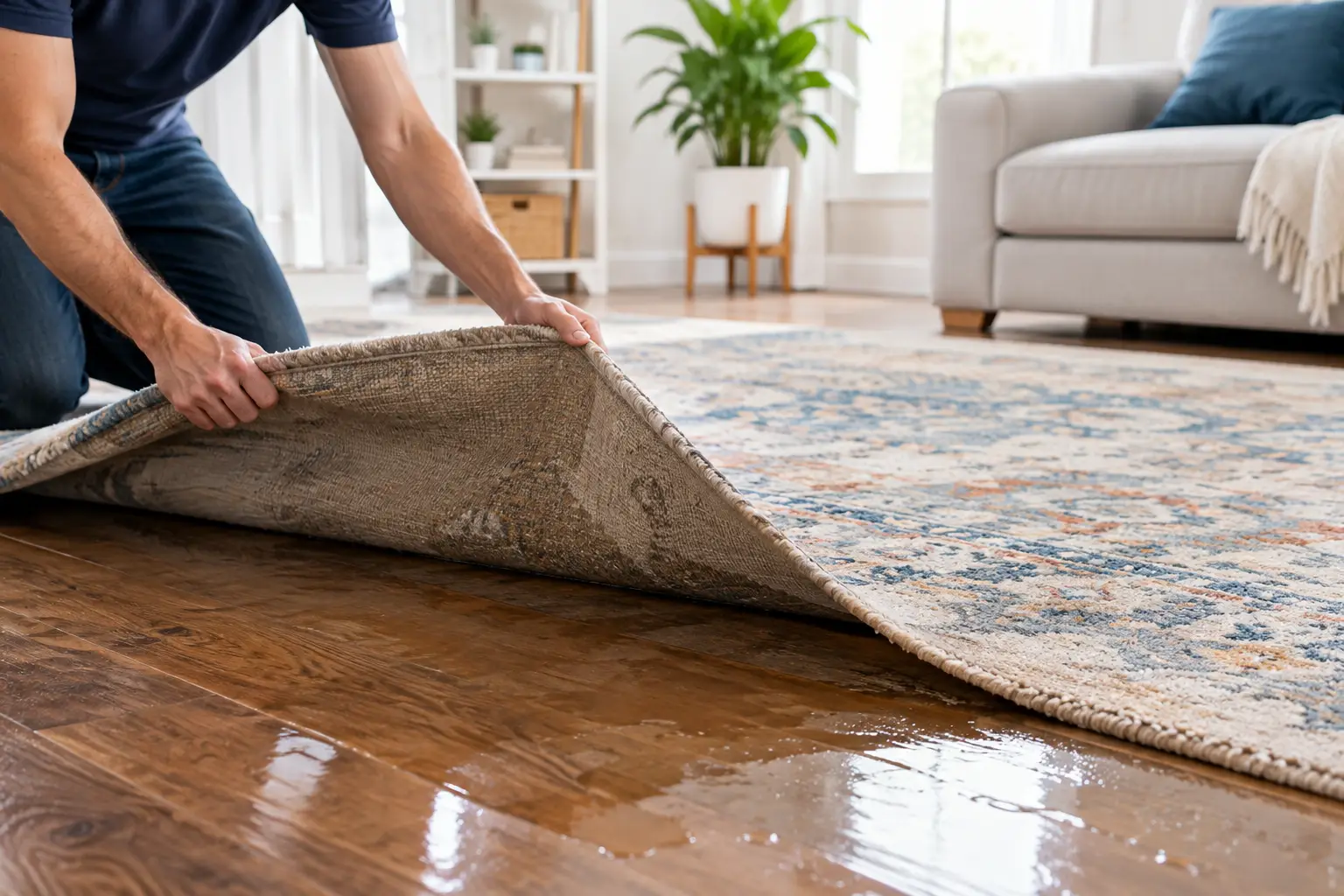
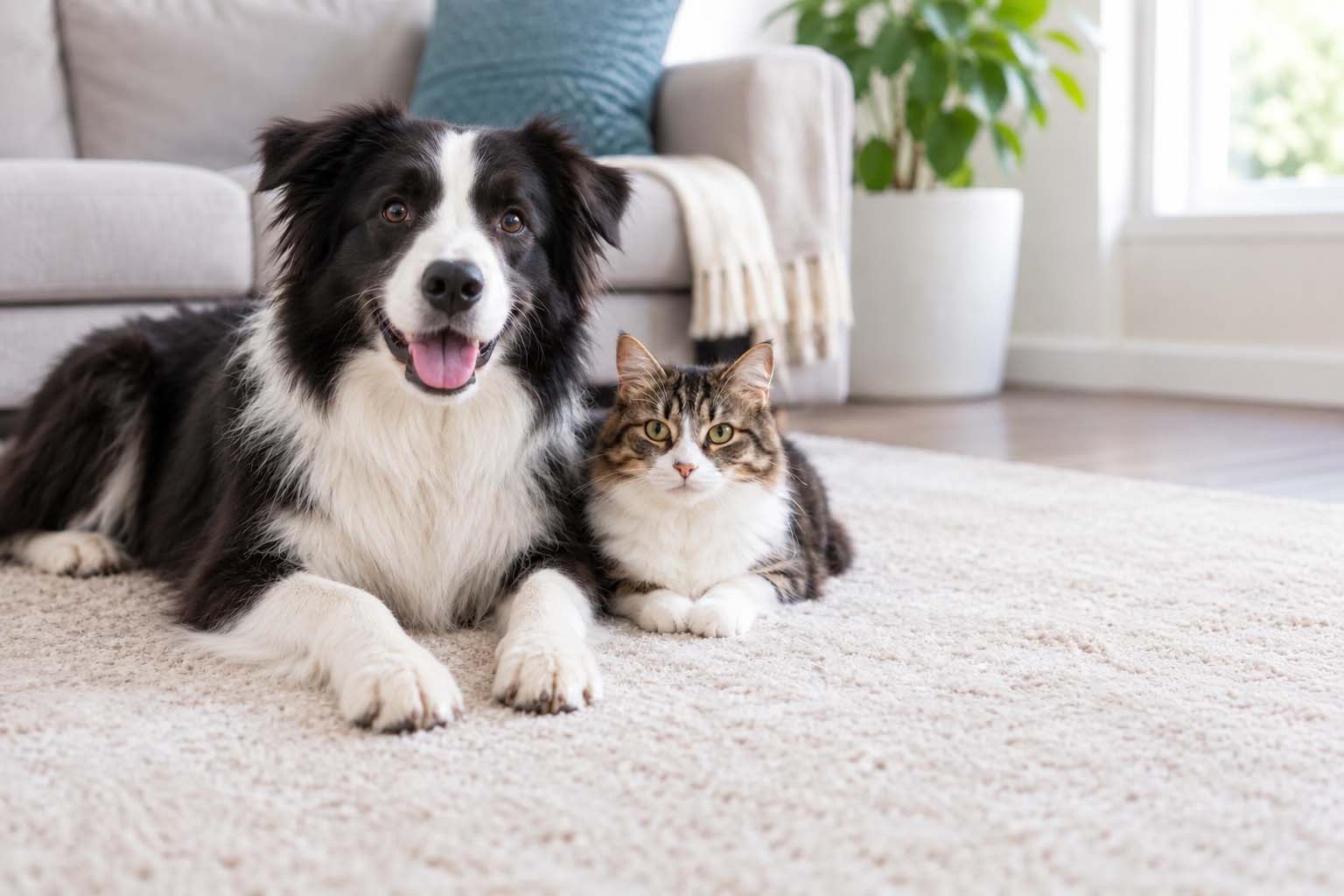
Pet accidents need attention beyond the visible spot. Urine can travel through the pile and settle into the rug’s foundation, pad, and sometimes the floor beneath. As it dries, odor-causing residues remain, and humidity can make the smell return days or weeks later.
Blot fresh urine thoroughly with white towels and avoid steam cleaning or saturating the area with scented products. Fragrance may mask odor temporarily, but it does not remove the contamination. Older or repeated pet accidents usually call for a deeper process that addresses the entire affected area, including proper flushing and odor treatment.
Blood, Vomit, and Other Protein Stains
Use cool water only for fresh protein stains. Warm or hot water can set them into wool and other fibers. Blot carefully, working from the edge inward. Because these stains may involve sanitation concerns and can be difficult to fully remove from a rug foundation, professional care is often the more dependable option for valuable rugs.
Common Methods That Can Make a Stain Worse
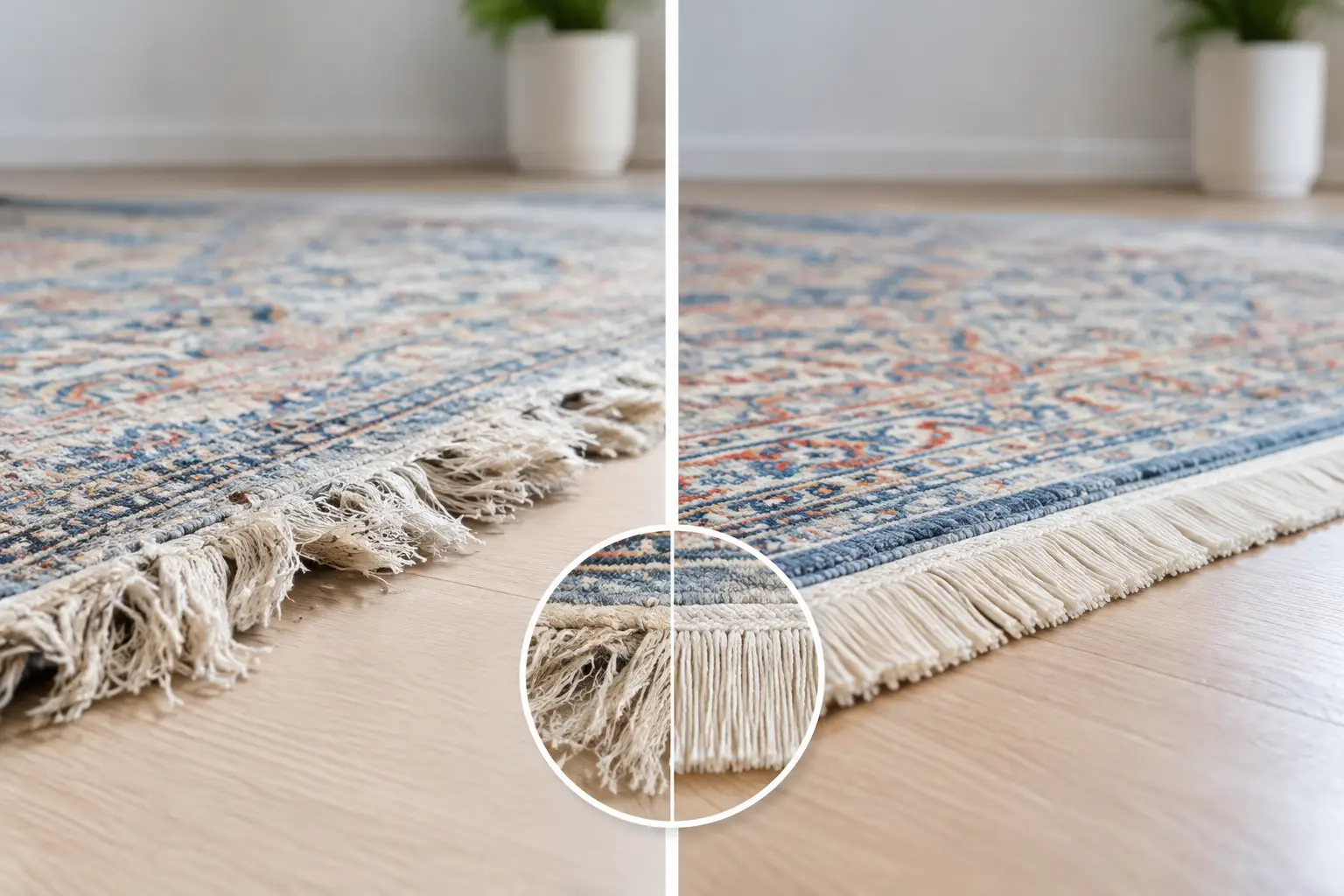
Many rug problems begin with good intentions. Scrubbing with a brush can untwist wool fibers and create a fuzzy, worn patch. Heavy use of soap can leave a sticky residue that holds dirt. Over-wetting can lead to odor, browning, dye bleed, or damage to floors underneath the rug.
Be cautious with rental machines as well. They may be useful on certain wall-to-wall synthetic carpets, but they are not automatically appropriate for loose area rugs. A machine that extracts only from the surface can leave moisture and cleaning solution below the pile, particularly in thicker rugs or those with dense foundations.
Do not use chlorine bleach, strong oxidizers, ammonia-based cleaners, or generic carpet products unless the rug manufacturer specifically permits them. These materials may alter color, weaken fibers, or create uneven results that cannot be fully reversed.
When an In-Studio Rug Wash Is the Better Answer
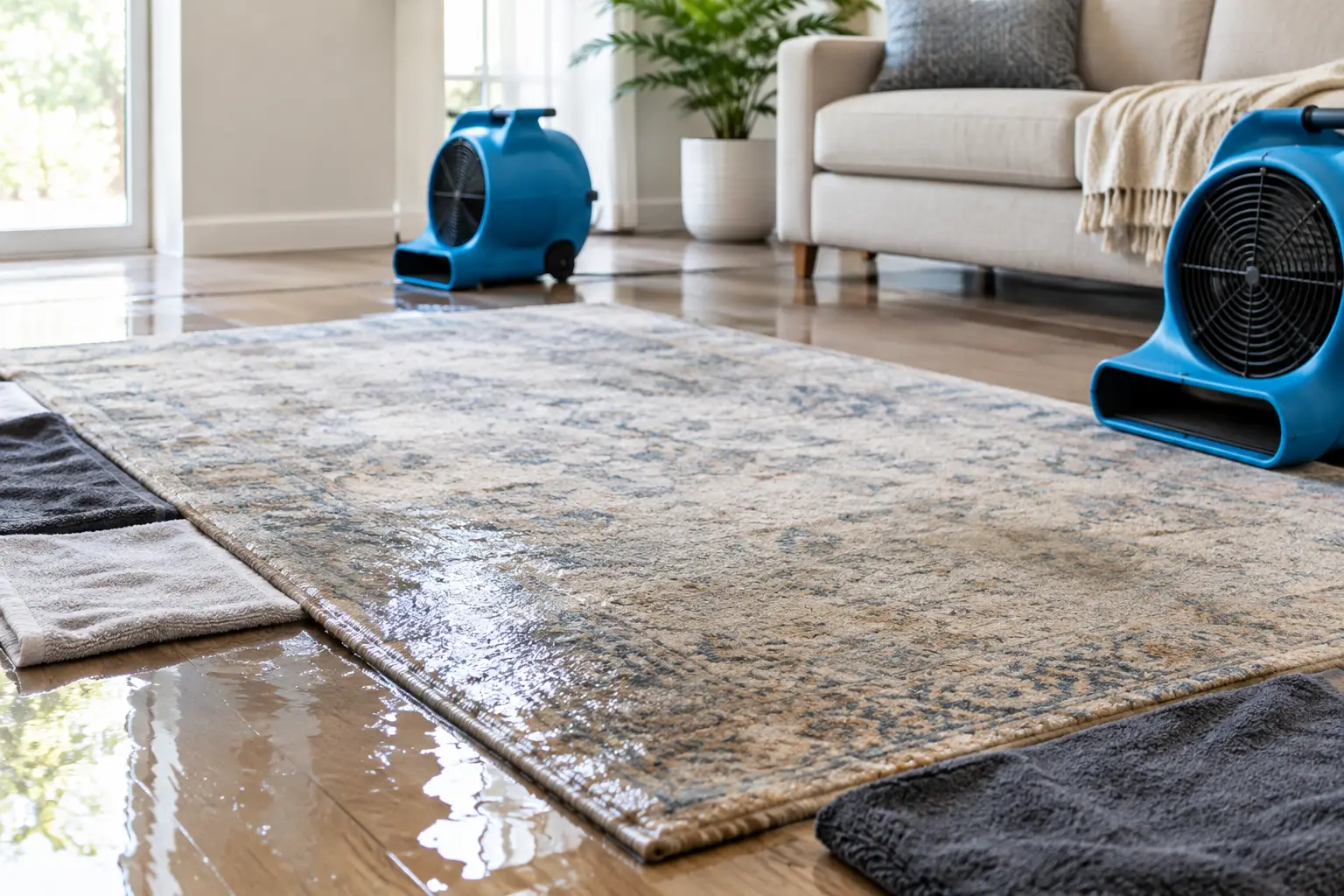
A spot treatment has limits. If the stain is old, large, sticky, odorous, or has reached the backing, a complete washing process is often more effective than repeatedly treating one area at home. This is particularly true for pet urine, floodwater exposure, food spills that have dried, and rugs that look dull or feel stiff around the affected spot.
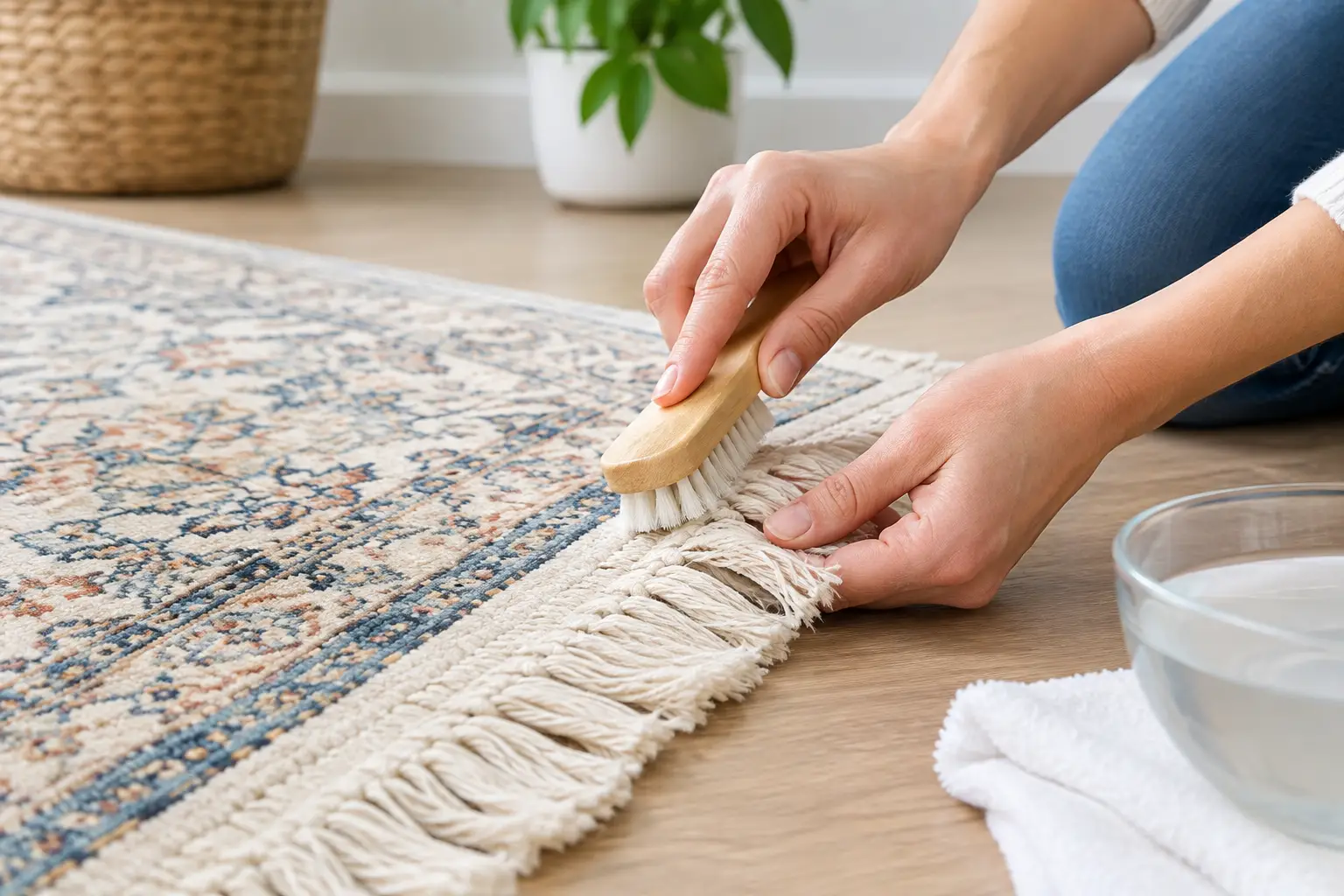
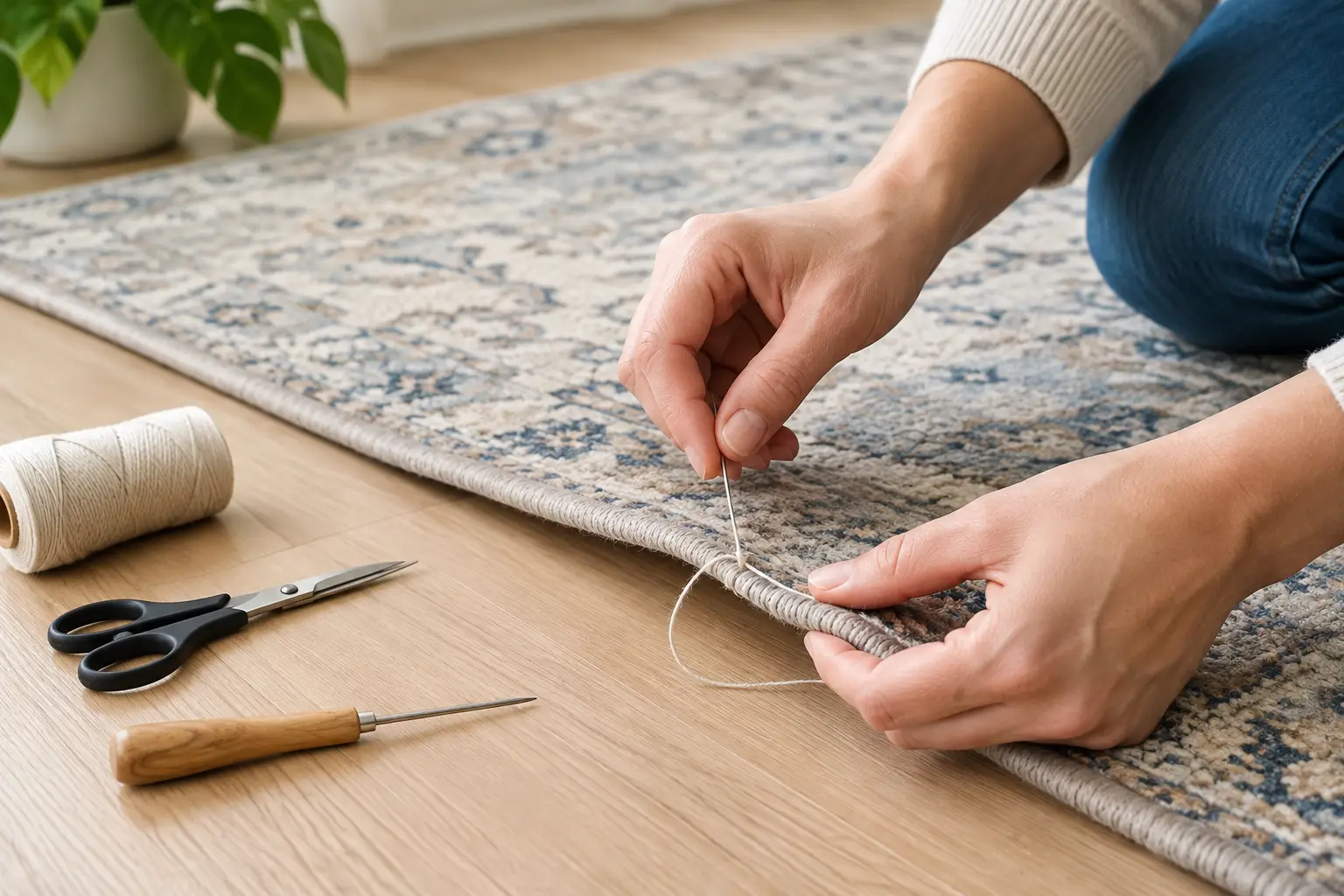
A careful professional assessment considers fiber type, construction, dye stability, fringe condition, previous cleaning attempts, and the condition of the rug pad. The rug can then receive the level of dusting, washing, rinsing, odor treatment, and controlled drying it actually needs. That approach is different from applying a one-size-fits-all chemical to the surface.
For Central Florida homeowners, moisture is an added concern. High humidity can slow drying and make hidden odors more noticeable. Pickup and delivery also reduces the need to transport a heavy or delicate rug in a vehicle after an accident.
At 1st Impressions Oriental and Area Rug Cleaning, rugs are evaluated individually so cleaning choices protect the fibers, colors, and structure rather than simply chasing the visible spot. A photo and measurements can help determine whether a stain is likely suitable for home blotting, focused treatment, or a thorough in-studio wash.
Protect the Rug After the Stain Is Gone
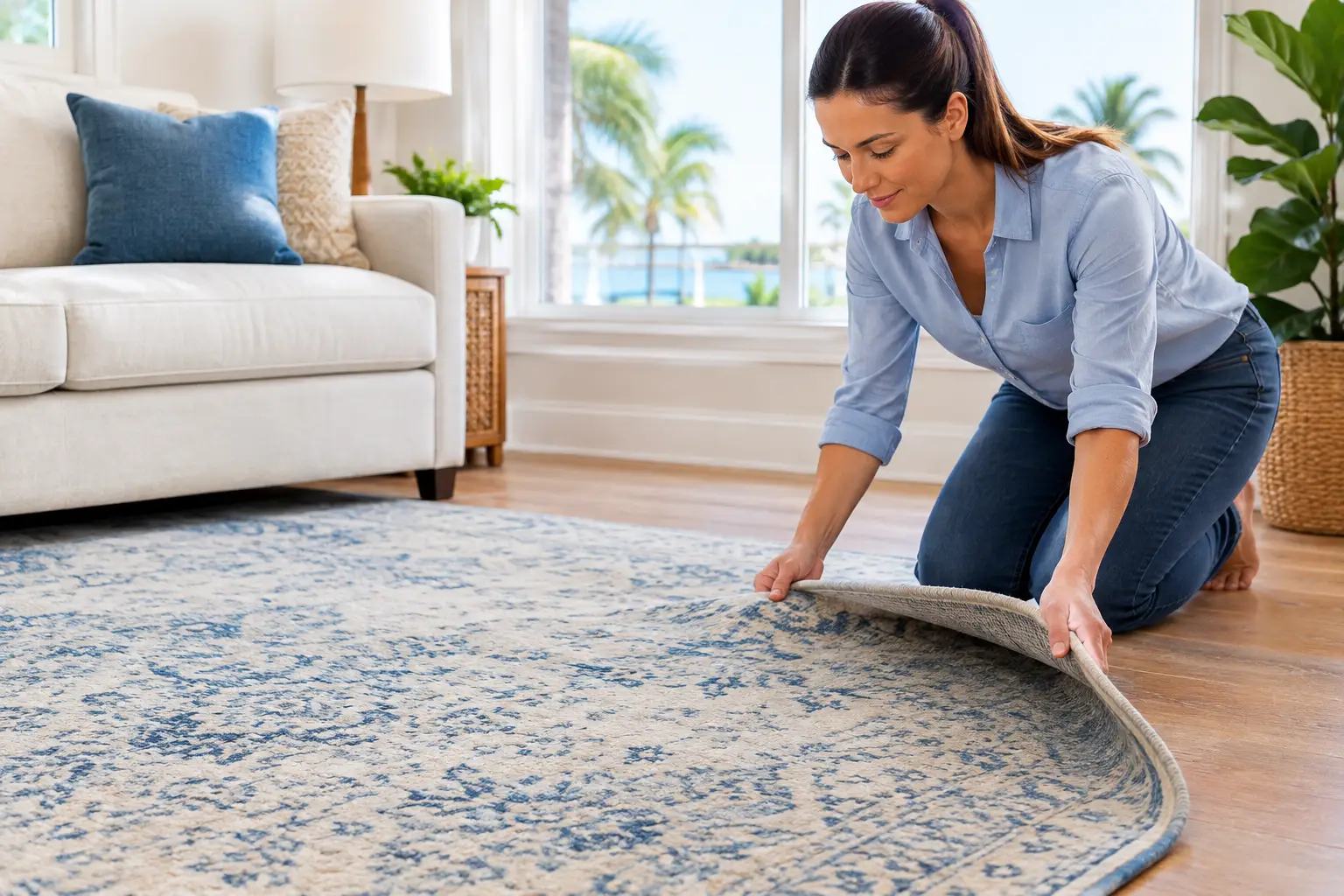
Once a rug is clean, a quality pad can help keep it in place, reduce friction against hard flooring, and add a layer of protection from spills that might otherwise reach the floor. Regular vacuuming with the proper setting removes dry soil before it settles deep into the pile. Rotate rugs periodically where sunlight or foot traffic is uneven, and address spills promptly instead of waiting for a convenient weekend.
If a stain resists gentle blotting, leaves an odor, or causes colors to change, stop treating it. Keeping the rug stable and getting informed help quickly gives a valued floor covering its best chance of looking like itself again.