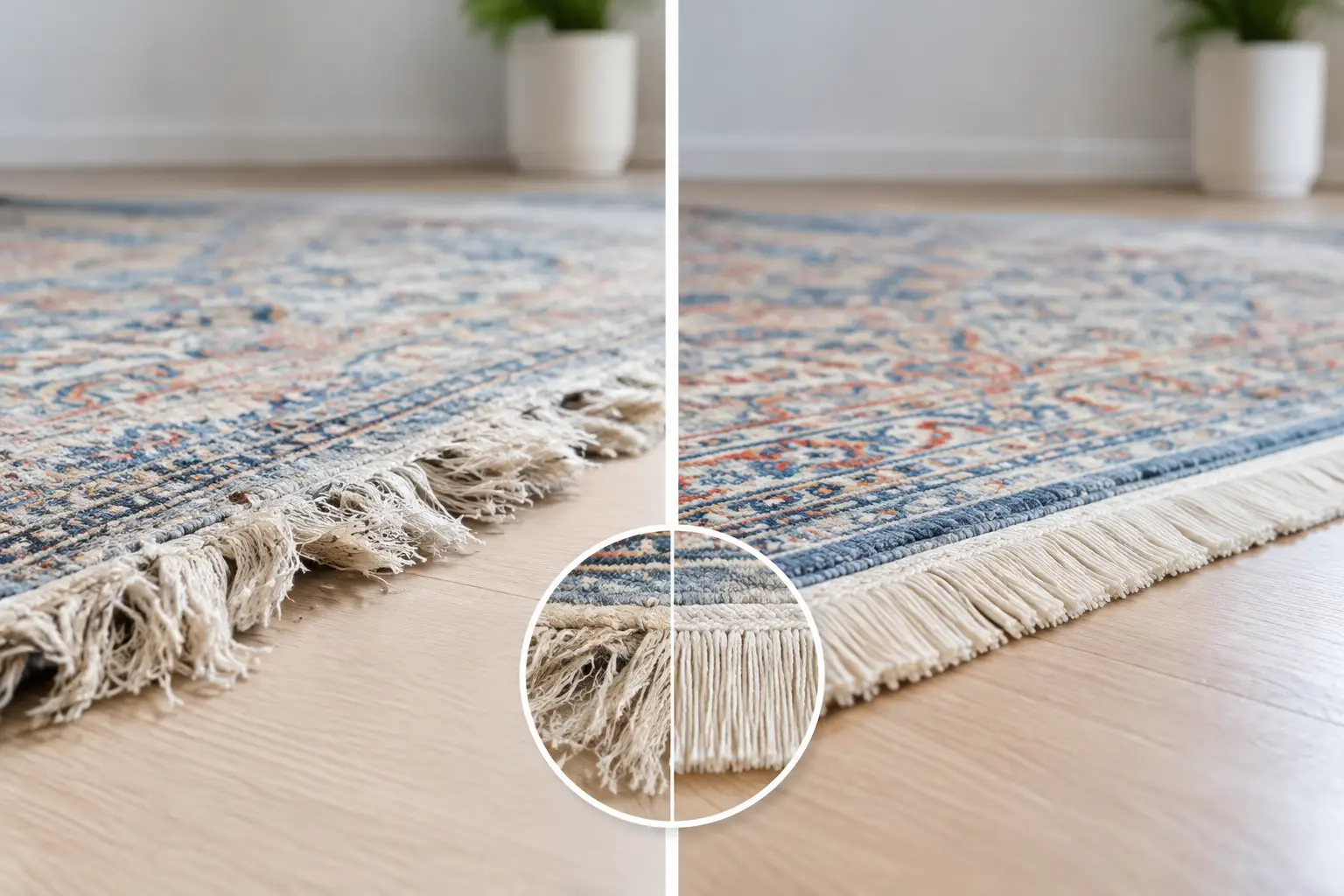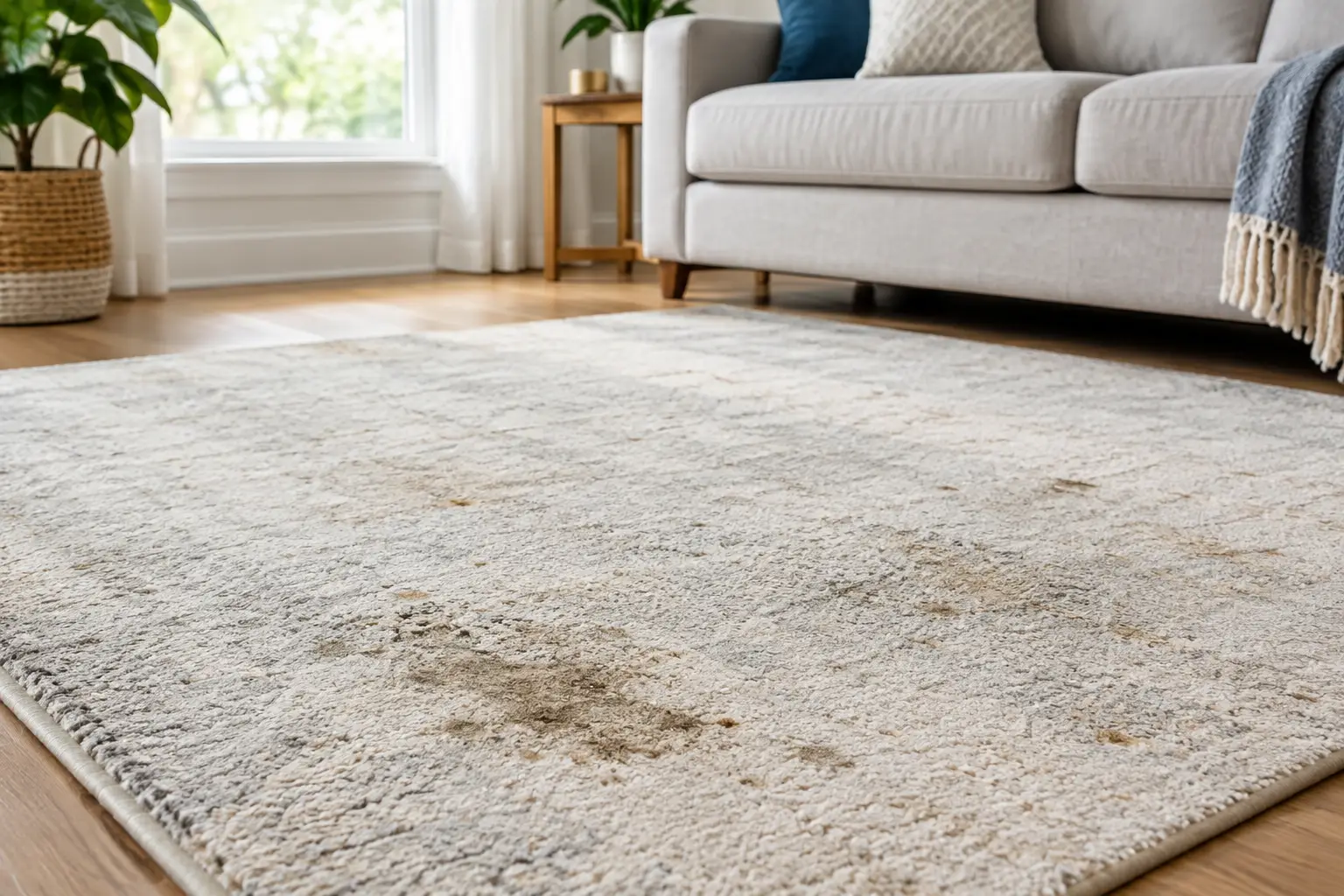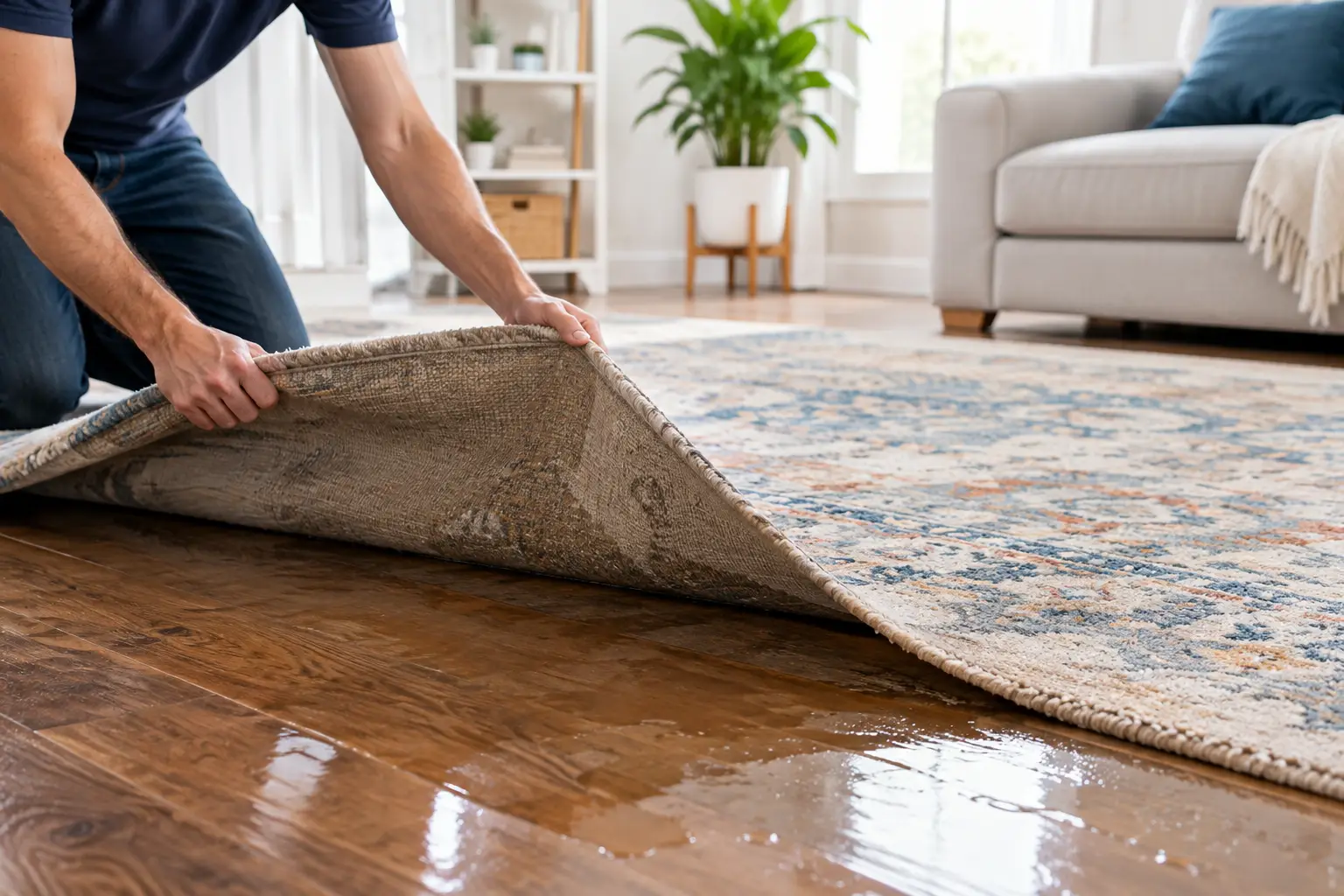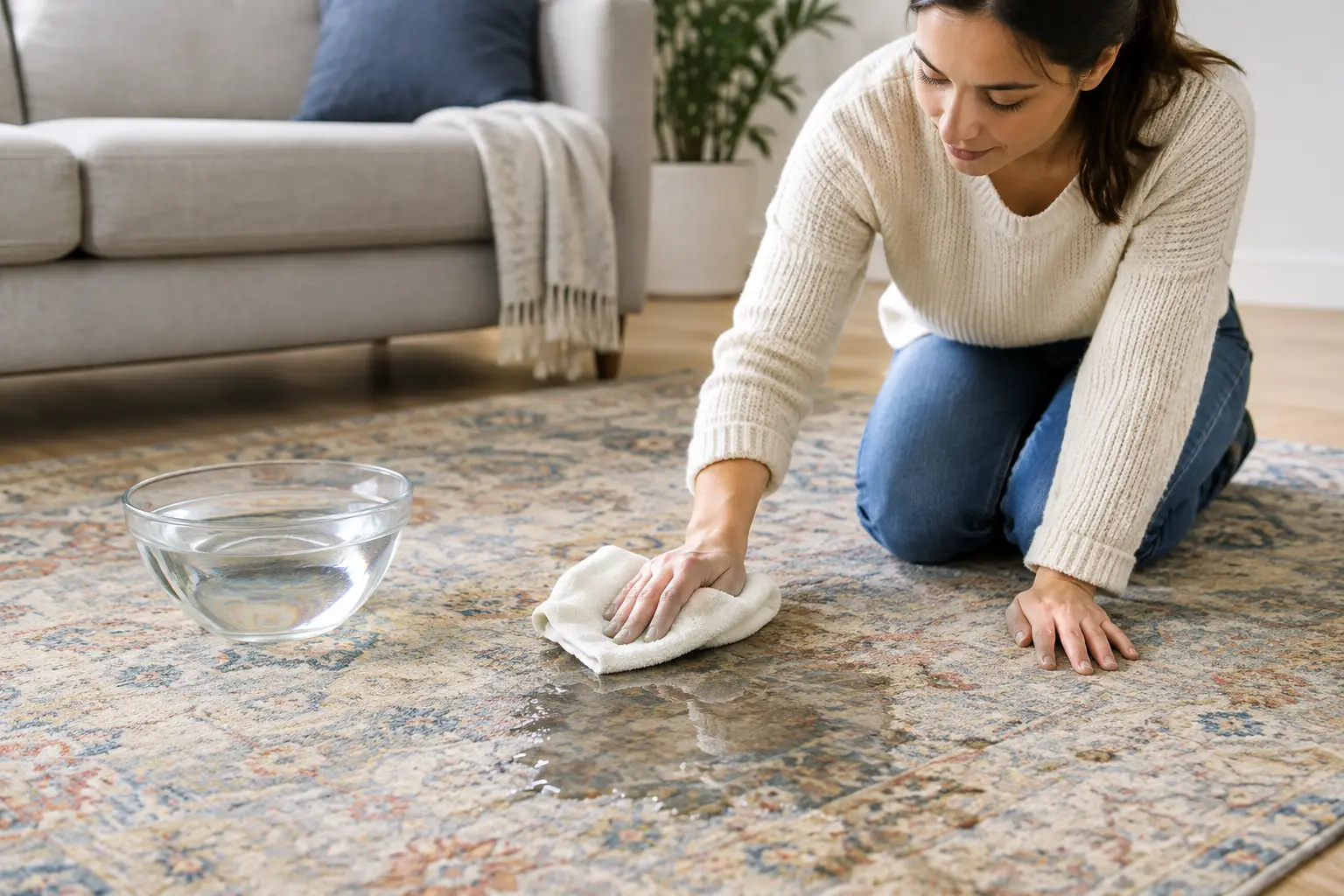
A rug can look fine on top while holding a surprising amount of water underneath. In Central Florida, a burst supply line, overflowing washer, roof leak, or storm-related water intrusion can quickly turn a favorite rug into a source of odor, mold, dye bleed, and floor damage. Knowing how to treat water damaged rugs starts with a fast, measured response – not with aggressive scrubbing or heat.
The right approach depends on what soaked the rug, how long it has been wet, and what it is made from. A machine-made synthetic rug affected by a small clean-water spill may be safely dried at home. An Oriental, wool, silk, viscose, hand-knotted, or sentimental rug deserves more caution. These rugs can shrink, bleed, buckle, or develop permanent odor when they are handled like ordinary carpeting.
First, Identify the Source of the Water
Before touching the rug, consider the water itself. Clean water from a supply line or a recent rain leak presents a different level of risk than water from a toilet overflow, backed-up drain, dishwasher, washing machine discharge, or outdoor flooding.
Water that may contain sewage, bacteria, chemicals, or flood contaminants should not be treated with household spot cleaners. Keep children and pets away, avoid bringing the rug through clean areas of the home if possible, and arrange for professional handling. Contamination can settle deep into the pile, foundation, fringe, and backing. Surface drying alone does not make the rug sanitary.
Even clean water becomes more troublesome as time passes. Within a day or two, the rug, pad, and flooring below can begin to hold moisture and develop a musty odor. In Florida humidity, drying can take longer than expected, especially when a rug is lying flat on tile, wood, laminate, or concrete.
How to Treat Water Damaged Rugs in the First Hours
The first goal is simple: stop more water from reaching the rug and remove moisture without stressing the fibers or structure.
Move the rug carefully
If it is safe to do so, lift the rug off the wet floor. A saturated rug is much heavier than it appears, and its foundation can stretch when lifted by one corner. Roll it loosely with the wet side inward, or have two people support it from underneath. Avoid folding a wet rug sharply, particularly one with a cotton foundation or delicate fringe.
If the rug is very large, heavily saturated, or located near electrical hazards, leave it in place until the area is safe. Turn off power to affected outlets only if you can do so without entering standing water. Personal safety comes first.
Blot and extract – do not rub
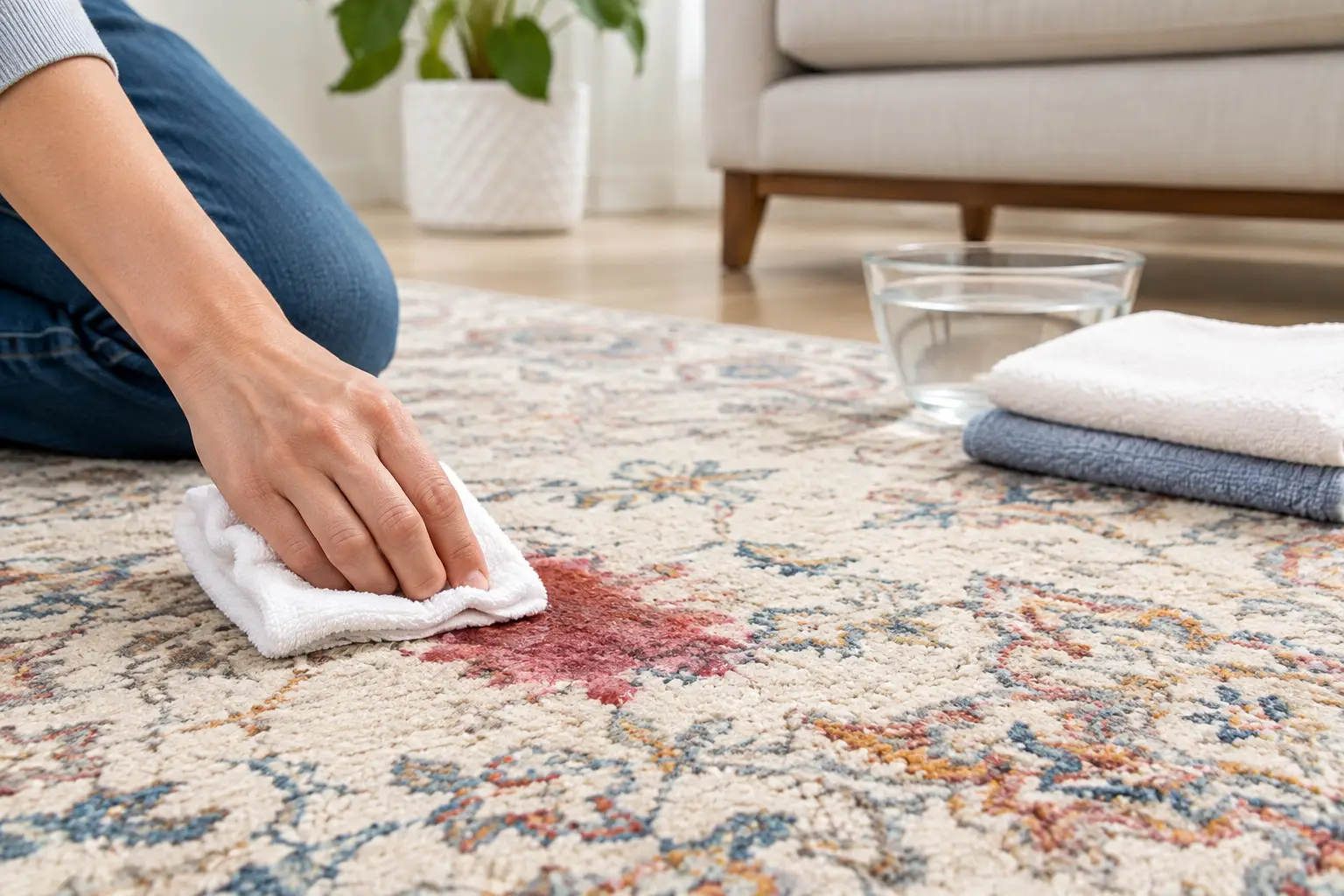
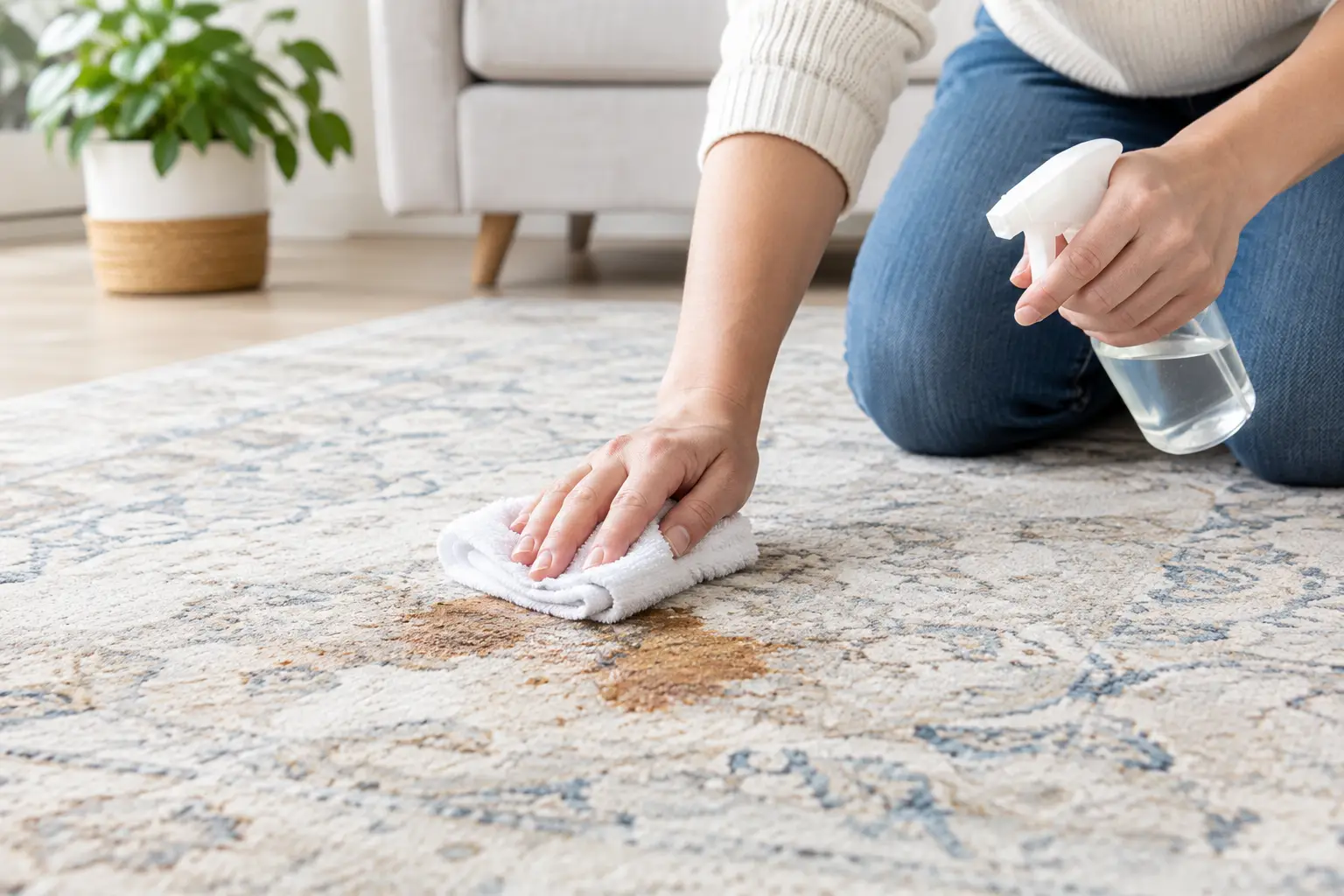
For a small clean-water incident, press clean white towels firmly into the rug to absorb water. Replace towels as they become wet. A wet/dry vacuum can help remove moisture from a durable rug, but use it carefully and do not drag a heavy machine over fringe, raised texture, or delicate fibers.
Do not rub the pile. Rubbing can distort fibers, spread soil, and push colored dyes into adjacent areas. It also will not reach water trapped in the rug’s foundation.
Separate the rug from the floor and pad
A wet rug should never remain pressed against a hard floor or a damp pad. Moisture underneath can stain wood, weaken laminate seams, and leave a shadowy residue on stone or tile grout. Remove the rug pad if it is wet. Many standard pads do not dry evenly and may need replacement after significant water exposure.
If you are attempting to dry a small, clean-water-affected rug at home, elevate it on a clean, sturdy rack or place it where air can circulate above and below. Position fans to move air across both sides. A dehumidifier can be helpful in a closed room, but do not rely on air conditioning alone to dry a soaked rug.
Keep heat and direct sun out of the equation
Heat feels like a quick answer, but it often creates a second problem. Hair dryers, space heaters, steamers, and prolonged direct sunlight can shrink wool, curl edges, weaken latex backing, and cause colors to fade or migrate. Silk and viscose are especially vulnerable to texture changes after they become wet.
Use steady airflow rather than intense heat. If colors begin to run, if the rug feels stiff as it dries, or if the edges start to ripple, stop home drying efforts and seek specialized help.
Why Water Can Damage a Rug After It Looks Dry
Water damage is not always obvious the day the rug gets wet. A rug may feel dry at the surface while its cotton foundation, backing, or pad remains damp. That trapped moisture can produce mildew odor, brown water marks, wicking, and mold growth days later.
Dye migration is another concern, especially in handmade rugs. Red, navy, black, and saturated accent colors may bleed into cream or ivory areas. Once colors have traveled, ordinary cleaning methods can make the problem worse. Controlled washing, drying, and color-correction techniques may be needed to stabilize the rug.
The floor beneath the rug also matters. Wood floors can cup or discolor. Moisture can become trapped between a rug pad and luxury vinyl plank. On concrete, a rug can absorb residual moisture from below even after the original leak has been addressed. Treating the rug without checking the floor and pad may leave the source of the problem in place.
When Professional Rug Washing Is the Safer Choice
Professional treatment is recommended when the water was contaminated, the rug has been wet for more than several hours, there is a musty odor, or the rug is valuable, handmade, antique, wool, silk, viscose, or heavily saturated. It is also the better choice when dyes are bleeding, fringes are yellowing, or a rug has a thick backing that cannot be thoroughly dried at home.
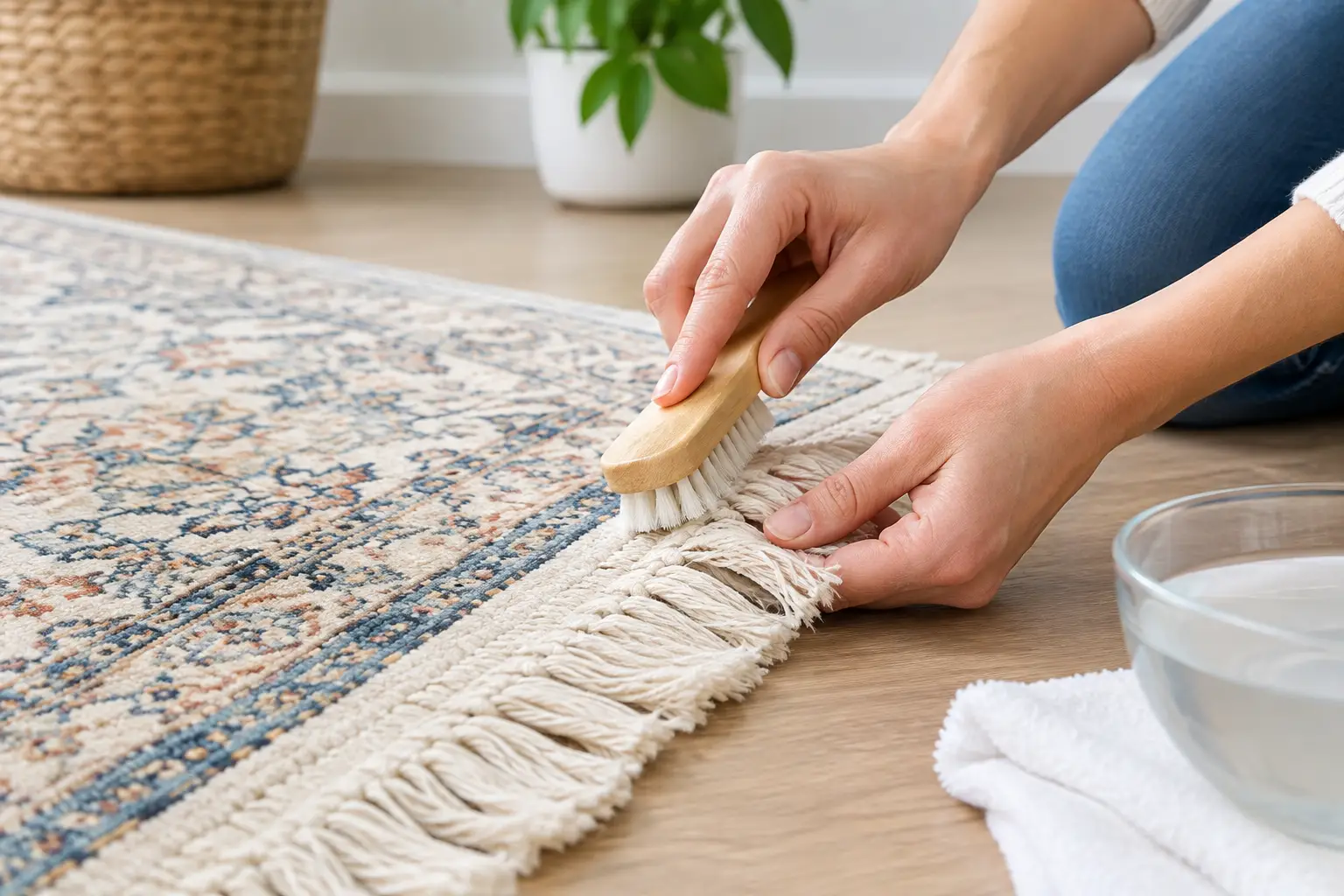
A proper in-studio process is more than a surface cleaning. It can include dust removal, controlled water-based washing, odor and contamination treatment when appropriate, careful rinsing, and thorough drying. The objective is to remove what the water carried into the rug while protecting its fibers, color, and structure.
At 1st Impressions Oriental and Area Rug Cleaning, each rug is evaluated for its fiber type, construction, dyes, contamination level, and existing condition before treatment. That matters because there is no single safe formula for every wet rug. A wool Persian rug, a designer viscose rug, and a polypropylene outdoor rug should not receive the same cleaning method.
Avoid These Common Water-Damage Mistakes
Well-meaning home remedies can permanently change a rug. Avoid applying bleach, harsh disinfectants, laundry detergent, or large amounts of vinegar. These products may alter color, leave sticky residue that attracts soil, or damage natural fibers. Do not use a rented carpet cleaner on a fine rug simply because it has suction. Excess moisture and improper cleaning solution can worsen dye bleed and leave the foundation wet.
It is also risky to roll a wet rug tightly and leave it in a garage, porch, or vehicle. That creates a dark, humid environment where odor and mold can develop quickly. If pickup is needed, keep the rug as open and ventilated as possible until it can be transported.
Protect the Rug Once It Has Recovered
After the rug has been properly cleaned and dried, inspect the area that caused the problem. Repair the leak, check nearby baseboards and flooring, and replace any pad that remains damp or smells musty. A quality rug pad can help protect both the rug and the floor, but it should be clean, dry, and suited to the floor surface.
For future spills, act promptly: blot, lift the rug from the floor when possible, and avoid heat or harsh chemicals. If the water event is more than a minor clean-water spill, taking a few photos and noting the source of the water will help a rug care professional recommend the right next step. Fast action is valuable, but careful action is what gives a well-loved rug its best chance to come back clean, stable, and ready for years more use.