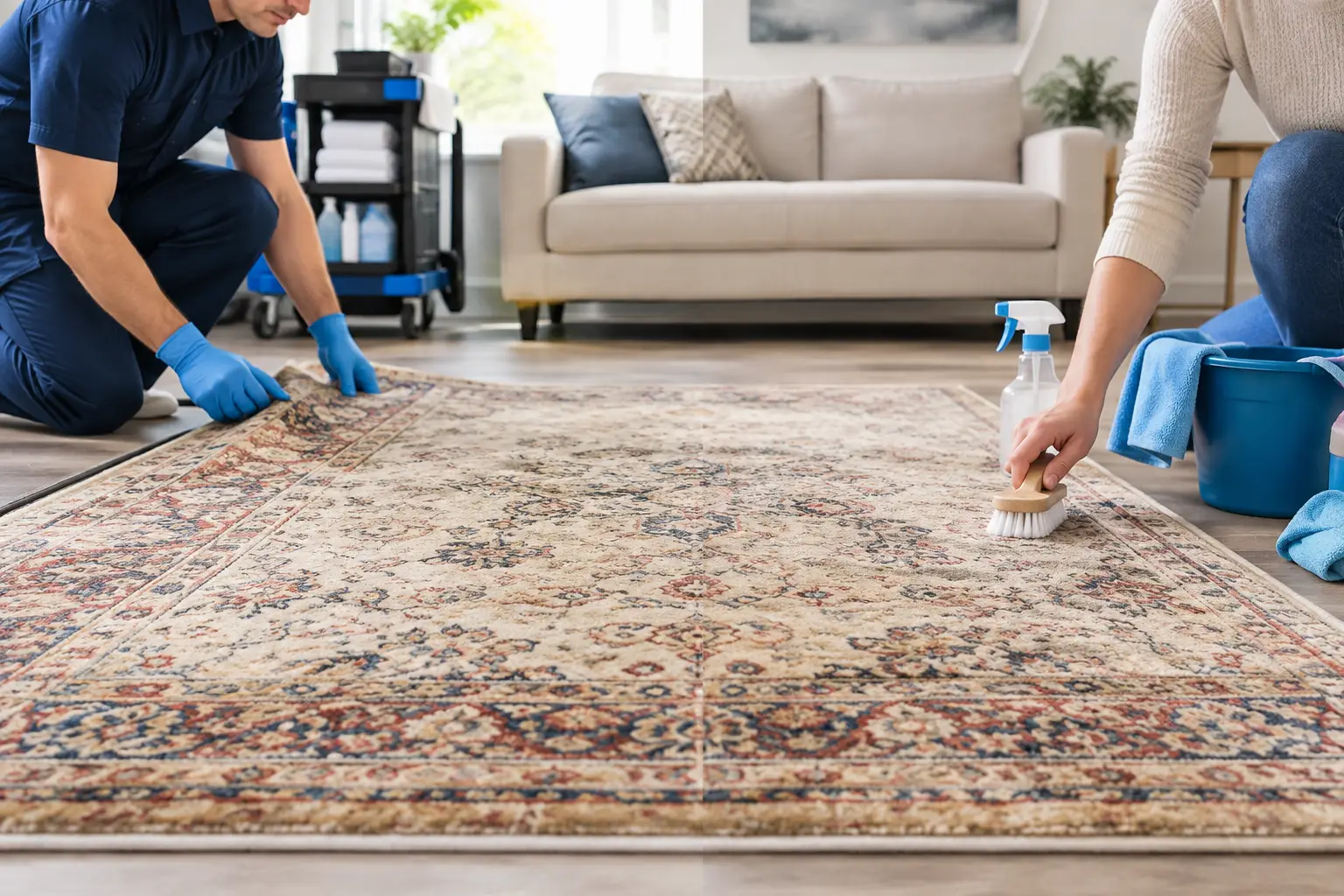
A glass of red wine near the sofa, a puppy accident by the entryway, or muddy feet after a Central Florida rainstorm can make a rug problem feel urgent. In those moments, professional versus DIY cleaning is not simply a question of convenience. For an Oriental rug, a designer area rug, or a sentimental family piece, the wrong cleaning method can turn a small stain into color bleed, fiber damage, lingering odor, or a distorted foundation.
Some at-home care is both sensible and necessary. Fast blotting after a spill can prevent a stain from setting, and regular vacuuming removes dry soil before it settles deep into the pile. The key is knowing where routine maintenance ends and specialized rug care begins.
Professional Versus DIY Cleaning: What Is Really Different?
A rug is not just a smaller version of wall-to-wall carpet. Its fibers, dyes, construction, backing, fringe, and age all affect how it should be cleaned. Wool, silk, cotton, viscose, jute, and synthetic fibers each respond differently to moisture, agitation, heat, and cleaning solutions.
DIY products are generally made to address a broad range of household stains. They may work acceptably on a durable, inexpensive synthetic rug when used carefully. But a cleaner that is safe for one rug can leave residue, fade dye, stiffen natural fibers, or cause browning on another. Strong spot removers, bleaching agents, and heavily fragranced products can also make later professional treatment more difficult.
Professional rug care begins with identification and inspection. A trained technician looks at fiber type, construction, dye stability, overall soil level, prior cleaning attempts, stains, odors, fringe condition, and signs of wear. That information guides the cleaning process rather than forcing every rug through the same method.
For fine rugs, a thorough water-based bathing process can remove embedded dry soil and contaminants that surface spraying cannot reach. Proper rinsing is equally important. A rug that looks clean but holds detergent residue may attract soil more quickly, feel sticky, or develop odor issues in humid conditions.
When DIY Care Makes Sense
Homeowners do not need to call for professional help every time a crumb lands on a rug. Gentle, consistent maintenance protects the appearance and lifespan of most area rugs.
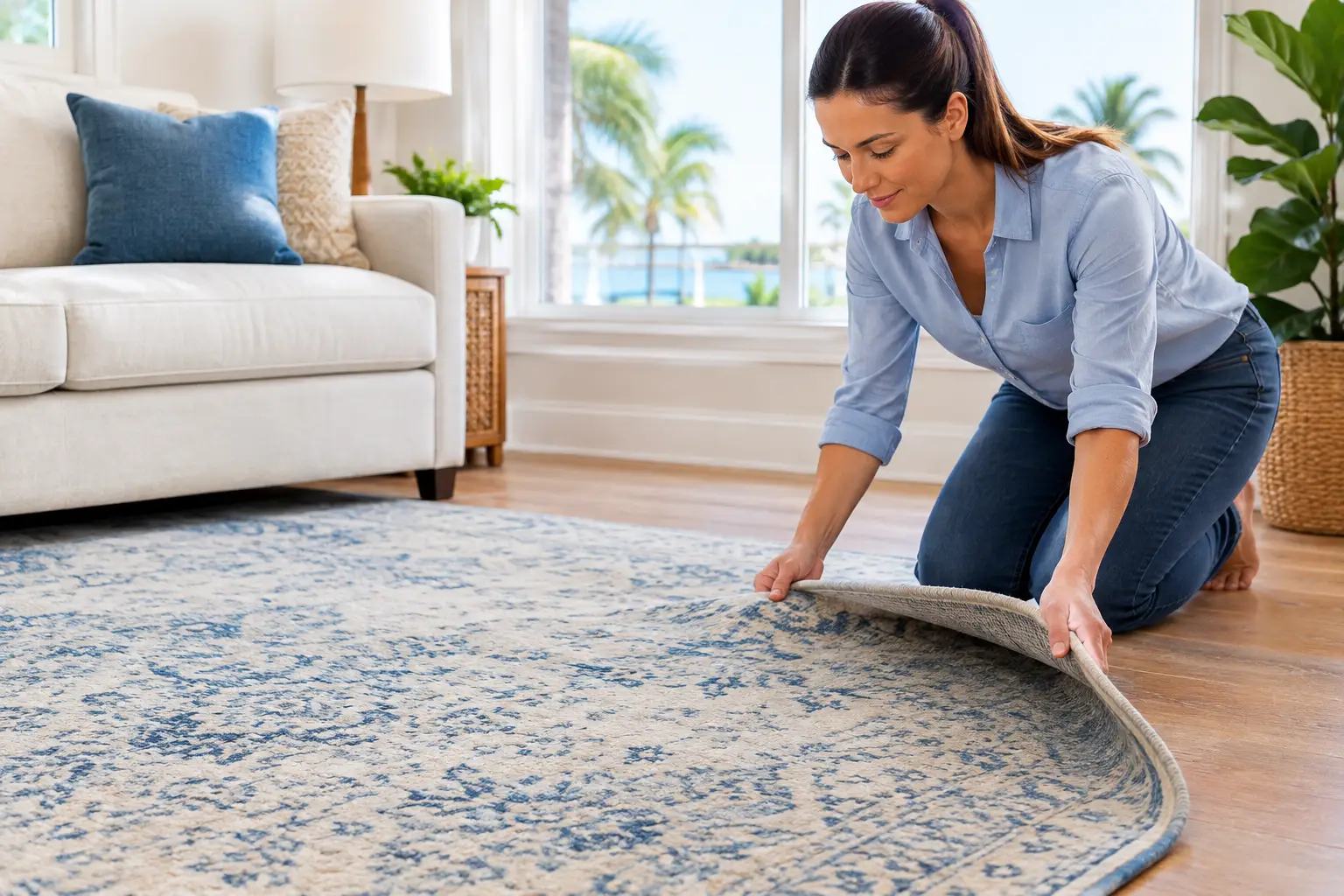
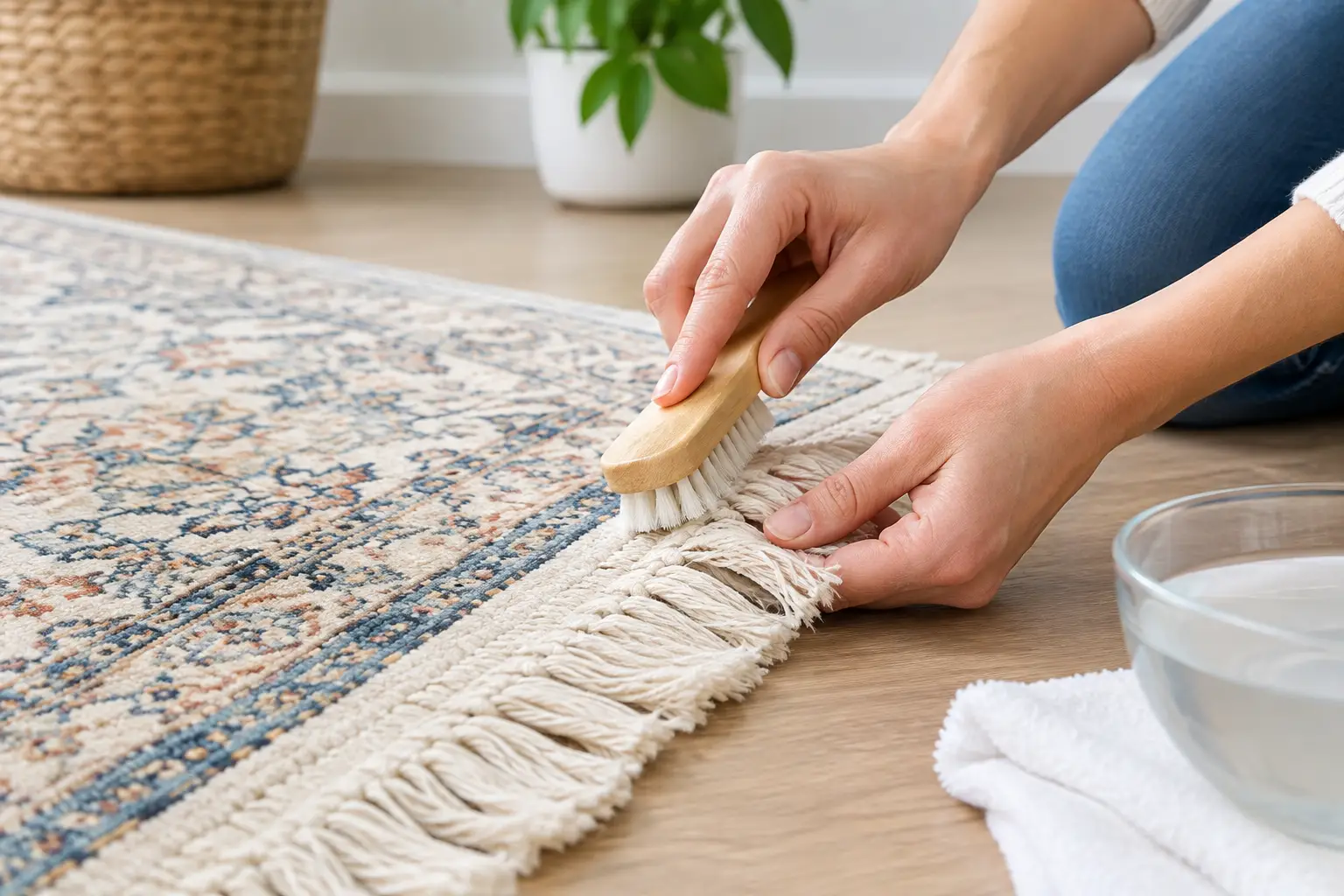
Vacuum regularly, using the appropriate setting for the rug’s pile. Avoid running a beater bar aggressively over delicate fibers, fringes, or hand-knotted construction. Vacuuming both sides occasionally, when the rug can be handled safely, helps remove dry grit that can wear down fibers from the inside.
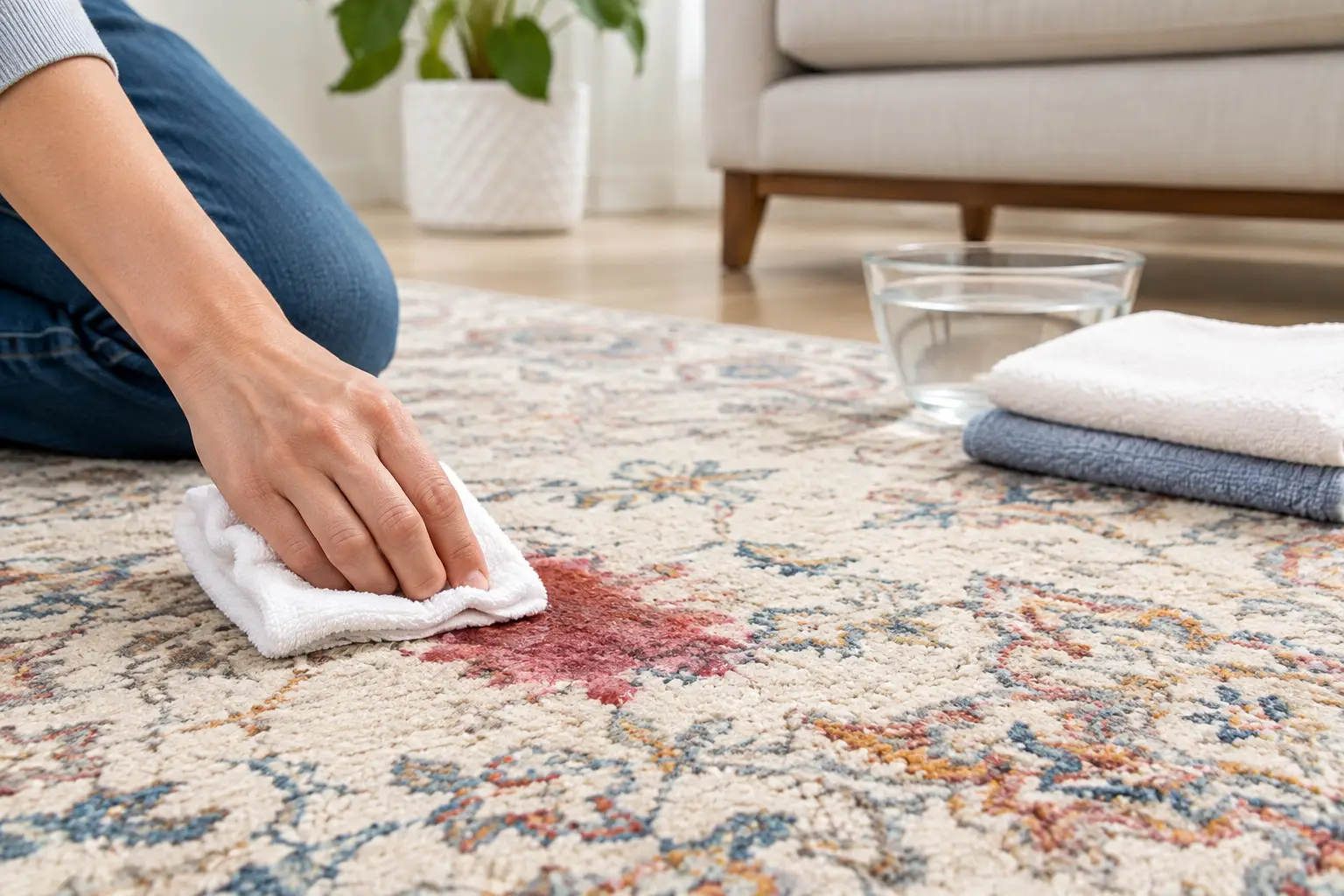
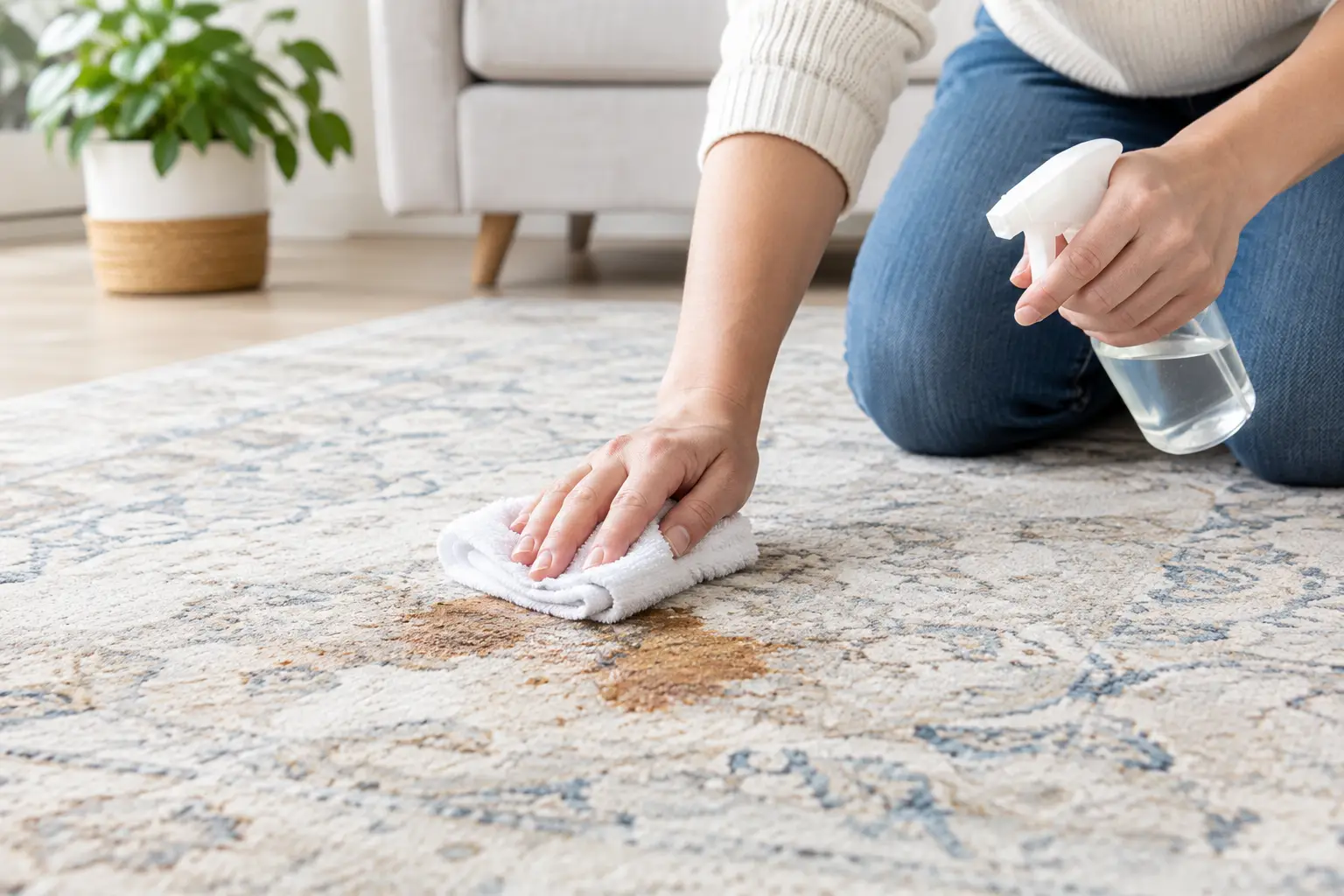
For a fresh liquid spill, act quickly. Blot with clean white towels, working from the outside of the spill toward the center. Press firmly and replace towels as they absorb moisture. Do not scrub. Scrubbing can push the spill deeper, spread it outward, roughen the pile, and damage the rug’s finish.
A small amount of cool water may be appropriate for some fresh, water-soluble spills, but restraint matters. Avoid soaking the rug, especially if you do not know what is beneath the face fibers. Many rugs have cotton foundations, latex backing, or materials that can be affected by excessive moisture.
DIY care is usually most reasonable when the rug is durable, the issue is minor and recent, the fiber content is known, and there is no odor, color transfer, or visible structural concern. Even then, test any product in a hidden area first and avoid mixing cleaners. Household remedies are not interchangeable, and a combination of products can create residue or permanently alter dyes.
Problems That Need More Than a Spot Cleaner
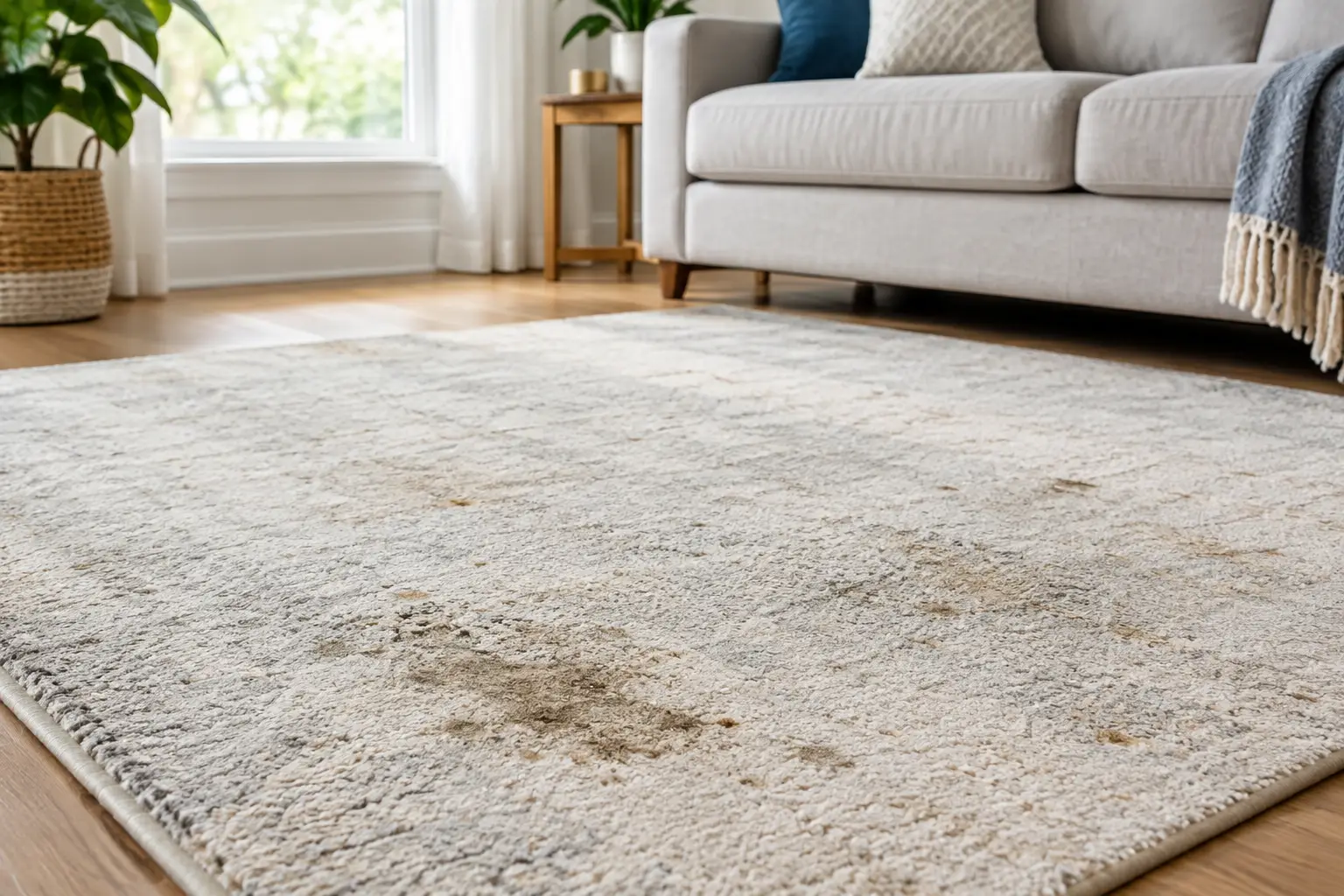
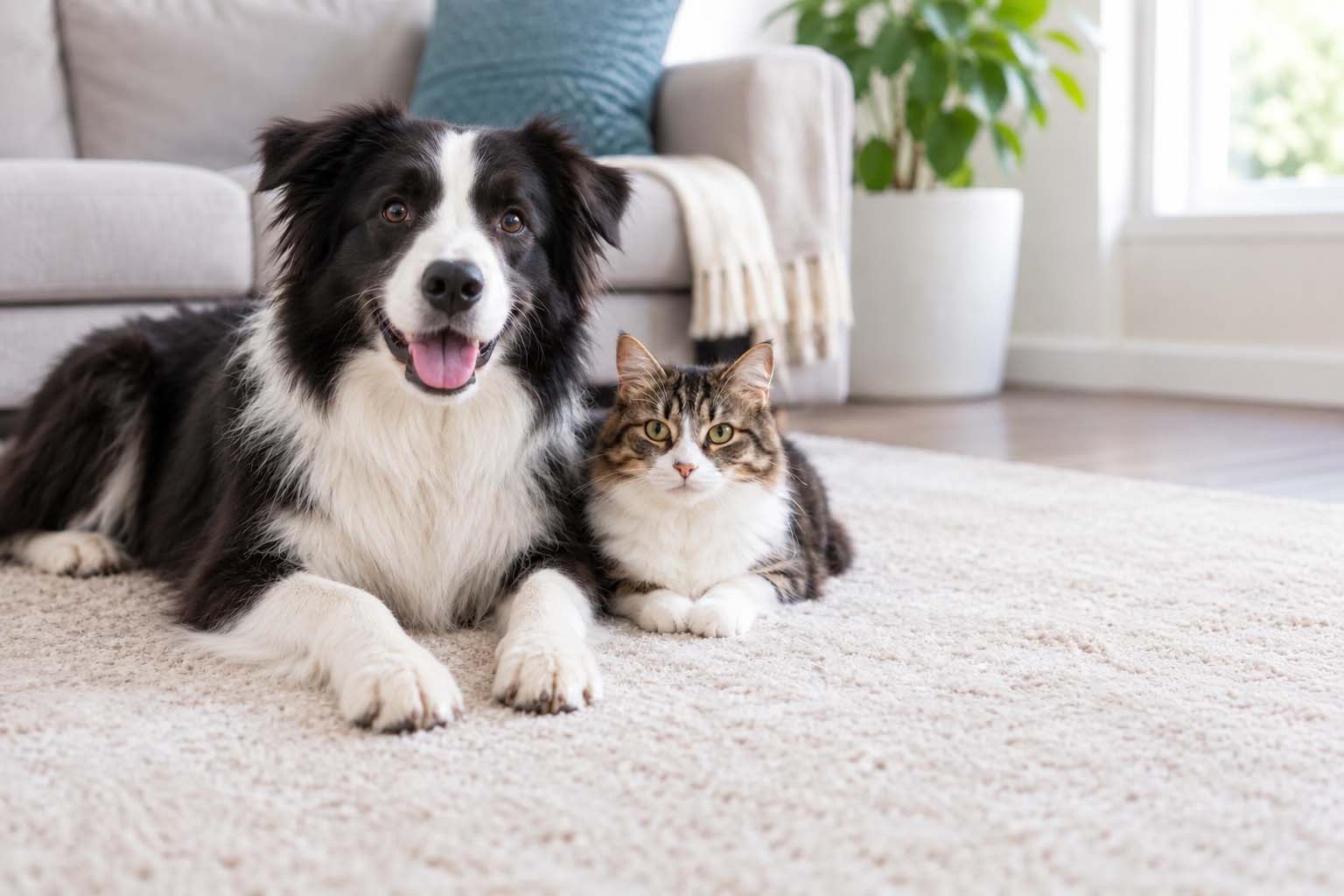
Certain issues call for more than surface treatment because the visible mark is only part of the problem. Pet urine is a common example. Urine can travel through the pile into the rug’s foundation and padding, where it dries, crystallizes, and produces odor again when humidity rises. A topical deodorizer may cover the smell briefly without removing the contamination.
Food and beverage stains can also become complicated when sugar, milk proteins, oils, or dyes remain in the fibers. A stain may disappear while the residue continues to attract soil. Improper heat treatment can set protein-based stains, and aggressive chemicals can affect wool or unstable dyes.
Professional evaluation is particularly wise when you notice any of the following:
- A pet odor that returns after the rug dries or after humid weather
- Red, blue, black, or other dyes bleeding into surrounding fibers
- Yellowing, browning, stiffness, or a crunchy feel after a home cleaning attempt
- Stains on wool, silk, viscose, antique, handmade, Oriental, or hand-knotted rugs
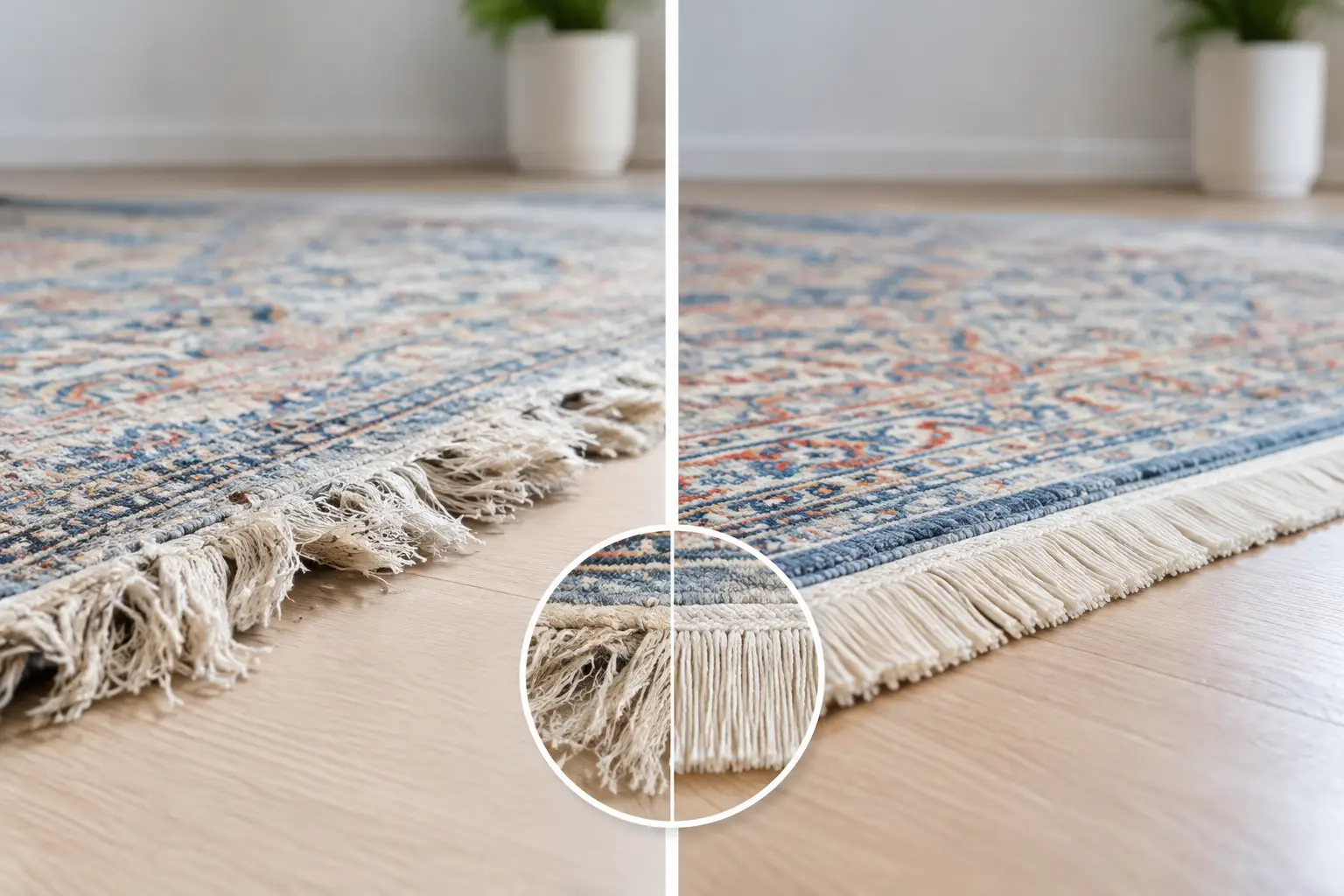
- Fringe damage, worn edges, ripples, holes, moth activity, or loose fibers
These conditions are not always emergencies, but delaying care can allow odors to set, stains to oxidize, or structural damage to worsen. A rug care center can assess whether cleaning alone is appropriate or whether repair, odor decontamination, color correction, moth treatment, or protective padding should be considered.
The Hidden Risk of Over-Wetting
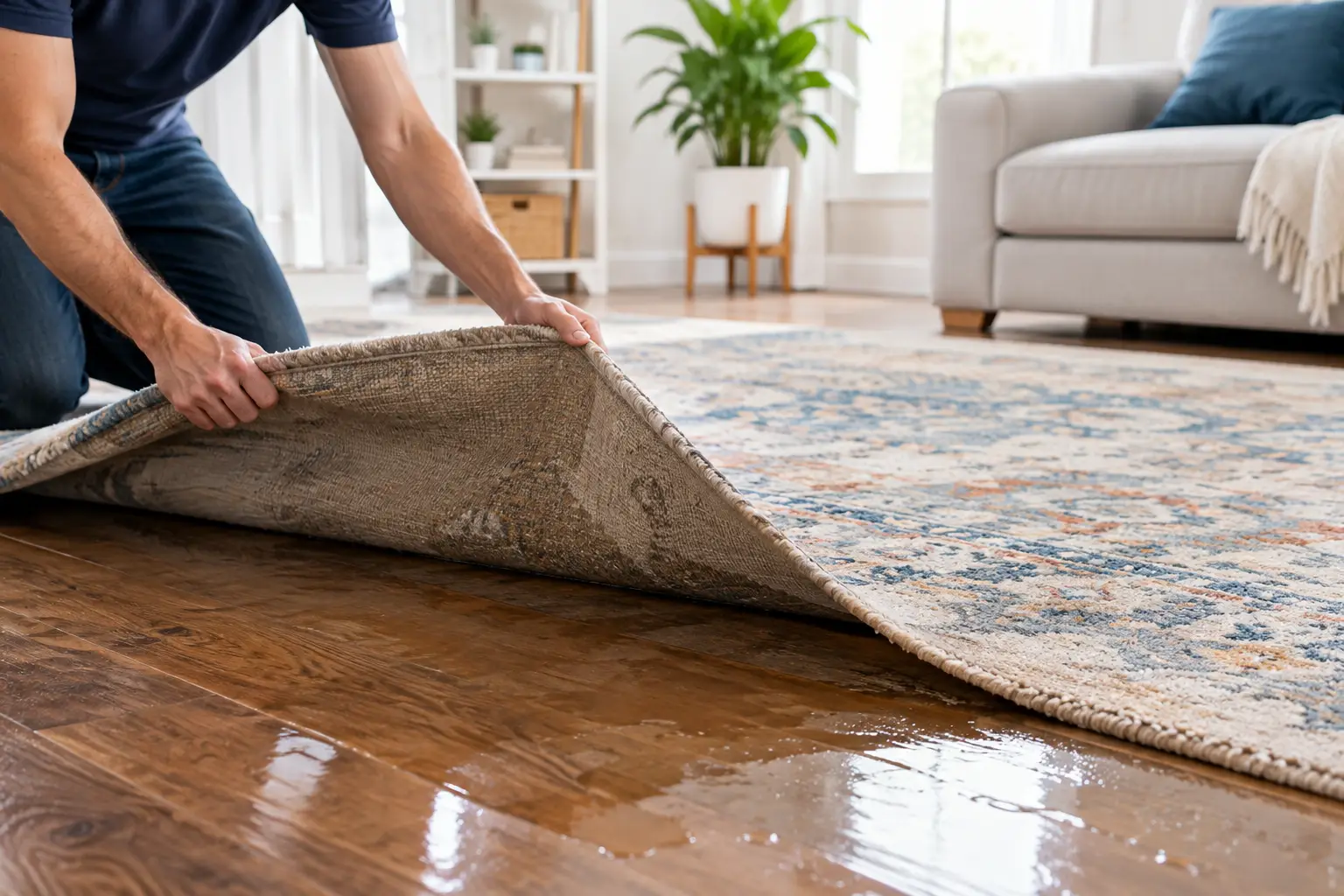
The most common DIY mistake is using too much water. Renting a machine or repeatedly spraying a stain can leave moisture below the surface long after the rug appears dry. In Orlando’s humid climate, slow drying can contribute to odor, browning, dye migration, and damage to the floor beneath the rug.
Over-wetting is especially risky for rugs with cotton foundations, glued backing, or natural plant fibers such as jute and sisal. It can also affect hardwood and other hard-surface floors if moisture reaches the floor underneath. A rug pad may hold moisture in place, so it should be checked whenever a significant spill occurs.
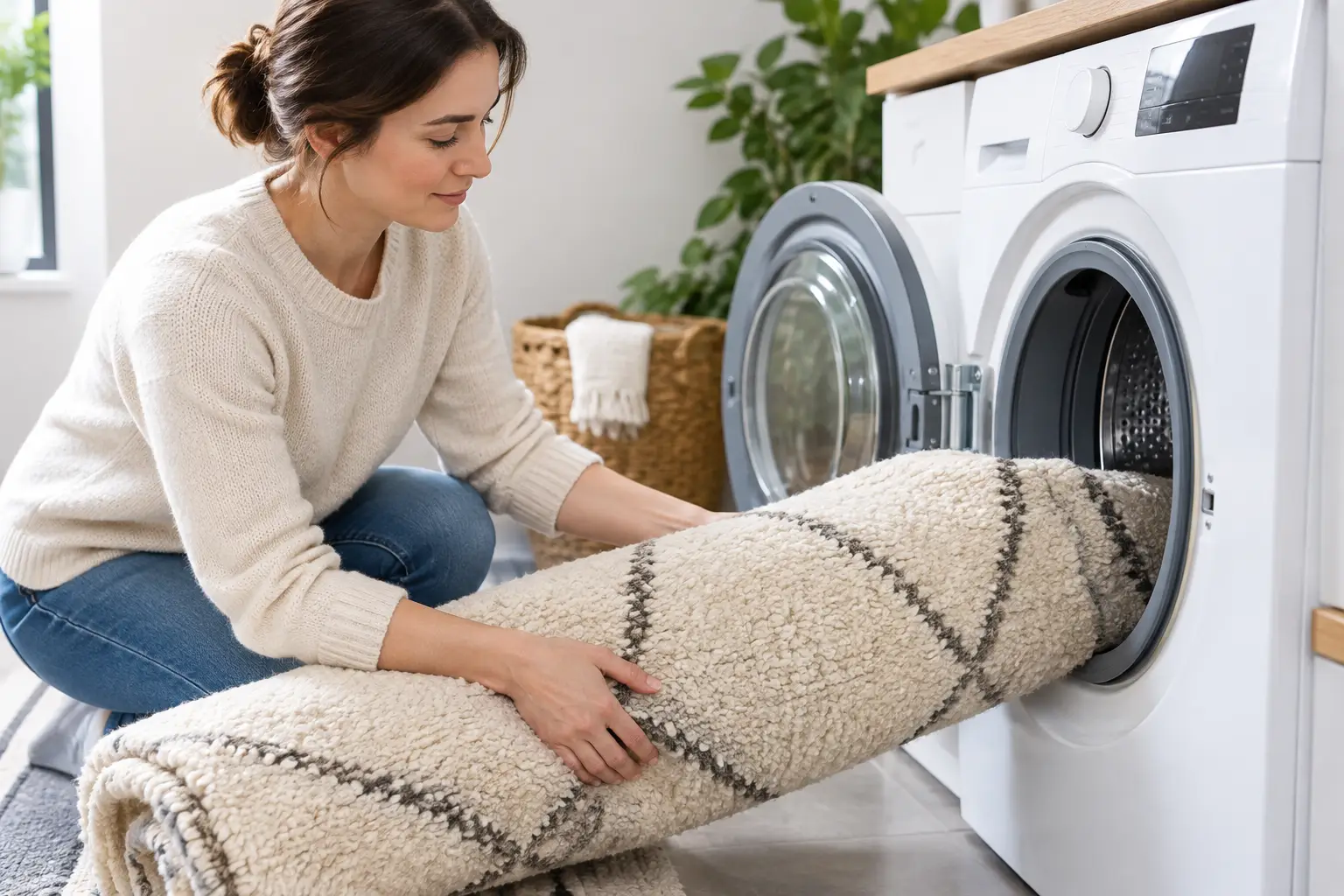
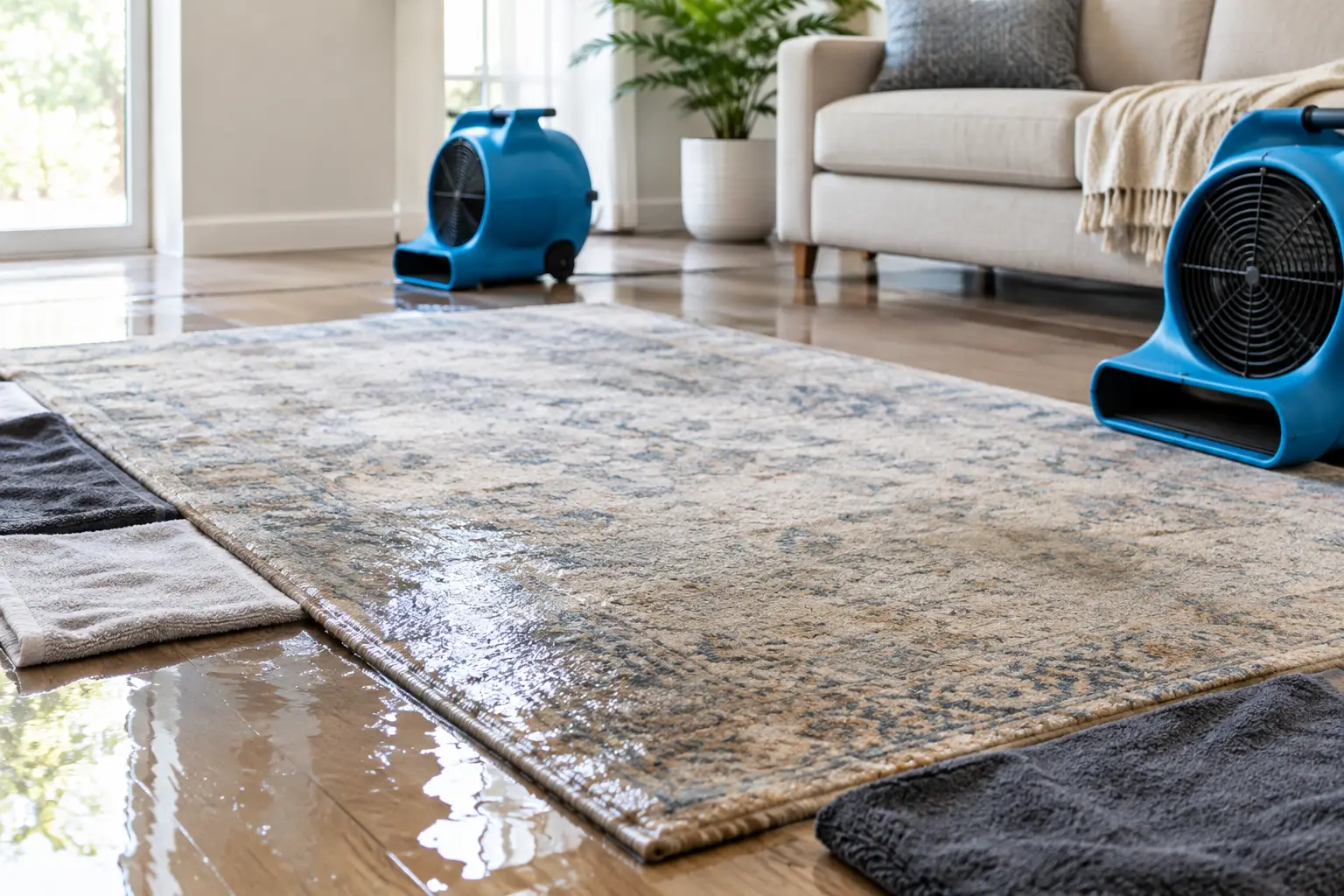
Professional cleaning facilities have controlled processes for washing, rinsing, extracting moisture, and drying rugs thoroughly. This is a practical advantage, not a luxury detail. Proper drying helps preserve the shape, feel, and color of the rug while reducing the chance that an odor problem will return.
Why Rug Construction Changes the Answer
A machine-made polypropylene rug in a busy playroom has different needs from a hand-knotted wool rug in a formal living room. The first may tolerate careful spot cleaning and periodic general cleaning well. The second may contain natural dyes, hand-spun wool, delicate fringe, or a foundation that demands a more measured process.
Silk and viscose deserve additional caution. Both can be vulnerable to water marks, pile distortion, color changes, and damage from common cleaning products. A rug’s price is not the only indicator of risk. A modest-looking handmade piece, an inherited rug, or a discontinued designer rug may be difficult or impossible to replace.
Before using a product, consider what you know about the rug. If the fiber content, dye stability, or construction is uncertain, it is safer to limit treatment to gentle blotting and seek an estimate. Photos and measurements often provide enough information to begin a clear discussion about next steps.
Cleaning Is Also Preventive Care
The best decision is often made before a stain occurs. Quality custom-fit rug pads help reduce slipping, cushion foot traffic, and protect both the rug and the floor underneath. They also reduce abrasion by keeping the rug from shifting and folding at corners.
Stain protection can be useful for appropriate rugs, particularly in dining rooms, family rooms, and homes with children or pets. It is not a promise that stains will never happen, nor does it replace prompt blotting. Its value is in giving you more time to respond before a spill bonds to the fibers.
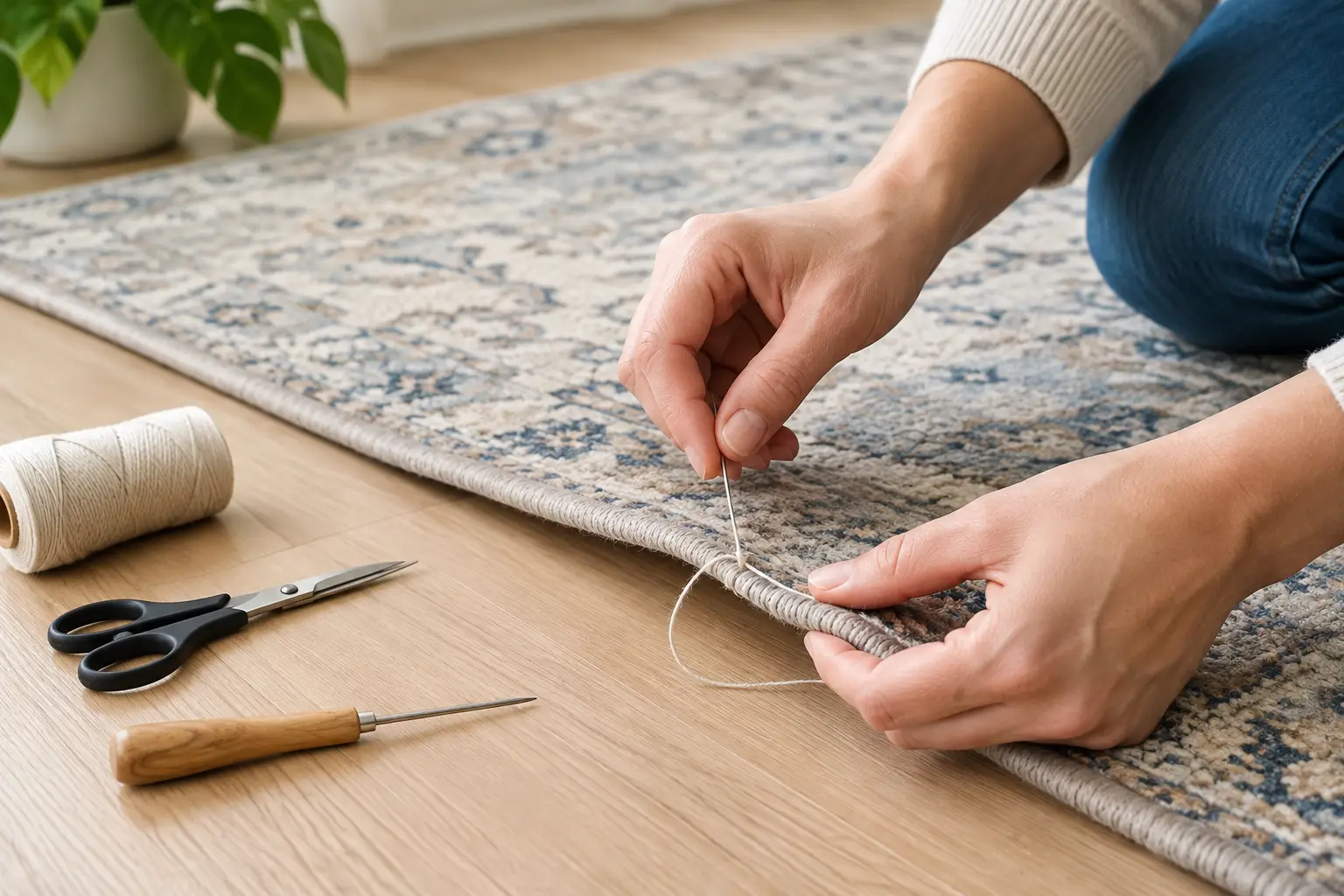
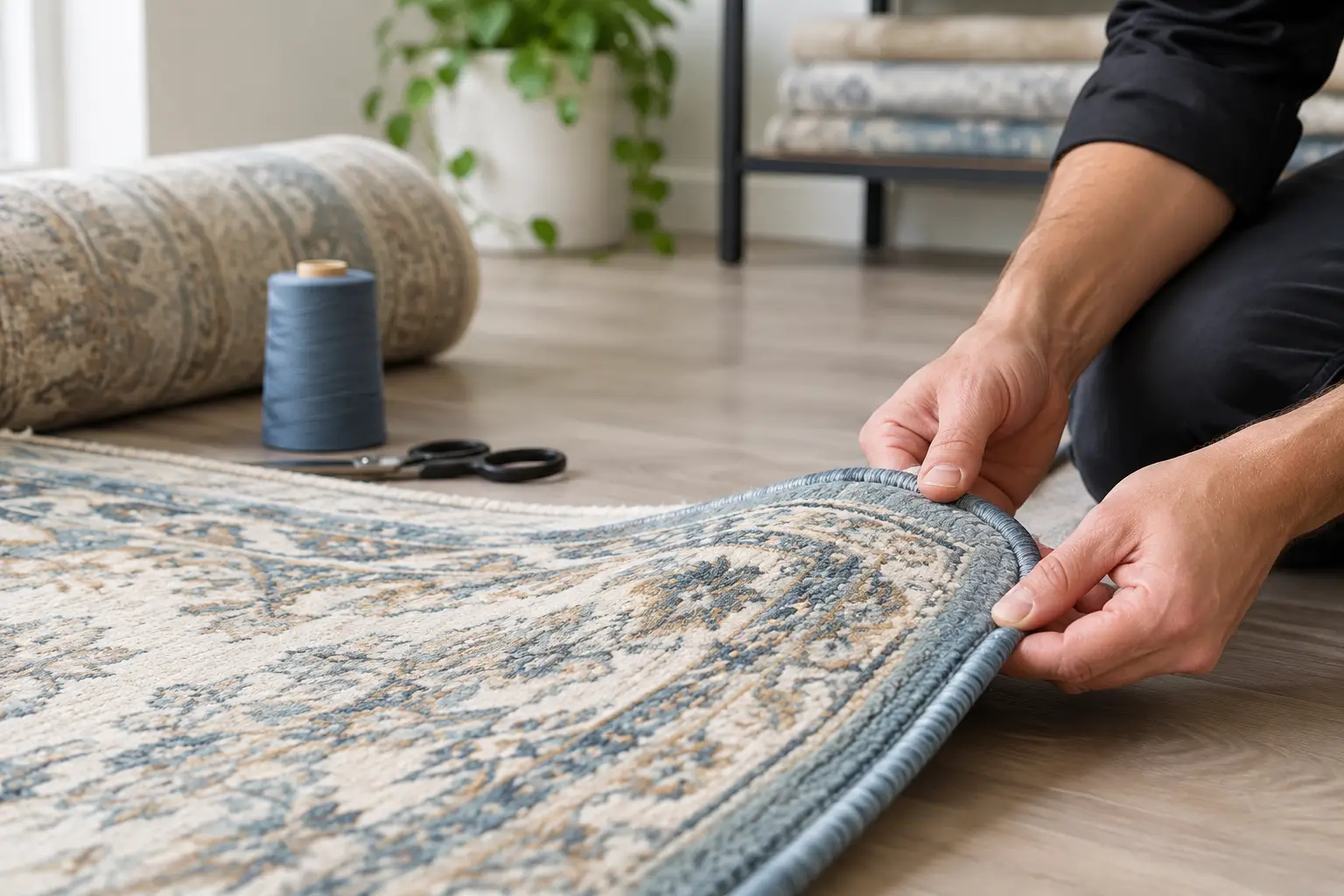
Rotation can also help rugs wear more evenly, especially in sunny rooms or high-traffic areas. Keep an eye on fringes and edges, since small repairs are generally easier and less costly when handled before they become larger structural problems. For stored rugs, clean, dry wrapping and periodic inspection help prevent avoidable issues such as moth damage and trapped odors.
Choosing the Right Level of Help
There is no single answer to professional versus DIY cleaning because the right choice depends on the rug and the problem. Routine vacuuming and immediate blotting are responsible ownership. Deep odor, dye instability, unknown fibers, persistent stains, or signs of wear deserve a more careful approach.
At 1st Impressions Oriental and Area Rug Cleaning, the goal is not to treat every rug the same way. It is to give each piece the level of care it needs, from washing and odor treatment to repair, protection, and safe storage. For homeowners in Orlando, Winter Park, Winter Garden, and nearby communities, a quick photo-and-measurement estimate can make that decision easier.
If you are unsure whether a stain is safe to handle at home, stop after blotting rather than escalating with stronger products. A careful first response preserves more options, and that is often the best way to protect a rug you want to enjoy for years.