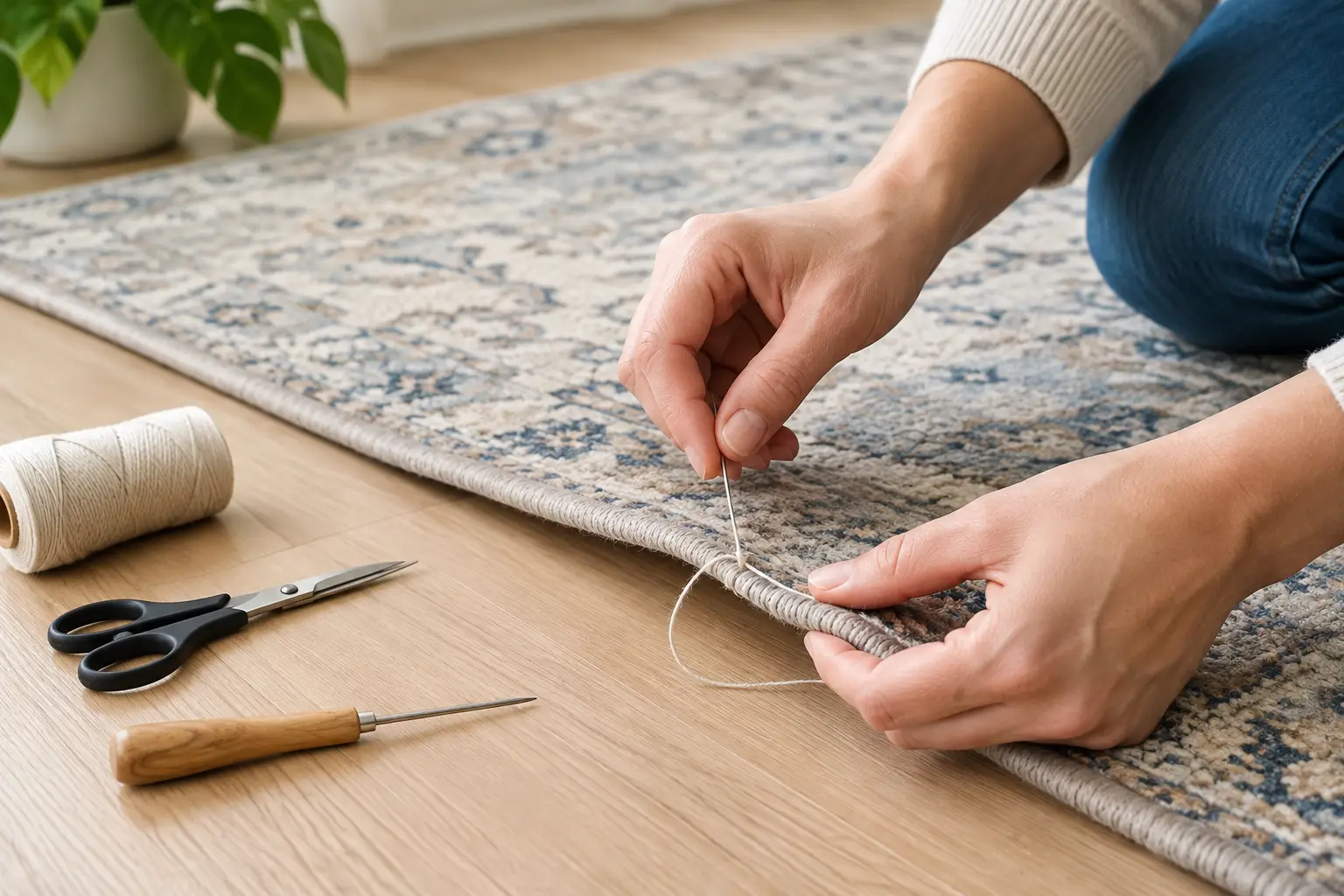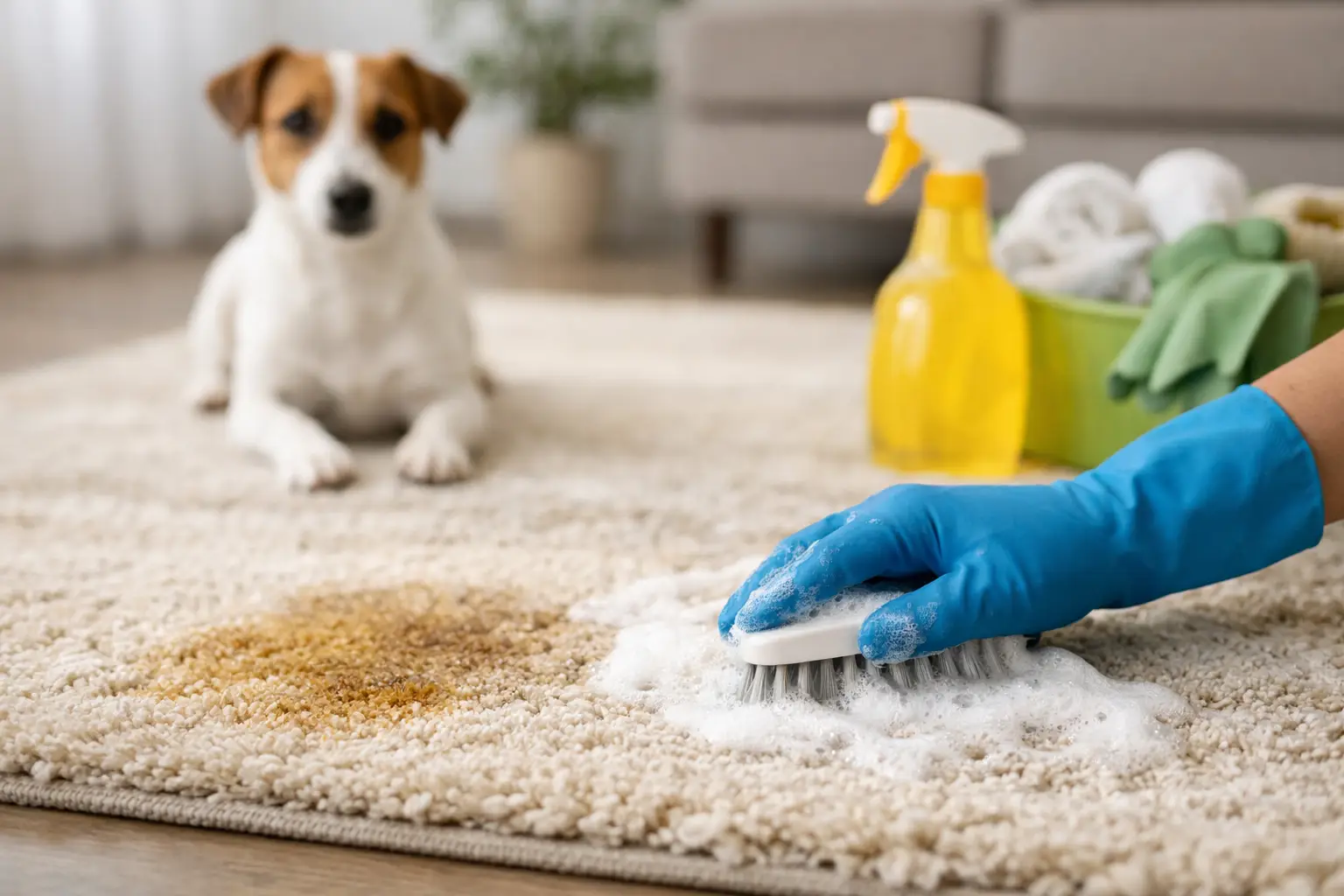
A rug can look clean and still carry pet urine deep in its foundation. That is why pet urine rug decontamination is different from spot cleaning or covering an odor with fragrance. When a pet urinates on a rug, moisture can travel through the pile, backing, and fringe before reaching the rug pad and floor beneath it. The visible mark may fade, but the urine salts and odor-causing residue can remain.
For homeowners in Orlando, Winter Park, Winter Garden, and nearby Central Florida communities, humidity can make this problem especially frustrating. A rug that seems fine on a dry day may begin to smell again after rain, increased indoor humidity, or a thorough mopping nearby. Proper treatment addresses what cannot be seen, while respecting the fibers, dyes, and construction that make a fine area rug worth keeping.
Why Pet Urine Odor Returns
Urine is not simply a surface stain. As it dries, it leaves behind concentrated residue that can continue to release odor when exposed to moisture. Pets may also detect traces that people cannot, which can encourage repeat accidents in the same location.
A household spray cleaner may improve the surface temporarily, especially if an accident is caught immediately. But once urine has penetrated a wool Oriental rug, a hand-knotted designer rug, or a thick synthetic area rug, the treatment has to reach the full depth of the contamination. Applying more product from the top can sometimes make matters worse by adding moisture without fully flushing out the residue.
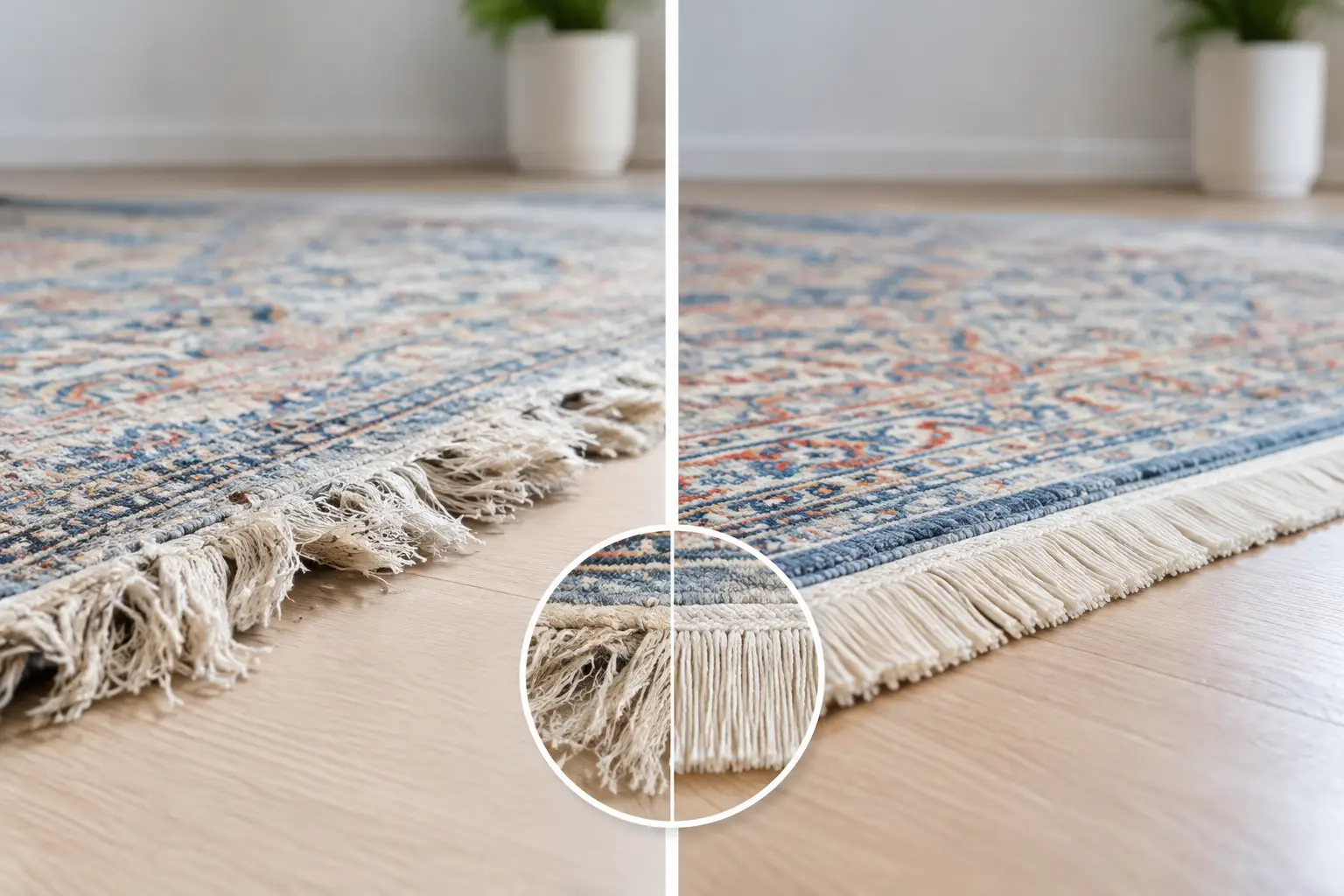
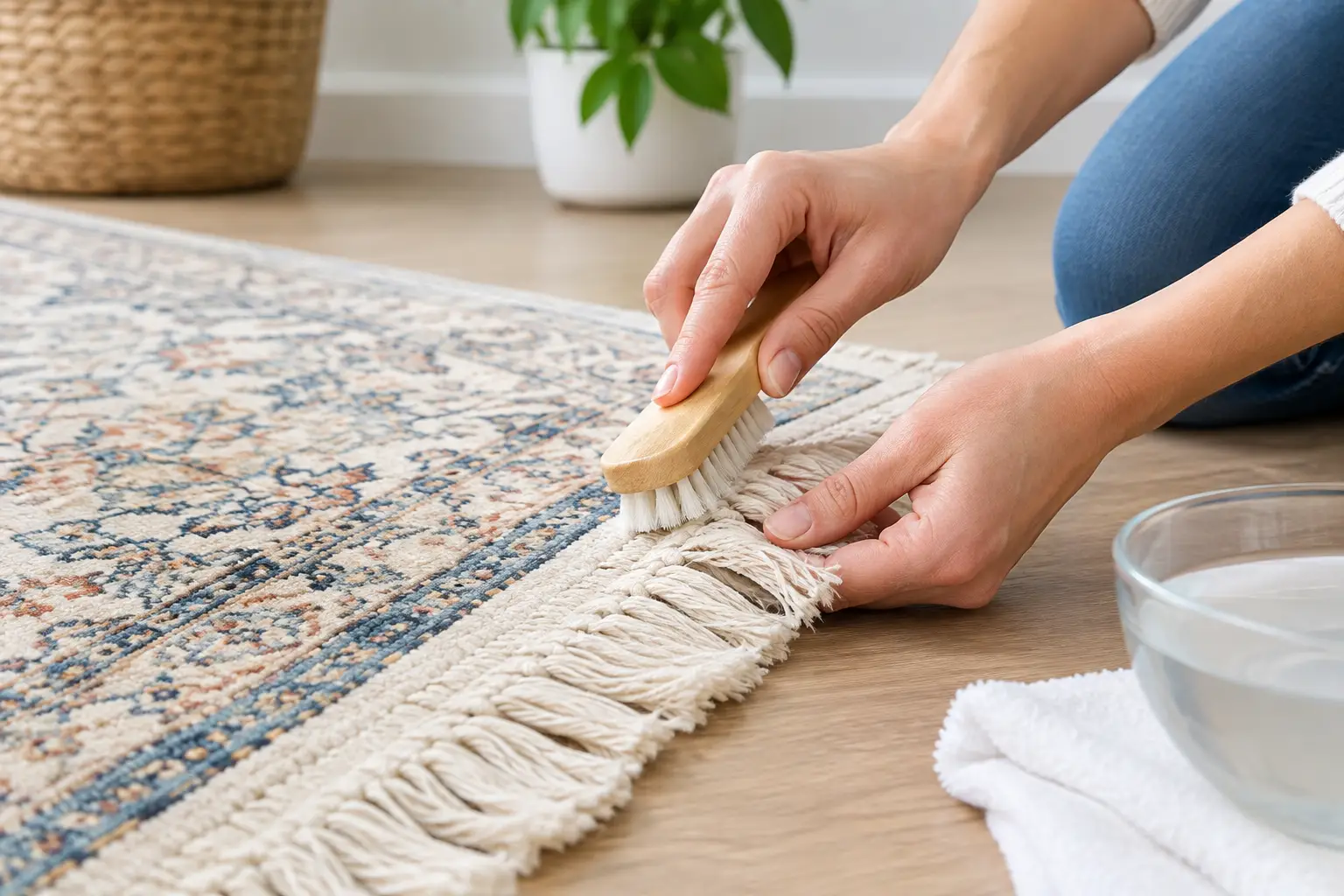
There is another consideration: not every rug should be treated the same way. Wool, silk, viscose, cotton, and synthetic fibers react differently to moisture, agitation, heat, and cleaning agents. Certain dyes can bleed, fringe can discolor, and weak foundation yarns can be damaged by aggressive home remedies. The right approach depends on the rug’s materials, construction, age, color stability, and the extent of the urine exposure.
What Professional Pet Urine Rug Decontamination Involves
Effective odor treatment starts with an honest assessment. A trained rug care team looks for the affected areas, checks whether the odor has reached the backing, and considers whether the rug pad or flooring may need attention, too. Ultraviolet inspection can help identify old or hidden urine spots, but it is only one part of the evaluation. Odor level, fiber type, and the rug’s overall condition matter just as much.
Treating the contamination, not just the smell
The goal is to break down and remove urine residue rather than perfume over it. Depending on the rug, this can involve targeted treatment before washing, followed by a thorough water-based bathing process that flushes contaminants from the pile and foundation. This traditional style of rug washing is especially valuable for pieces that cannot be truly cleaned by surface extraction alone.
A proper process also includes controlled drying. Rugs need to dry thoroughly and evenly so odors are not trapped in damp fibers. For a valuable handmade rug, careful handling throughout the process protects against unnecessary stress on the weave, fringe, and color.
No responsible rug professional should promise that every odor will disappear in every circumstance before inspecting the piece. Very old contamination, repeated accidents, severe saturation, or urine that has reached a damaged backing can require additional treatment. In some cases, replacing the rug pad is necessary because a contaminated pad can transfer odor back into an otherwise cleaned rug.
Looking below the rug
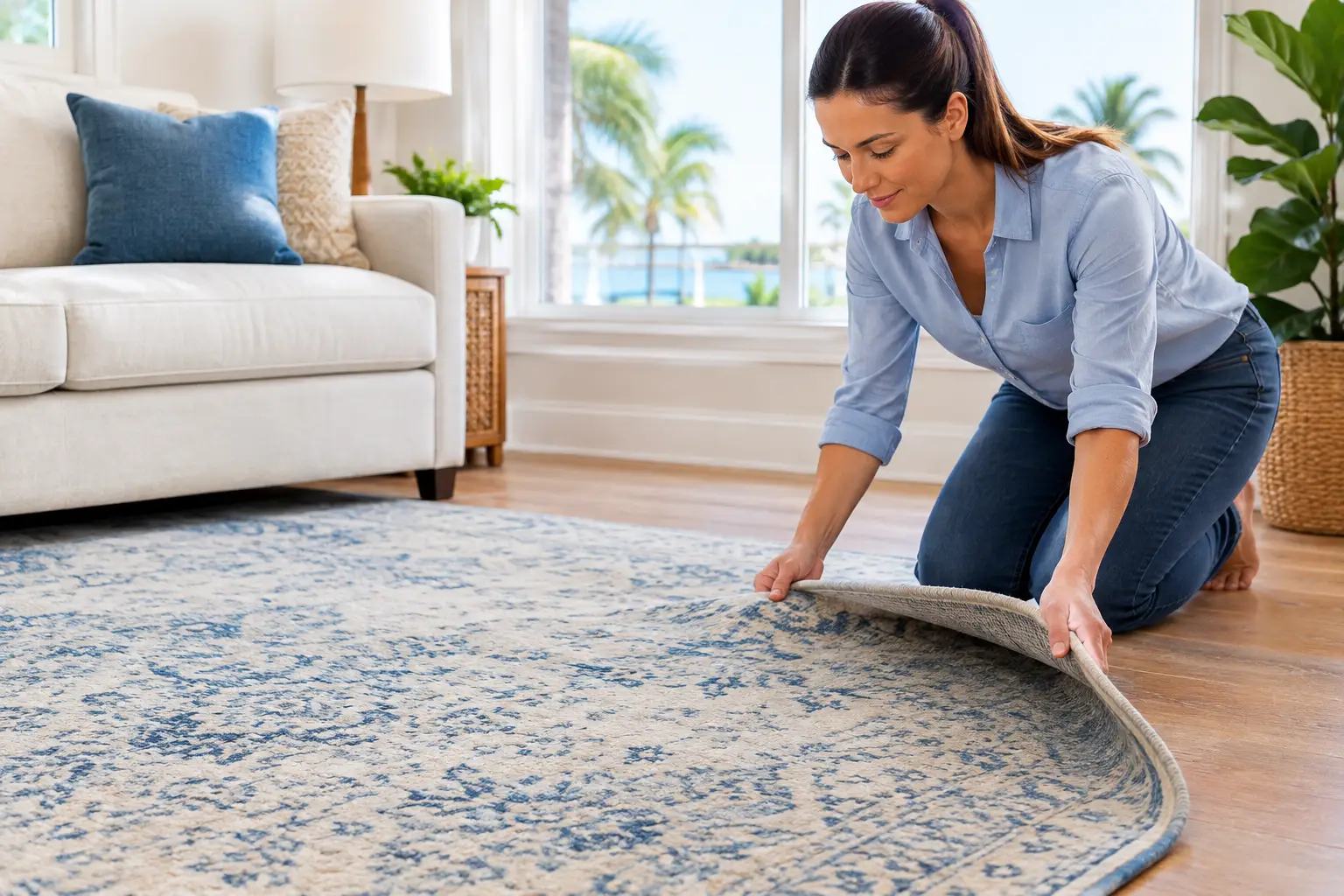
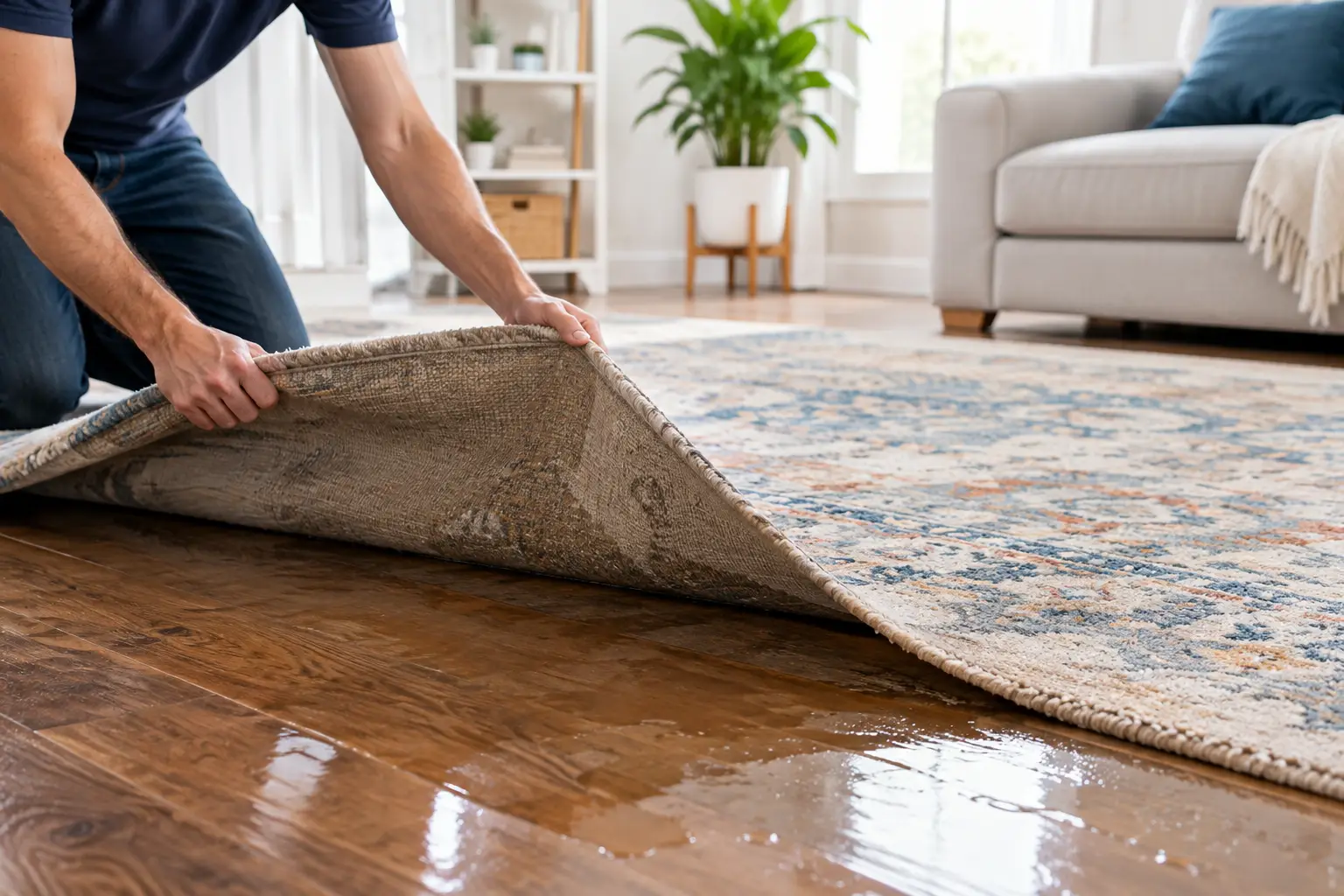
If urine traveled through the rug, the work may not end at the rug itself. A pad can absorb a remarkable amount of moisture and odor, particularly beneath a large area rug. On hard-surface floors, residue may remain at seams, along baseboards, or in the texture of unfinished or damaged wood. On carpeted floors, the carpet and cushion beneath the rug may need separate attention.
This is why lifting the rug and inspecting the area below it is so useful. It prevents the common disappointment of bringing home a freshly cleaned rug only to notice the same odor returning because its pad or floor was never addressed.
What to Do After a Pet Accident
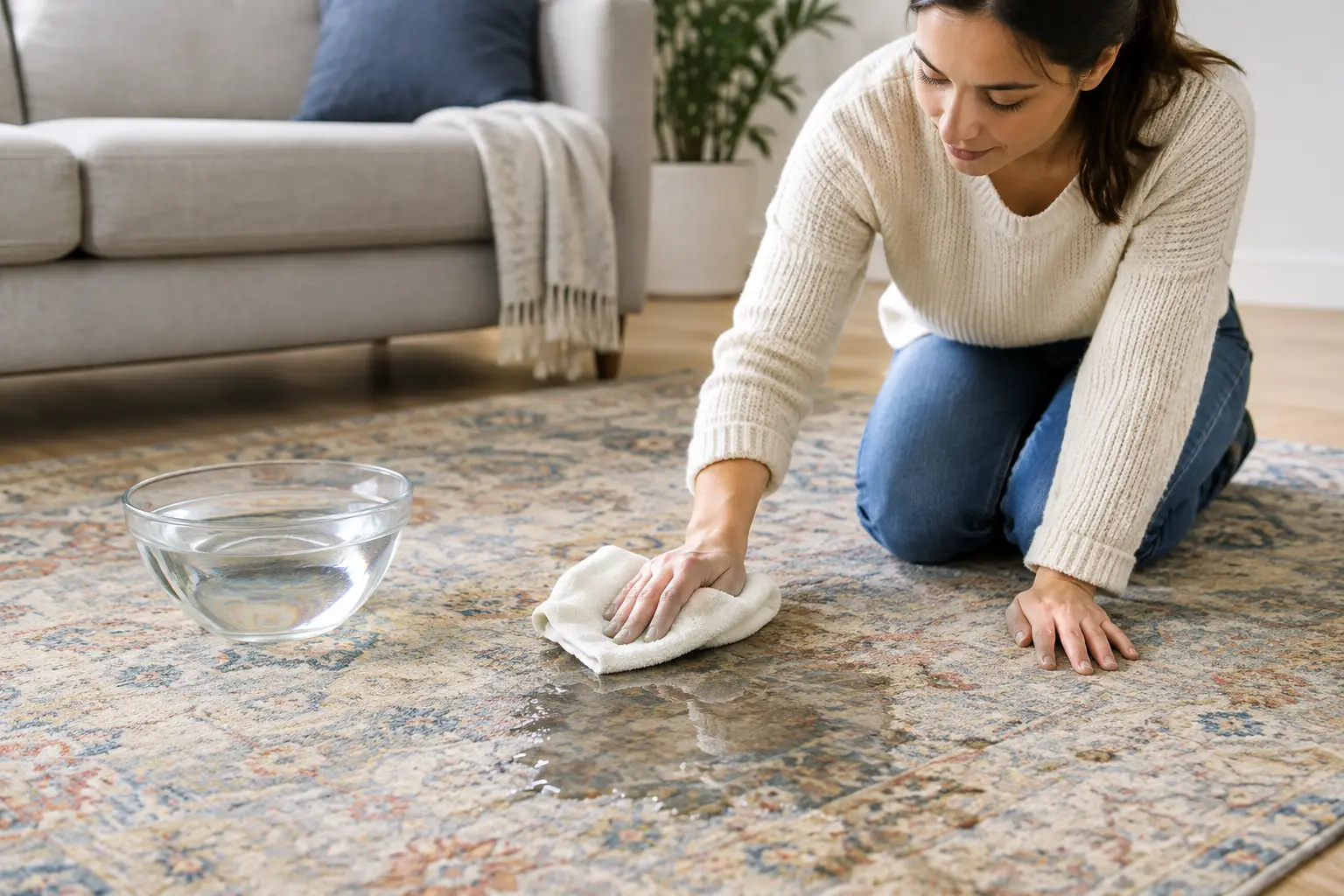
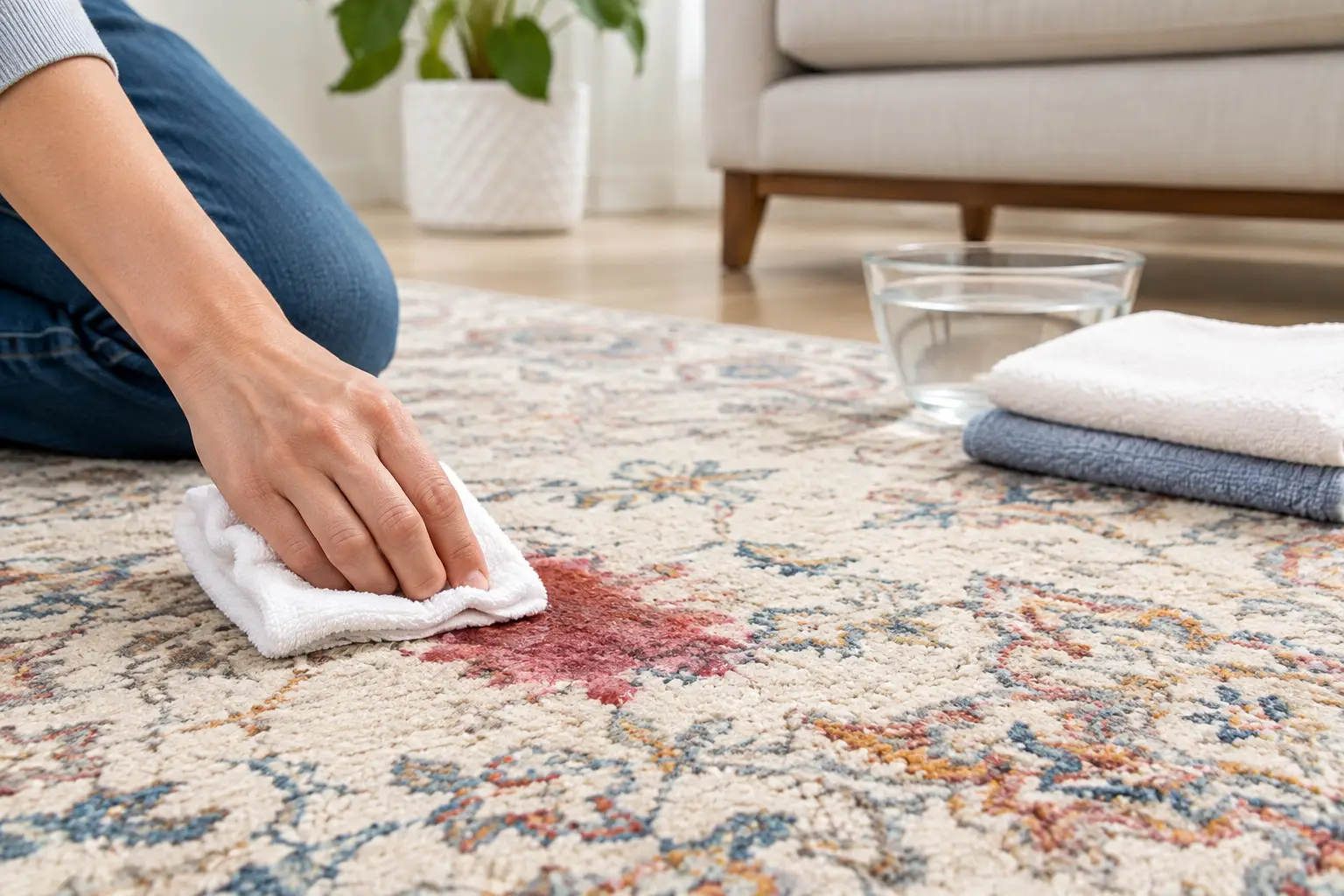
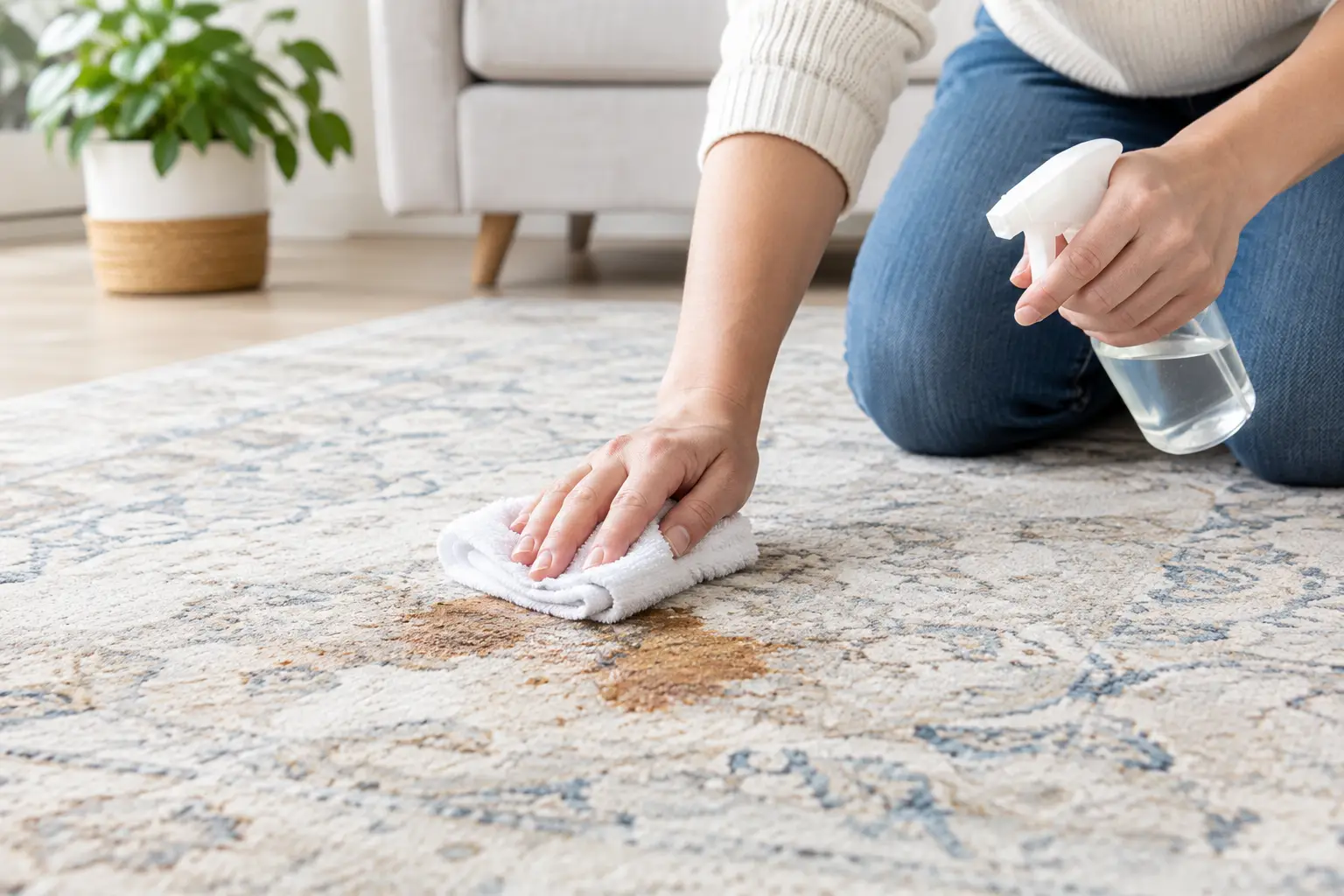
Fast action helps, but restraint matters. Blot fresh urine with clean white towels, pressing firmly to absorb as much moisture as possible. Avoid scrubbing, which can push liquid farther into the fibers and distort the pile. If the rug is small enough to move safely, lift it from the floor and place towels beneath the affected area so moisture does not continue soaking into the pad.
Do not use bleach, ammonia, steam, or heavy amounts of household cleaner on a fine rug. Bleach can permanently alter dyes and weaken fibers. Ammonia may have an odor that attracts some pets back to the same place. Steam can set stains and odors or cause color movement in rugs that have not been tested for stability.
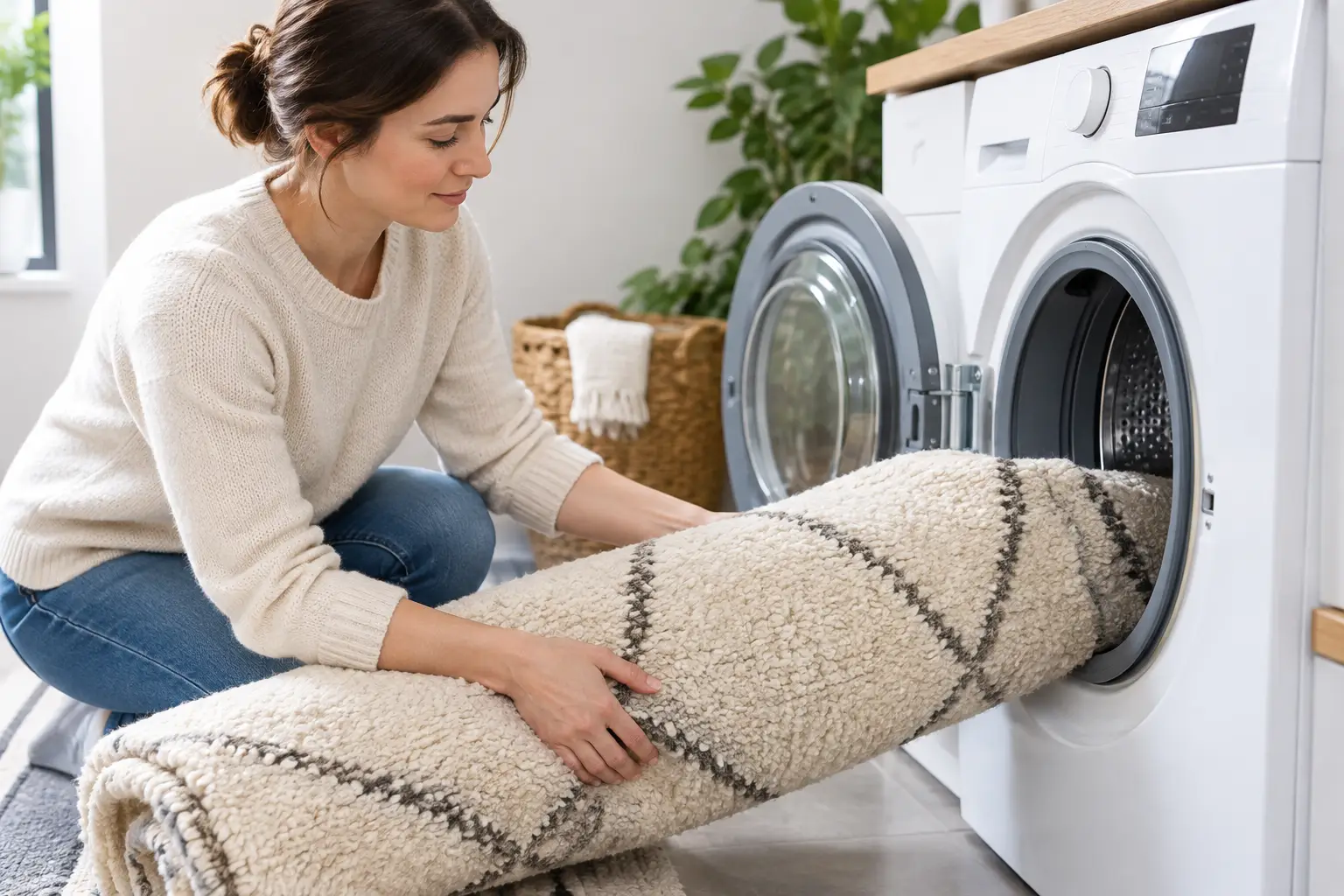
For a minor fresh accident on a washable synthetic rug, careful blotting may be enough to limit the damage until professional cleaning can be arranged. For wool, silk, antique, hand-knotted, or sentimental rugs, it is better to stop at blotting and seek advice before applying any product. A photograph of the rug, close-ups of the affected area, and its approximate dimensions can help a rug care specialist provide useful guidance quickly.
When a Rug Needs More Than Spot Treatment
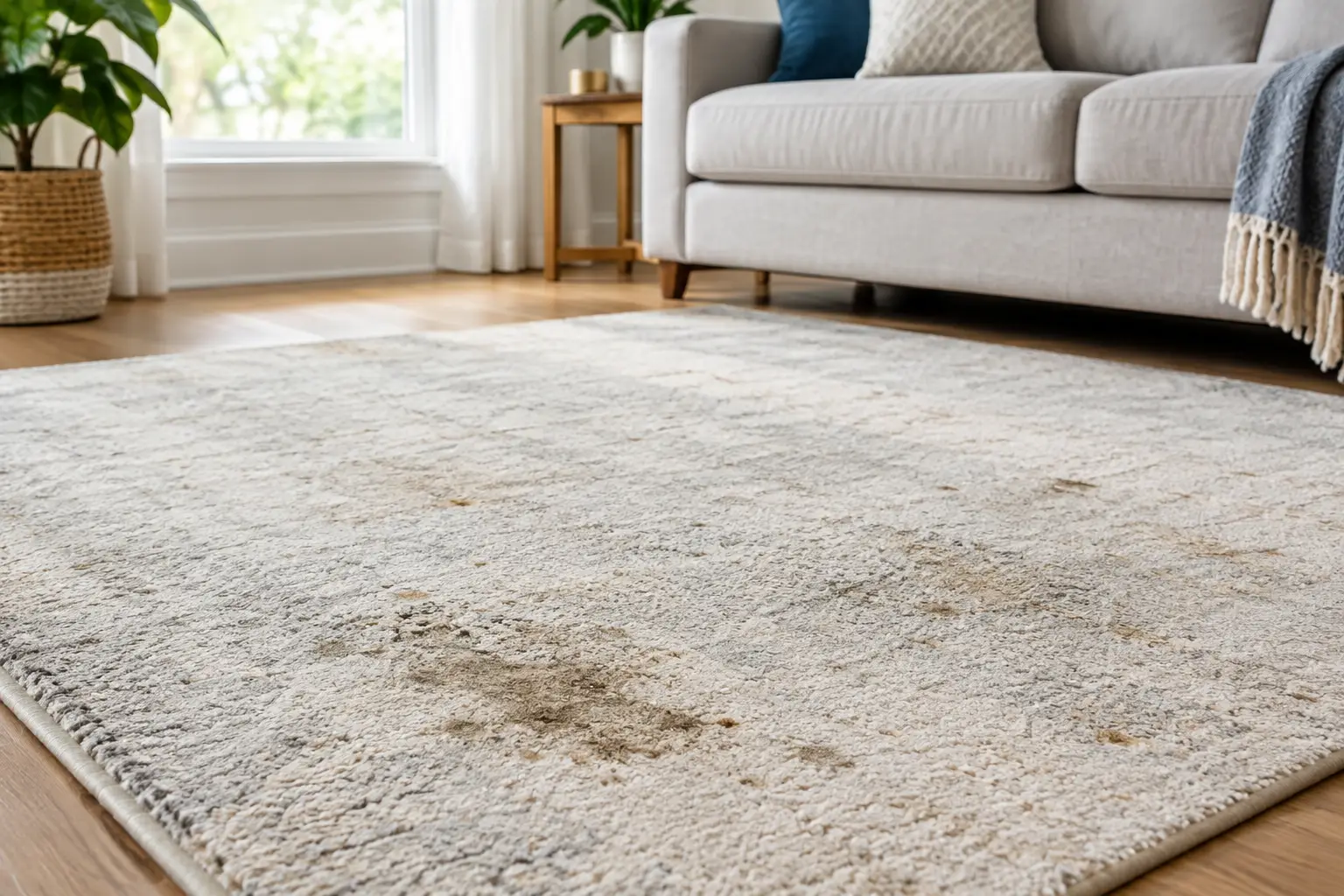
Persistent odor is the clearest sign that deeper cleaning is needed, but it is not the only one. You may notice a yellow or brown stain that reappears after drying, stiff or crunchy fibers, a darkened backing, or a pet repeatedly returning to one area. Even if the rug appears normal, a urine odor that becomes noticeable during humid weather points to residue below the pile.
Professional cleaning is particularly worthwhile when the rug is large, expensive, handmade, or meaningful to your family. Replacing a fine rug may cost far more than restoring it correctly, and improper cleaning can reduce its beauty and value. Careful decontamination also protects the floor below, whether that is hardwood, tile, luxury vinyl, or carpet.
At 1st Impressions Oriental and Area Rug Cleaning, rugs are evaluated as individual textile pieces, not treated as generic floor coverings. That means considering whether the most appropriate solution is targeted odor treatment, full washing, pad replacement, stain protection after cleaning, or a combination of services. Pickup and delivery can also spare homeowners the difficulty of transporting a heavy or fragile rug.
Preventing the Next Odor Problem
Prevention is practical, not perfect. Even well-trained pets can have accidents during illness, stress, aging, or a change in routine. The objective is to make cleanup faster and limit how far moisture can travel.
A quality custom-fit rug pad can provide cushioning, help prevent slipping, and create a protective layer between the rug and the floor. It is not a substitute for cleanup after an accident, but the right pad may reduce direct contact with the floor and is much easier to replace than damaged flooring. Pads should be selected carefully for the type of floor beneath the rug, especially hardwood and other finish-sensitive surfaces.
It also helps to place cherished silk, antique, or light-colored rugs in lower-risk rooms when possible. In homes with puppies, senior pets, or pets experiencing medical changes, washable rugs may be the more practical choice for entryways and high-traffic areas. That is not a compromise in style. It is simply matching the rug to the realities of the room.
If an odor has returned after repeated home cleaning, do not assume the rug is beyond saving. Set it aside from your pet’s usual access, blot any fresh moisture, and have the rug assessed before the residue becomes more deeply embedded. A careful cleaning plan can preserve the rug you love and make the room feel comfortable again.