
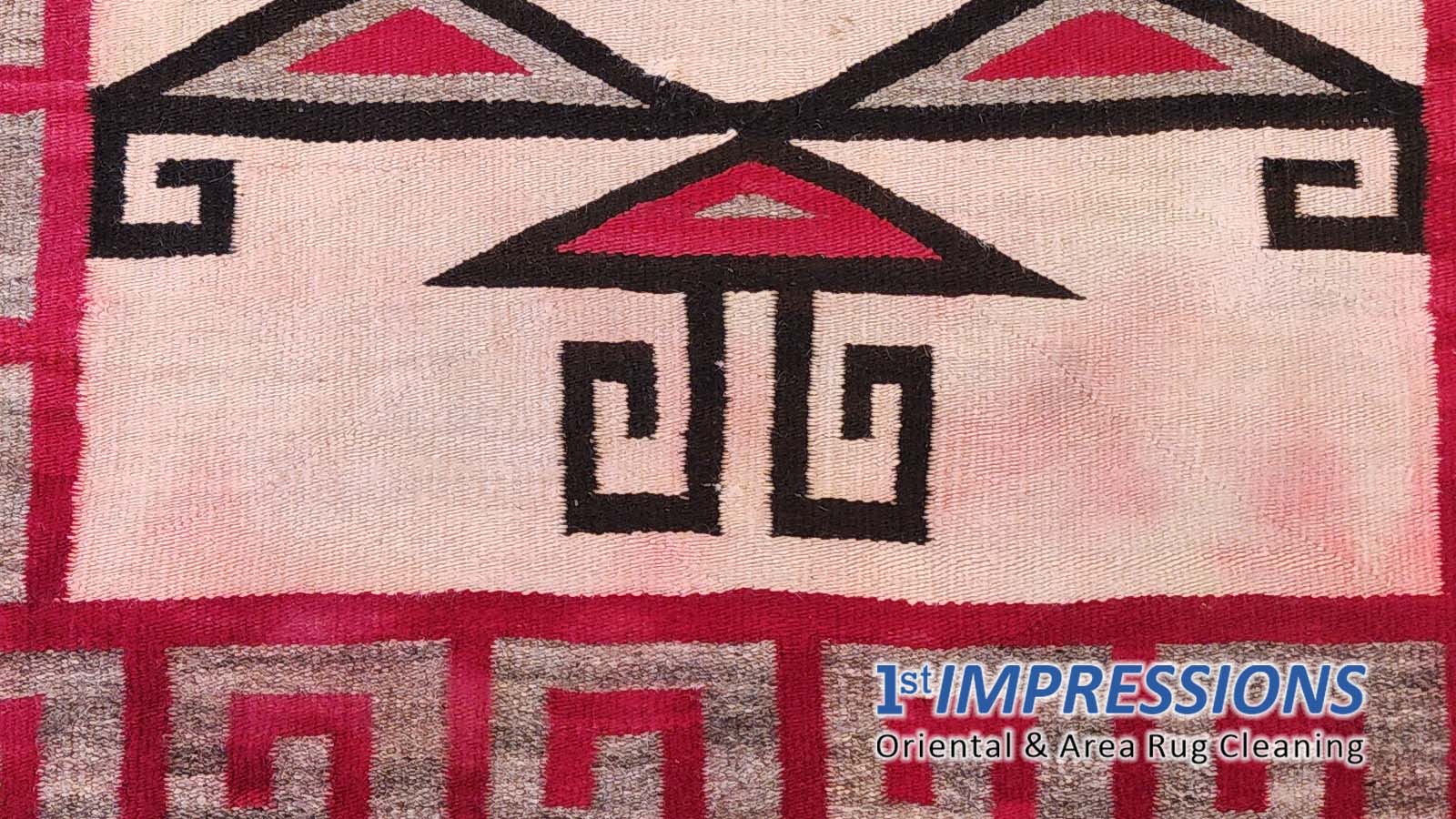
Why Moisture and Spills Can Cause Color Bleeding in Area Rugs
In Central Florida homes, area rugs deal with a lot.
Rainy afternoons, humidity, pets, kids, sliding glass doors, tile floors, pool entrances, and everyday spills can all bring moisture into the home. Most of the time, a quick cleanup is enough. But with some area rugs, moisture can create a more serious problem: color bleeding.
Color bleeding happens when dye moves from one part of a rug into another area where it does not belong.
A red border may bleed into a cream-colored field. A dark design may transfer into lighter fibers. Color may move into the fringe. A pet accident or spill may leave behind a cloudy or discolored area.
When this happens, it can be difficult to correct completely. That is why rug owners should understand how moisture, spills, pet accidents, and cleaning products can affect rug dyes.
First Impressions Oriental and Area Rug Cleaning helps homeowners throughout Winter Garden, Orlando, and Central Florida care for Oriental rugs, wool rugs, handmade rugs, specialty rugs, and other area rugs.
What Is Color Bleeding?
Color bleeding, also called dye bleeding, dye migration, or dye transfer, happens when dye becomes unstable and moves into nearby fibers.
This is different from normal shading, pile direction, abrash, or natural color variation. Those characteristics can affect how a rug looks from different angles, but the dye itself has not moved out of place.
True color bleeding usually means something has disturbed the dye. Moisture is often involved, but cleaning products, pet urine, heat, previous cleaning attempts, and the rug’s original dye quality can also play a role.
Why Some Rugs Are More Likely to Bleed
Not every rug has the same dye stability.
A well-made rug with properly set dyes may handle professional washing very well. Another rug may react differently because of how it was made, dyed, used, or previously cleaned.
Dye stability can be affected by the rug’s fiber type, age, dye quality, construction, previous moisture exposure, old spills, pet contamination, or harsh cleaning products. Certain handmade rugs, older rugs, heavily saturated rugs, and rugs with previous cleaning damage may need extra caution.
Two rugs can look similar in a home but respond very differently when exposed to moisture.
Why Central Florida Moisture Matters
Central Florida’s climate can make moisture a bigger concern for area rugs.
Humidity, afternoon storms, wet shoes, damp patios, pool traffic, and open doors can all bring moisture inside. Many homes also have tile or hard surface flooring, which can allow moisture to sit beneath a rug if a spill, leak, or pet accident is not noticed right away.
If a rug with unstable dyes stays damp too long, the dyes may loosen and move. This is especially risky when the rug is sitting flat on the floor and air cannot circulate underneath.
Moisture-related dye bleeding may happen after spills, pet accidents, water from plants or vases, rainwater near a door or slider, plumbing leaks, over-wetting from rental machines, or a rug pad that traps moisture underneath the rug.
Fast action can make a difference. The longer moisture sits, the greater the chance of staining, odor, fiber damage, or dye movement.
Pet Accidents Can Be Especially Damaging
Pet urine can be very hard on area rugs.
It does more than add odor. Urine can affect dyes, fibers, texture, and the rug’s foundation. As urine ages, it can become more alkaline and more difficult to remove. It may also cause yellowing, color change, dye movement, or permanent staining.
If a pet accident happens on a rug with unstable dyes, the risk of color bleeding increases. This can be especially noticeable near borders, fringe, and lighter areas of the rug.
If you discover a pet accident, blot gently with a clean white towel. Avoid scrubbing, avoid harsh cleaners, and do not soak the rug. If odor or discoloration remains, it is best to contact a professional rug cleaner for guidance.
Why Store-Bought Cleaners Can Make the Problem Worse
Many homeowners try to treat rug spots with products they already have at home.
That is understandable, but area rugs are not the same as wall-to-wall carpet. A product that seems fine on synthetic carpet may not be safe for an Oriental rug, wool rug, silk rug, viscose rug, or handmade rug.
Some cleaning products can leave residue, shift the rug’s pH, remove color, or destabilize dyes. Oxygen-based cleaners, bleach-based products, laundry products, high-pH cleaners, peroxide, vinegar, baking soda, dish soap, and online cleaning mixtures can all create problems depending on the rug.
The biggest concern is that a small spill can become a larger problem if the wrong product is used first.
Why Professional Dye Testing Matters
Professional rug cleaning should begin with understanding the rug.
Before cleaning, a rug should be inspected for fiber type, construction, dye behavior, soil level, stains, odor, wear, fringe condition, and previous damage. Dye testing helps determine whether special precautions are needed before the rug is cleaned.
Some rugs can be washed thoroughly. Others require a more controlled process. The goal is to remove soil and contamination while respecting the rug’s dyes, fibers, and structure.
This is why area rugs should not be cleaned like ordinary carpet. Rugs often contain wool pile, cotton foundation threads, silk highlights, latex backing, glued construction, unstable dyes, or delicate fibers that require specific care.
Can Color Bleeding Be Fixed?
Sometimes color bleeding can be improved. Sometimes it cannot.
The result depends on the rug, the type of dye, the fiber, how long the dye has been out of place, what caused the bleeding, and whether any previous cleaning attempts made the problem worse.
Fresh dye migration may be easier to address than older bleeding that has already set into the fibers. Even then, correction is delicate work.
It is also important to understand that regular cleaning and color correction are not the same thing. Cleaning removes soil and contamination. Color correction is a more specialized process, and not every rug is a good candidate.
How to Reduce the Risk of Dye Bleeding
You cannot control how your rug was originally dyed, but you can reduce the chances of making a dye problem worse.
A few smart habits can help:
- Blot spills quickly with a clean white towel.
- Avoid scrubbing the rug.
- Do not use bleach, peroxide, harsh spot cleaners, or online cleaning mixtures without professional guidance.
- Keep plants, pet bowls, and water sources off or away from rugs.
- Check rugs near sliding doors, patios, pool entrances, and wet shoes.
- Address pet accidents as quickly as possible.
- Avoid rental carpet cleaning machines on area rugs.
- Do not leave a damp rug sitting flat on the floor.
- Have rugs professionally inspected before cleaning.
If you are unsure what to do after a spill, pet accident, or moisture issue, calling a professional is safer than guessing.
Professional Rug Cleaning and Dye Testing in Central Florida
Color bleeding is one of the reasons professional rug cleaning should never be a one-size-fits-all process.
Every rug has its own construction, fiber type, dye behavior, age, condition, and history. A careful inspection helps identify risks before cleaning begins.
First Impressions Oriental and Area Rug Cleaning provides professional rug cleaning and rug care for customers in Winter Garden, Orlando, and throughout Central Florida, including pet odor treatment, rug protection, custom-fit rug pads, rug repair, fringe repair, color correction, and pick-up and delivery.
If you are concerned about color bleeding, dye transfer, pet accidents, spills, or moisture damage, contact First Impressions Oriental and Area Rug Cleaning for helpful advice and professional rug care.